VOLUME FOCUS : Books on Books
A selection of books from our shelves.

 Forthcoming from Volume Editions.
| >> Read all Stella's reviews. | |
 |
Marianne Dubuc’s children’s books are delightful: wonderful stories, excellent characters, humour as well as heart; and charming illustrations, where there is always more to find on the page. You may already have The Lion and the Bird on your shelf, or gifted the excellent 'Mr Postmouse' titles. Up the Mountain is another to add to your or a child’s collection. Mrs Badger every Sunday heads outdoors and walks up the mountain. She loves walking through the fields, past the apple trees, across the streams and climbing higher and higher. To get to the top, to see the world, is for her the best place to be. On the way, she greets her friends — various animals that live on the mountain and in the trees. One day, a shy cat, Leo, is watching her. Leo thinks he is too small to climb the mountain, but, with some encouragement and help from Mrs Badger (and a few rests along the way) and a dose of curiosity about what’s at the top, he makes it. After that, every Sunday Leo joins his friend Mrs Badger, and they enjoy the wonders of the mountain, both the journey and the destination. As the days go by, Mrs Badger is the one who needs the rest and encouragement, until one day it’s just Leo venturing out and then returning to Mrs Badger’s house with stories and treasures. Eventually, Mrs Badger’s mountain becomes Leo’s mountain and the cycle of discovery and wonder continues. This is a charming story about friendship, and aging; about sharing and curiosity — a story of looking out at the world with wonder and care. This edition is translated and published by the excellent children’s press Book Island. |
| >> Read all Thomas's reviews. | |
 | In the Dark Room by Brian Dillon {Reviewed by THOMAS} Unless we are wrested by a pervasive trauma from the entire set of circumstances which constitute our identities, which are always contextual rather than intrinsic, our memories are never kept solely within the urns of our minds, so to call them, but are frequently prodded, stimulated and remade by elements beyond ourselves, or, indeed, are outsourced to these elements. Brian Dillon’s In the Dark Room is thoughtful examination of the way in which his memories of his parents, who both died as he was making the transition into adulthood, are enacted through the interplay of interior and exterior elements (the book is divided into sections: ‘House’, ‘Things’, ‘Photographs’, ‘Bodies’, ‘Places’). It is the physical world, rather than time, that is the armature of memory: time, or at least our experience of it, is contained in space, is, for us, an aspect of space, of physical extension, of objects. It is through objects that the past reaches forward and grasps at the present. And it is through the dialogue with objects that we call memory that these objects lose their autonomy and become mementoes, bearers of knowledge on our behalf or in our stead. Memory both provides access to and enacts our exclusion from the spaces of the past to which it is bound. In many ways, when the relationship between the object and the memory seem closest, this relationship is most fraught. Photographs, which Dillon describes as “a membrane between ourselves and the world,” are not so much representations as obscurations of their subjects. The subjects of photographs both inhabit an immediate moment and are secured by them in the “debilitating distance” of an uninhabitable past. When Dillon is looking at a photograph of his mother, “the feeling that she was manifestly present but just out of reach was distinctly painful. … Photography and the proximity of death tear the face from its home and memory and set it adrift in time.” All photographs (and, indeed, all associative objects) are moments removed from time and so are equivalents, contesting with interior memories to be definitive. Photographs, even more than other objects, but other objects also, are mechanisms of avoidance and substitution as much as they are mechanisms of preservation. Memory, illness, death all distort our experience of time, but so does actual experience, and it is this distortion that generates memory, that imprints the physical with experience “spreading itself everywhere like a disease of the retina” (in the words of George Eliot). Intense experience, especially traumatic experience, death, illness, loss, violence, occlude the normal functions of memory and push us towards the edges of consciousness, touching oblivion as they also imprison us in the actual. As Dillon found, if experience cannot be experienced all at once, the context of the experience can bear us through, but it must be revisited in memory, repeatedly, until the experience is complete, if this is ever possible. Memory will often co-opt elements of surroundings to complete itself, and, especially if associative objects are not present, it will magnify its trauma upon unfamiliar contexts, increasing the separation and isolation it also seeks to overcome. Must the past be faced as directly as possible so that we may at last turn away from it? >>Brian Dillon's new book, Affinities, is available now |

"Always italicise foreign words," a friend of the author was advised. In her first book of poetry, Māori scholar and poet Alice Te Punga Somerville does just that. In wit and anger, sadness and aroha, she reflects on how to write in English as a Māori writer, and how to trace links between Aotearoa and wider Pacific, Indigenous and colonial worlds.
>>Always Italicise has been short-listed for the Mary and Peter Biggs Award for Poetry at the 2023 Ockham New Zealand Book awards.
>>Writing while colonised.
>>English has broken my heart.
>>English has broken my heart on the radio.
>>Two Hundred and Fifty Ways to Start an Essay About Captain Cook.
>>Our stories about Cook.
>>(Not quite) 250 ways.
>>250 ways.
>>Writing the new world.
>>Interconnections.
>>Te Punga Somerville wrote a standout essay in Ngā Kete Mātauranga.
>>Environment and identity.
>>Challenging stories.
>>A bibliography of writing by Māori in English.
>>Your copy of Always Italicise.

We will be giving away a copy of the remarkable Renters United! / Lawrence & Gibson Publishing tabloid-format! illustrated! edition of Murdoch Stephens's biting and hilarious RAT KING LANDLORD with every book order we dispatch (until supplies are exhausted). And if you order a Lawrence & Gibson book we will put in a bonus copy!
>>Read Stella's review of RKL.
>>Books from L&G.

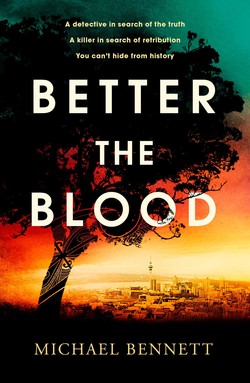
Michael Bennett (Ngāti Pikiao, Ngāti Whakaue)
(Simon & Schuster)
Michael Bennett’s finely tuned thriller opens with an historical atrocity before moving to a contemporary series of murders. Detective Hana Westerman is caught between being a good cop or a kupapa collaborator, and the cases become frighteningly personal. Excellently paced and populated by complex characters, this intricate novel centres on conflict between utu and on the aroha, hūmarie and manaaki needed to move forward.
>>Your copy.
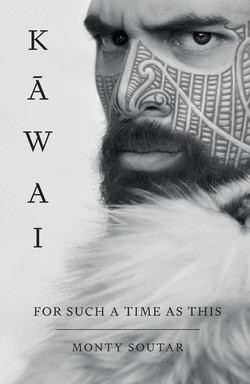
Monty Soutar (Ngāti Porou, Ngāti Awa, Ngāi Tai ki Tāmaki, Ngāti Kahungunu)
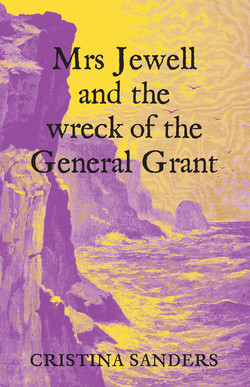
Cristina Sanders
The Cuba Press
Based on the true story of an 1866 shipwreck, this re-telling of the endurance of the survivors on a sub-Antarctic island is impeccably researched and peopled by rounded, realistic and complex characters. Dramatic and well paced, it is rich with vivid descriptions of sea, land and weather, and Cristina Sanders offers insight into the physical and psychological effects of being stranded in an inhospitable environment. Historical fiction at its best.
>>Your copy.
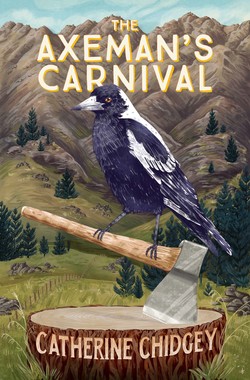
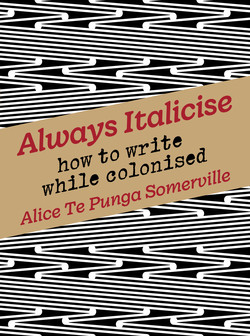
Alice Te Punga Somerville (Te Āti Awa, Taranaki)
Auckland University Press
Alice Te Punga Somerville’s meticulously crafted collection resonates with aroha, wit, sadness and anger. Advice to “italicise all of the foreign words in her poems” becomes a catalyst to exploring the dynamics of racism, colonisation, and writing in English as a Māori writer. Poems float like gourds strung with musings and personal recounts. English words incline as foreign words, but te reo syllables evade linguistic ambushes, camouflaged soundscapes and erasure. They stand upright, mark Space-Time like pou.
>>Your copy.
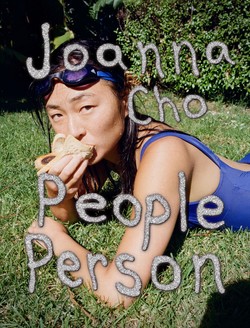
Joanna Cho
Te Herenga Waka University Press
Joanna Cho explores relationships, identity and survival with an aching, ironic honesty. A people person may have a name bought from a fortune-teller, drive battered cars, light up rooms with their hearts, or miss the smell of kawakawa ointment. Cho navigates expectations and choices in imagined and recalled stories, skilfully connecting folklore with autobiographical snapshots from South Korea and Aotearoa. Whimsical, surreal, magical and mundane elements meld and clash in poetic vignettes.
>>Your copy.
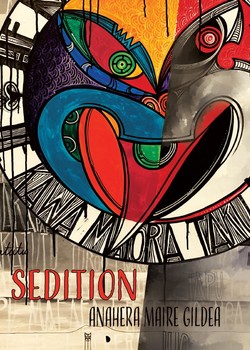
Anahera Maire Gildea (Ngāti Tukorehe)
Taraheke | Bush Lawyer
Sedition flows through generations of dis-ease, enlivens tongues stilled by loss and trauma, excavates a genealogy of resistance. It’s a contemplative, defiant collection that resists the commodification of culture and whenua, and the ongoing perversity of neo-colonialism. Poems float upon the notion that we walk into the future facing our past, which embodies and shapes us. Anahera Maire Gildea agitates, untangles and reweaves threads of outrage, dystopia and anguish as she resolutely redraws detrimental power.
>>Your copy.
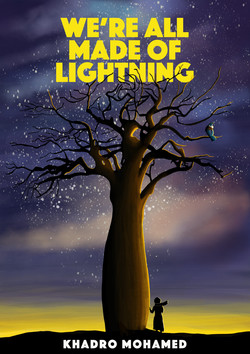
Khadro Mohamed
We Are Babies Press, Tender Press
Khadro Mohamed’s elegiac collection features a speaker torn between multiple worlds. Pendulating from prose to lyric, it is a ghostly work in which dreams and memory bleed into each other, as do its places: Egypt, Somalia, Newtown and Kilbirnie. Even time becomes concurrent, and for Mohamed, the past is right there in the present. In this collision of languages and worlds, the possibility and impossibility of home is both grieved and celebrated.
>>Your copy.
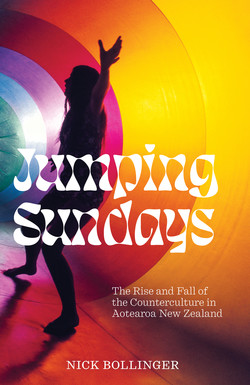
Nick Bollinger
Auckland University Press
With its distinctive cover, bold typography and risograph hues on uncoated stock, this book demands to be read from page one. Weaving original sources into an engaging narrative, Nick Bollinger has crafted a considered and fitting history. Photographs from private collections add to its rich production, balancing text and illustration in ways that belie its size. Like the period it surveys, Jumping Sundays is a game-changer.
>>Your copy.

This is more than an exhibition turned art book. Stunning reproductions, historical essays and the insights of two dozen contributors do justice to the institution that is Robin White. As iconic screenprints flow seamlessly into large format barkcloth, White’s border-crossing practice is temporally divided with the savvy use of typographic spreads. Space, too, is given to the voices of her Kiribati, Fijian and Tongan collaborators. Strikingly elegant yet comprehensive, excellence is what’s happening here.
>>Your copy.
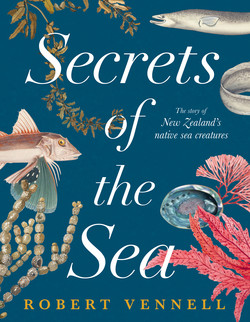
Robert Vennell
HarperCollins
Secrets of the Sea is a treasury of interesting facts, beautiful photography and remarkable prose. Beyond the luscious illustrations is a perfect blend of science, history and mātauranga Māori that gives the text depth and relevance and reveals in fascinating (and urgent) ways the interconnectedness of the human and extra human world. Visually compelling and hugely accessible, this impactful book will delight the marine biologist, sea aficionado and general reader alike.
>>Your copy.
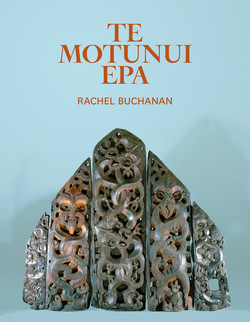
Rachel Buchanan (Taranaki, Te Ātiawa)
Bridget Williams Books
Innovative and immensely topical, Te Motunui Epa is a triumph of storytelling and a challenge to the confines of traditional historiography. Rachel Buchanan’s meticulous research and compelling writing is complemented by the very best in graphic design – from its light-catching cover to the black-bordered array of archival documents. Generous while unafraid to confront the colonial hurt at the heart of the story, this is a deceptively powerful and enduring work.
>>Your copy.
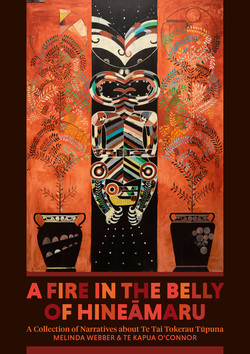
Melinda Webber (Ngāti Kahu, Ngāti Hau, Ngāti Hine, Ngāpuhi, Ngāti Whakaue) and Te Kapua O’Connor (Ngāti Kurī, Pohūtiare)
Auckland University Press
An exquisite and innovative book that uses a form of storytelling, pūrākau, to construct further stories that elucidate and challenge. It adds a layer of narrative truth to what we know about Te Tai Tokerau and, more importantly, shifts existing perceptions. It reveals the richness of knowledge in whakapapa which, especially for Te Tai Tokerau rangatahi, will spark significant personal and collective inspiration.
>>Your copy.
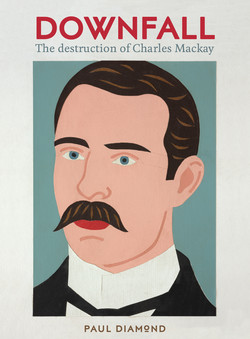
Paul Diamond (Ngāti Hauā, Te Rarawa, Ngāpuhi)
Massey University Press
This beautifully produced and generous book is a fascinating account of an extraordinary moment in small-town colonial New Zealand with its vivid line-up of characters, a revenge plot, blackmail and local Pākehā political intrigue. Alongside gripping, skilled and elegant popular historical storytelling, readers will find well-researched and closely observed insights into aspects of our national character, and our struggles with social decency.
>>Your copy.
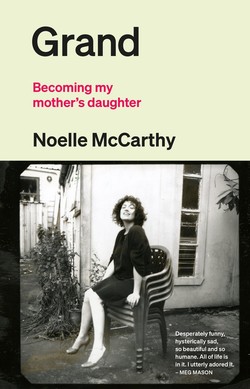
Noelle McCarthy
Penguin Random House
This memoir presents both a woman confronting her own shame and the shame of generations with visceral honesty. It offers a treatise on forgiveness and a light of hope. Noelle McCarthy’s command of language imbues readers with sight, sound, smell and taste. It is complete as an individual narrative, while the centrality of the mother-daughter relationship and the weight that loads onto the process of knowing oneself offers much to our collective emotional intelligence.
>>Your copy.
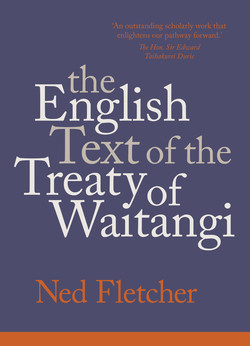
Ned Fletcher
Bridget Williams Books
Ned Fletcher’s extensively researched and meticulously constructed book provides a valuable contribution to scholarship, history and law, and makes a timely and evolved interjection into the conversations of this country. Readers are led to evidenced conclusions via Fletcher’s clear hypotheses, structural commitment to reason and thorough examination of the characters and context involved in the creation of the English text of Aotearoa’s founding document.
>>Your copy.
| >> Read all Stella's reviews. | |
 |
I’m re-reading Rat King Landlord in tabloid format complete with illustrations — it’s the Renters United! edition. Bravo, publishers Lawrence & Gibson! We are giving away a copy with every book order. Here’s my review of the paperback edition (2020): Ever wanted a crash course in Marxist theory, class structure, exploitation and capitalist advantage through property ownership, but found the reading a little too onerous? Well, then this novel is for you. Rat King Landlord, newly out of the excellent Lawrence & Gibson stable from the pen of Murdoch Stephens, is a satire that places you squarely in the continuing saga of our housing crisis — specifically the rental dilemma. Looked for a flat in Wellington lately; lived in an overpriced damp and mouldy house with strange flatmates and yet stranger landlord? — you need to look no further than here for a slice of almost-truth. Meet our flatmate, getting up early to make coffee in his haze of infatuation for Freddie, before she heads to work at the hip Broviet Brunion cafe located at the edgy end of the city, while flattie number three, Caleb, sleeps on, or whatever else he does, behind his closed door. So typical flatting life? Think again! Everyone wants to get on the property ladder, including the rats. Maligned and misunderstood, the rats are taking back the yard and the house. They are no longer content to live off your scraps while avoiding your traps. Rats have rights too! At the same time, strange posters are popping up all over the city advertising an event unlike any other — The Night of the Smooth Stones. Unauthorised and taking over billboard space owned by a corporate in cahots with the council, the posters resist being painted over or torn down. The message is oblique and the word on the street — well, on social media and in the huddled conversations of the politically leveraged hipsters — is that a revolution is about to hit the streets. Targets: property agents (loud hiss), landlords (hiss) and house owners (half-hearted small hiss). While the street is heating up, at home the temperature is rising too. The human landlord has died falling off a shonky ladder and his will results in the ownership of the house ending up in the hands (paws) of the Rat — the last being to witness him alive. Don’t even think about being animalist. As the Rat adjusts to his newfound status, learning English through texting (specifically with Caleb — the reclusive — who has an odd fascination with his Rat associate and an employer/employee relationship in due course — one that favours him over his flatmates), upgrading his shed, and making a slippery agreement to get himself into the house as a flatmate/landlord (alarm bells!), our protagonist becomes more agitated by the situation. Fire in the backyard, vigilantes on the street, pseudo-rebellion in the streets — who’s a landlord and who’s a renter? Have you got proof of your status or lack of? And the nights of rebellion just keep getting stranger. Who's behind the call to arms, and why is Freddie's boss acting weird? Rat King Landlord is a hilarious trip with a serious underbelly. |
| >> Read all Thomas's reviews. | |
 | Dust by Michael Marder (Reviewed by THOMAS} Dust: substance without form, or, rather, substance post-form, matter without identity, matter that has relinquished, or has been forced to relinquish, by abrasion perhaps, or fatigue, whatever identity it has most recently had, matter now adrift, out of place, bereft of form, bereft of nameability, other than as dust, not taking on another form, nor moving towards taking on another form, not taking on any of the set of identities that we associate with form, applying, as we do, identities to forms rather than to substance, matter that cannot be defined even as anything other than dust, a kind of dirt, but not a dirty dirt, a clean dirt, in other words a non-dirt, a self-negation, an oxymoron, a substantial nothing, an accumulation of entitilessness on the surface of an entity, a nonentity seeking to overwhelm an entity, evidence of entropy, evidence of the action of time upon everything our lives are made of, evidence that our world is contingent rather than ideal, that things slip away from under the ideas we fit to things, that ideas will always be disappointed in the actualities to which they are applied, even the relatively simple ideas that we call nouns, evidence that our ways of thinking and the ways of the world of which we think are not subject to the same laws, or to the same processes if what they are subject to are not laws, evidence that matter seeks release from time, release from form, for it is form that makes us vulnerable to time, evidence that matter above all grows tired and seeks to rest. Years ago I made notes towards what I intended to be a short book on dust, but this, fortunately for everyone, is now little more than e-dust among all the other e-dust in the world. Fortunately (in a positive sense), Michael Marder has written this interesting book, so, if you have any interest in dust, or in the universal processes that are evidenced in dust, I recommend you read it. |


