Showing posts with label Review by Stella. Show all posts

Saturday, 1 April 2023


>> Read all Stella's reviews.


And the Ocean Was Our Sky by Patrick Ness, illustrated by Rovina Cai  {Reviewed by STELLA}

“Call me Bathsheba,” are the first lines of this inventive novel mimicking another famous story.  Patrick Ness’s And the Ocean Was Our Sky is a stunning wonder of a story. In this inverse Moby-Dick, we are introduced to a pod of whales that hunt man. In this world, the sea is the right way up and our sky is the Abyss. The action takes place in and on the ocean as we travel with the whales. Our narrator Bathsheba is the Third Apprentice under the lead of Captain Alexandra — a fearless giant of a whale, a harpoon embedded in her head, survivor of numerous battles with man. When the pod come across a wrecked human ship, bodies afloat, drowned, it is difficult to tell whether this is the work of man or whale. If whale, it is messy — wasteful — the bodies haven’t been harvested for their teeth nor bone. If man, why? As they approach the ship, a hand clutching a disc protruding from the capsized hull is spied: a hand that belongs to a young man — a prisoner — called Demetrius, and he has a message about (or from) Toby Wick - the nemesis of the whales. Toby Wick, feared and hated by man and whale, is a mysterious and vicious hunter — a legend. None who have seen him live to tell the tale of who he is and the powers he can summon to win every battle. Alexandra, obsessed with overcoming Toby Wick, is determined to fulfill a prophecy — one that has been passed down through generations. The great Toby Wick will be confronted. Demetrius is kept alive under the ocean and Bathsheba is commanded to interrogate him. A relationship builds between man and whale - for centuries prejudice and hatred have reigned supreme between the species, each hunting the other, each having just cause for revenge. Yet Bathsheba is intrigued by this meeting with Demetrius, who is merely a pawn in Toby Wick’s game — not a hunter, not an enemy. As Bathsheba’s loyalty is tested, the pod swim closer to their meeting with the mythic Toby Wick. What awaits them is fearsome and surprising. And the Ocean Was Our Sky is an epic journey for Bathsheba — physically but even more so philosophically and emotionally. Her interactions with Demetrius and the encounter with Toby Wick will change her forever, and the relationship between man and whale will create a new prophecy. This mind-bending story about fear, prejudice, loyalty and legend is brilliantly and beautifully illustrated by Rovina Cai.  It’s a tale for any age much like Ness’s excellent A Monster Calls.   

>>This wonderful book is just one of the superb titles to be found in our Children's Book Sale. Browse the sale now.

Saturday, 25 March 2023


{STELLA}>> Read all Stella's reviews.


As a child, I would go to the library every Friday. It was the highlight of my week, and I managed to read my way around the shelves (some books several times). The small bookcase at home had a few treasures — my own books. And I still remember most of these titles vividly. Reading them into the small hours of the morning with my torch or making a den among the trees, hidden away with my books was my special pleasure and a secret world only I could enter. Joining my friends on the page and discovering worlds outside my own, reading books was a surprise, a wonder, company and solace. The school holidays are fast approaching, as well as the Easter break, so now is a good time to stock up for yourself, the children in your family, or to give a gift to someone who would appreciate the wonder of a new book for their special shelf. We have many beautiful and excellent children’s books in stock, and because we would like to see these books in homes, we are offering a selection at reduced prices.
Here are some picks from our sale that would captivate young readers: I would recommend Still Stuck — learning to dress oneself is hilarious fun;  The Witches of Benevento: The Secret Janara — this delightful series features stand-alone stories of history and mischief with a gaggle of curious children; the thoughtful (and stunningly illustrated) And the Ocean Was Our Sky. For excellent teen fantasy, try A Winter’s Promise. And then there are the large, beautiful, illustrated non-fiction books — hours, days, years of looking and learning — highlights: The Sky, Animalium and A World of Art to just mention a few.
Happy browsing! And let us know if you would like your purchases gift-wrapped. 

>>Browse our Children's Book Sale now.

Friday, 17 March 2023


>> Read all Stella's reviews.


Up the Mountain by Marianne Dubuc     {Reviewed by STELLA} 

Marianne Dubuc’s children’s books are delightful: wonderful stories, excellent characters, humour as well as heart; and charming illustrations, where there is always more to find on the page. You may already have The Lion and the Bird on your shelf, or gifted the excellent 'Mr Postmouse' titles. Up the Mountain is another to add to your or a child’s collection. Mrs Badger every Sunday heads outdoors and walks up the mountain. She loves walking through the fields, past the apple trees, across the streams and climbing higher and higher. To get to the top, to see the world, is for her the best place to be. On the way, she greets her friends — various animals that live on the mountain and in the trees. One day, a shy cat, Leo, is watching her. Leo thinks he is too small to climb the mountain, but, with some encouragement and help from Mrs Badger (and a few rests along the way) and a dose of curiosity about what’s at the top, he makes it. After that, every Sunday Leo joins his friend Mrs Badger, and they enjoy the wonders of the mountain, both the journey and the destination. As the days go by, Mrs Badger is the one who needs the rest and encouragement, until one day it’s just Leo venturing out and then returning to Mrs Badger’s house with stories and treasures. Eventually, Mrs Badger’s mountain becomes Leo’s mountain and the cycle of discovery and wonder continues. This is a charming story about friendship, and aging; about sharing and curiosity — a story of looking out at the world with wonder and care. This edition is translated and published by the excellent children’s press Book Island.

>>Some other Book Island titles. 

Saturday, 11 March 2023


>> Read all Stella's reviews.


Rat King Landlord by Murdoch Stephens  {Reviewed by STELLA}

I’m re-reading Rat King Landlord in tabloid format complete with illustrations — it’s the Renters United! edition. Bravo, publishers Lawrence & Gibson! We are giving away a copy with every book order. 

Here’s my review of the paperback edition (2020):

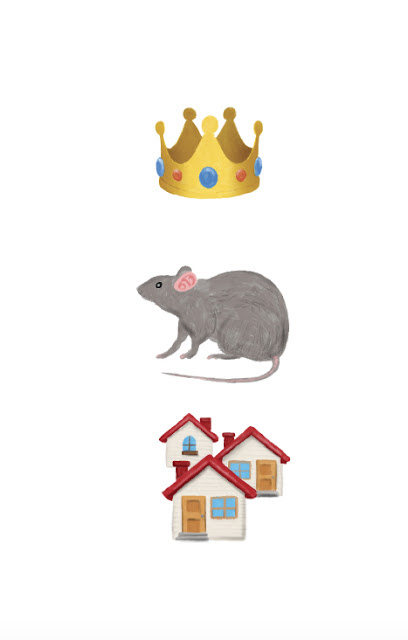
Ever wanted a crash course in Marxist theory, class structure, exploitation and capitalist advantage through property ownership, but found the reading a little too onerous? Well, then this novel is for you. Rat King Landlord, newly out of the excellent Lawrence & Gibson stable from the pen of Murdoch Stephens, is a satire that places you squarely in the continuing saga of our housing crisis — specifically the rental dilemma. Looked for a flat in Wellington lately; lived in an overpriced damp and mouldy house with strange flatmates and yet stranger landlord? — you need to look no further than here for a slice of almost-truth. Meet our flatmate, getting up early to make coffee in his haze of infatuation for Freddie, before she heads to work at the hip Broviet Brunion cafe located at the edgy end of the city, while flattie number three, Caleb, sleeps on, or whatever else he does, behind his closed door. So typical flatting life? Think again! Everyone wants to get on the property ladder, including the rats. Maligned and misunderstood, the rats are taking back the yard and the house. They are no longer content to live off your scraps while avoiding your traps. Rats have rights too! At the same time, strange posters are popping up all over the city advertising an event unlike any other — The Night of the Smooth Stones. Unauthorised and taking over billboard space owned by a corporate in cahots with the council, the posters resist being painted over or torn down. The message is oblique and the word on the street — well, on social media and in the huddled conversations of the politically leveraged hipsters — is that a revolution is about to hit the streets. Targets: property agents (loud hiss), landlords (hiss) and house owners (half-hearted small hiss). While the street is heating up, at home the temperature is rising too. The human landlord has died falling off a shonky ladder and his will results in the ownership of the house ending up in the hands (paws) of the Rat — the last being to witness him alive. Don’t even think about being animalist. As the Rat adjusts to his newfound status, learning English through texting (specifically with Caleb — the reclusive — who has an odd fascination with his Rat associate and an employer/employee relationship in due course — one that favours him over his flatmates), upgrading his shed, and making a slippery agreement to get himself into the house as a flatmate/landlord (alarm bells!), our protagonist becomes more agitated by the situation. Fire in the backyard, vigilantes on the street, pseudo-rebellion in the streets — who’s a landlord and who’s a renter? Have you got proof of your status or lack of? And the nights of rebellion just keep getting stranger. Who's behind the call to arms, and why is Freddie's boss acting weird? Rat King Landlord is a hilarious trip with a serious underbelly. Shitty houses, rip-off rents, exploitative agencies and landlords funded by the structure of the capitalist system fueling the beast we call the housing market. Satisfying satire — mad, fast-paced and audacious. 


Saturday, 4 March 2023


>> Read all Stella's reviews.


Between the Flags by Rachel Fenton  {Reviewed by STELLA}
A girl, a drowning, a rescue, a comic. Rachel Fenton’s teen novel explores the difficult territory of trauma with tenderness, humour, and humility. She cleverly leads you into what seems to be a story about striving, peer pressure, competitive sports, and being a teenager in today’s world which presents a plethora of ‘big issues’ to young people (climate change, racism, class, body image). And it is all these things, but it is at its core a gripping and emotional observation of grief and the many faces this can wear. At first, you are unaware that the main character is carrying or, more precisely, hiding a burden that is too big to be named. Mandy is a member of the Surf Lifesavers' club at Soldier Tree Bay, North Shore, and the book begins with her, face down in the sand, one of six other fourteen-year-olds waiting to compete in the race for the flag. Here you are in Mandy’s head, having the action described in blow-by-blow picture frames. A perfect comic strip in the making. This is disconcerting and intriguing, visually (through the text) pulling you into this place, this moment. It also, subtly, tells you something about Mandy. She has this coping mechanism for a reason. But what won’t be revealed for quite a few chapters. She’s an outsider, partly pushed away by the other girls, partly holding herself separate. At school she’s stopped speaking, ostracising herself further, and she’s falling behind, and not through a lack of ability. Casey, her little brother, loves her stories and wants to see what she’s drawing, but he’s not always around. And her big brother, Dan, has long flown the coop. Mandy’s loneliness drives her further into herself. And to make it worse, it looks like her Mum and Dad are breaking up. She’s angry with both of them. And she’s fed up with the nasty Jen and her friends, and the boys, especially Oliver, who are always making fun of her. Why couldn’t she be more like Mako, instead of nicknamed Orca? Seeing the psychologist helps, but the turning point is when she accidentally hands in her comic instead of her English essay. Mako may be the comic book hero but Mandy Malham is the unforgettable character of this novel as she shows us how we do and don’t cope with difficult situations and how we can overcome trauma and move forward. Between the Flags is a powerful, affecting novel with a comic strip at its centre.

Saturday, 25 February 2023


>> Read all Stella's reviews.


Scary Monsters by Michelle de Kretser  {Reviewed by STELLA}

Scary Monsters is a novel of two distinct parts — two novellas — where you choose which story you read first — Lili's or Lyle's. I decided on chronological order. Lili’s story is set in Paris in the 1980s, and Lyle’s in a near-future Australia. 
If you’ve done an OE to Europe you will immediately step into Lili’s shoes. She’s teaching for a short time in Paris, on her way to Oxford, living at the top (all those stairs) of an apartment building — not charming — in a cold and small room and probably paying too much for the privilege. Definitely paying too much, according to her more sophisticated artist friend, Minna. As Lili, Minna and her boyfriend, Nick, gravitate around each other, the world with all its thorny issues circles them. The newspapers are full of the Yorkshire Ripper case and the police are out on the streets, picking up illegal migrants from North Africa. When the police raid their neighbourhood, Lili is always asked for her ID, while Minna never is. Privilege comes in a fair-skinned box. Lili, an Asian Australian, is used to feeling othered, but you get the distinct impression she hoped to escape some of this prejudice by being among like-minded travellers. Despite being part of a diverse, freewheeling and optimistic group of young people, it’s Lili who is grappling with, and noticing, overt and covert racism, dealing with her creepy downstairs neighbour and sexist behaviour from her wider social group. Aiming for sophistication — she wants to be a modern-day Simone de Beauvoir — but falling for Minna and Nick can only lead to disorientation. This abruptly ends when Minna takes off. There are all sorts of little power plays here, as well as the charge for a bright new future. Lili and her friends celebrate the election of France’s first socialist president. Hope is in the air, but on the street does anything change?
And then switch to Lyle. Lyle’s a middle-aged Melburnian who works in Evaluations at the Department of Security. He lives in the outer outer suburb on Spumante Court with his ambitious corporate wife, Chanel, and his ageing mother, Ivy (who migrated from Sri Lanka when Lyle was a child). They have two adult children: Sydney — who has almost finished his PhD but he’s gone off-grid and is proving a disappointment — and Mel, who’s moved to London to study architecture (an expensive exercise for her parents) but whose ultimate focus is her social media profile. They’ve all survived the Pandemic and the others that followed, and are fortunate — though not as wealthy as some of their fellow corporate Australians — to live in an air-conditioned house out of the fire zones. In other words, this is good for those that can but crap for those who can’t, and ultimately horrendous. As are this family. While Lyle and Chanel spend all their time being as Australian as possible and then more so, Ivy is delving back into her past. Chanel’s pumping for the new apartment and Lyle is torn between the easy life of agreeing and his care for his ageing mother, complex feelings that are foreign to him. Add to this the need to keep yourself as neutral as possible and avoid suspicion from either the securities services or from his wife, you have the distinct impression that Lyle is walking on hot bricks. Navigating this dog-eat-dog world which hates migrants and offers no empathy, Lyle is starting to crack. But can a man with so many layers of veneer crack at all or is he lost to himself? 
De Kretser’s playful and intelligent novel pitches you in and throws you out — it’s both absorbing and startling in structure — and will leave you to ask and answer the question: Who are the scary monsters? The prejudices that bind us to a situation? Or us, humans, ourselves? You choose.

Saturday, 18 February 2023


>> Read all Stella's reviews.


Pure Colour by Sheila Heti {Reviewed by STELLA}

Curious and more curious, in Pure Colour Shelia Heti takes us further than she has before. If you’re a Heti fan, you will be used to her turn of phrase and oblique references as well as her wry absurdist touch. In her earlier novels, How Should A Person Be? Heti gave us a wild and wonderful exploration of a young person dipping her feet in the world, with all the bravado you would expect as well as the doubt; while Motherhood explored that moment in life when you ask the big questions about art, relationships and parenthood. In Pure Colour, Heti makes another jump and then plunges sideways. It’s more existential and probing, and flat bang in the middle the main character becomes a leaf. Seriously. Mira leaves home for college and studies art criticism, she works in a lamp shop and has fallen for the woman who works in the bookshop. She’s piecing together information and coming up with her own interpretations. People are either birds, fish or bears and respond according. Birds look down and see the world from above in an abstract fashion, thinking their way around it. Fish, being one of many, is more concerned with the collective whole, while Bear is particularly loyal to only a few or even one, and those in their ambit are completely secure in the Bear’s love. God’s got a lot to answer for in what Mira sees as God’s 'first draft', and there are some hilarious interludes about what God thinks/does: God “doesn’t want the criticism of the most dynamic parts of culture coming from someone in the middle of life… God doesn’t care what you think about a band”, and when Mira muses on why God didn’t make every face the same “A person can waste their whole life, without even meaning to, all because another person has a really great face.” The first draft is also real and scary — it’s too hot and much of life is pointless. Mira wanders through her life as though she is sleepwalking, and when her father dies she is pulled into a vortex of grief and an intense sense of her life as a leaf. She does emerge from the leaf, but life has moved on. Annie, the woman she is obsessed with, has moved on, the lamp store has gone and art critics who have been trained on paper are no longer as valid. She’s become one of the precariat and when she finally decides to up sticks and track down Annie, it’s too late. It was always too late — it was a mistake. Where is Shelia Heti going with this? Is she gently nudging us towards the inevitable second draft with Mira as our not-so-great-but-okay guide or is she simply playing another game in abstraction? Mira wonders “why she spent so much of her life… looking at websites, when just outside the window there was a sky”. Maybe Heti felt the same way. Pure Colour is intriguing and full of ideas that trigger more ideas, and you can decide whether you’re a bird, fish or bear if you play along.


Saturday, 11 February 2023


>> Read all Stella's reviews.


Harrow by Joy Williams   {Reviewed by STELLA}
How do you get geriatric eco-terrorists into a book and make it sound believable, ironic, outrageous, and compelling? When your main protagonist is a ten-year-old with a jaundiced view of the world, but also a surprising innocence, how are we convinced that this could be a future reality? Joy Williams makes us believe because she’s a genius. Harrow, her recent novel, is a sideways dystopia, very strange and difficult to follow — not because it’s pretentious or overly literary but because the end of the world (as we know it) will be confusing, blindingly obvious, and surprisingly full of unexpected consequences. As you read this review, you will notice the inconsistencies — how can it be this, but also that? How can you have a 10-year-old protagonist surviving crossing America alone but somehow be okay —  picked up and harnessed by the goodwill of others — even if this is fleeting? How can, and why, do terminally ill geriatrics who can’t seem to get along (there are plenty of petty squabbles at the abandoned conference centre/resort) have a plan (of destruction — we will get to that later) that forces them to be bound together by a mutual ideology? Well, it works because Joy Williams is a brilliant writer and she’s angry, even as she darkly exploits us humans and uses our foibles to create characters who will stick on you. And that’s how it is — Harrow gets under your skin and just when you’re confused the lightbulb clicks on and it’s so bright, you hope you’ll be in the dark again. Darkness may be preferable to the future. This world is destructive — or was. Williams layers out all the issues under this veneer of fictional telling. There’s consumption, capitalism (hyper), deforestation, extinction (there are no more animals), and, really, just collapse. The world has given up and humans are swaddled by what’s left — entertainment and distraction. The rebellion has been overcome, aside from the geriatrics with their inconsequential acts — small violences do not a change make. Especially when the worst excesses of capitalism and environmental destruction have rebooted full throttle. And this is the world that Khristen at ten has the job of navigating. After her boarding school closes and the rich kids have been collected in their SUVs and other vehicles of a survival nature, the teachers take off and deposit Khristen at the train station. It’s not too much later that the end of the line approaches, i.e. the trains stop and K has to walk on in search of her mother, who she last heard (a few years back) was headed to the aforementioned resort. No surprise, she doesn’t find her there. Yet, the matriarch of this outfit takes her in for a bit and we get a front-row seat as witness to the shenanigans of the motley crew, as well as a paying guest, a mother with her precocious 10-year-old son, who’s determined to be a judge — he spends his days quoting legal jargon. They have their own side hustle story which involves murder, family dispute, alcohol, and expectation. Yet they are on holiday, so standing in the putrid lake, known as Big Girl, fishing is how Khristen first encounters her future judge. 

Saturday, 4 February 2023


STELLA>> Read all Stella's reviews.


The Roads to Sata: A 2000-mile walk through Japan by Alan Booth  {Reviewed by STELLA}

Booth walked the length of mainland Japan from its most northern tip Cape Soya to the southern Cape Sata in 1977. After living in Japan for seven years, in Tokyo, initially, to study theatre, and then writing for various newspapers and magazines, he felt he wanted to better understand the country he lived in, and had married into. First published in 1985, recently reissued, The Roads to Sata is a wonderful account of the ordinary and surprising. Eloquent and witty, Booth is keenly observant of the landscape, the culture and the people. His descriptions are vivid and honest, revealing the best, worst and curious of this time. 1970s Japan is moving fast—new highways, big industry, expanding cities—but retains a slower pace in the byways, on the old tracks, and in the villages that Booth passes through. Within a few pages, you will be hooked. By the landscape descriptions: “The mist lay so thick on the hills that it hid them, and the rain continued to flatten the sea.” “In the silent gardens of the old houses in Kakunodate the tops of the stone lanterns are lumpy and green, the stone wells drip with dark water that congeal in the summer heat. The moss is black-green and thick as a poultice.” By his hilarious and at times frustrating encounters: So many offers of a ride to the gaijin who wants to walk! “On the road into the city I was twice greeted in English. At a drive-in a young truck driver jumped out of his cab and said, ‘You, foot, yes, and good for walk, but sun day—rain day, oh, Jesus Christ!’ Further on, a businessman stopped his car to offer me a lift and, clearly, puzzled by my refusal, said, ‘Then what mode of transportation are you embarking?’ Japanese slipped out: ’Aruki desu.’ ‘Aruki?’ 'Aruki’. A digestive pause. ‘Do you mean to intend that you have pedestrianised?’ I nodded. He drove away, shaking his head.” By Booth’s observations of culture, both ancient and modern, of history and folklore: “But at the village of Kanagawa that night they were dancing. Four red demons with clubs made of baseball bats, a snow queen covered in silver cooking foil, a black nylon crow, three coal miners with lamps, a robot with a body of cardboard boxes—all danced in the small school playground, round the car whose battery powered the microphone into which a bent old woman was singing. Her only accompaniment was one taiko drum and the scattered clapping of the dancers.” With laugh out loud passages, his encounters with oddities on the road and in the ryokans (tradition inns) he stays in, as well as haunting and searingly honest moments as he meets ordinary people who reveal their personal histories, Booth relates his conversations with humility and insight. All this taken together with both the grind and beauty of walking for 128 days over 3300 km, makes The Roads to Sata an illuminating travelogue, vivid and rich—and all the more so for Alan Booth’s turns of phrase, superb language and witty style.

Saturday, 28 January 2023


>> Read all Stella's reviews.


The Ape Star by Frida Nilsson   {Reviewed by STELLA}
Would you like a gorilla to adopt you? Would you like to live in a junkyard in the middle of an abandoned industrial area? And how does a hammock slung up behind a wall suit you for a new bedroom? If you answered yes to all three questions maybe you would like to change places with Jonna.
There are 51 children at the orphanage and the inspector is due. He’ll be counting heads and there better be 50 of them. (The inspector, Tord Fjordmark, is also on the local Council and he’s  keen to get his hands on the junkyard for a money-making venture (more on this later!) and Gorilla is holding them up.) The manager, Gerd, is in a flap. The drive is raked, the sheets are spotless, the gardens perfect and the floor shiny, but she’s one too many. Just as she’s berating Jonna, again, for her dirty hands, a solution arrives in the nick of time. Luckily a car (if you could call it that) speeds in. Unluckily it undoes the meticulous gravel work. Luckily the driver wishes to adopt. Unluckily for Jonna, she’s Gorilla’s choice. Everyone is gobsmacked, and poor Jonna, despite her desire to leave Renfanan and her belief that no one would ever choose her, wishes she wasn’t now rushing headlong down the road in a vehicle pieced together out of scrap, driven outrageously by a Gorilla in baggy pants and big boots. She has the uncomfortable feeling that she might be eaten. (Warning: don’t always believe your  fellow orphans.)
In fact, the only dinner on the table when they get home is fried egg sandwiches and they are pretty good. Gorilla is odd though, and Jonna makes a move as soon as she can to run away. It fails, and then she’s under Gorilla’s watchful eye and has to work out in the yard. After a few weeks, Jonna starts to like the scrap yard, the customers that come by for a bargain, and grows accustomed to Gorilla’s ways, although going to town isn’t high on Jonna’s list — it's embarrassing! She’s not surprised that Gorilla attracts stares and dismay. How could she not? There’s a silver lining though — the second-hand bookshop. Gorilla loves her books, and Jonna will learn to enjoy them too. Jonna’s getting into the groove of Gorilla’s lifestyle and coming up with ideas to make the scrap yards more profitable - some of them not exactly honest. As she gets to know Gorilla, she realises that this is the best kind of family one can have: inventive, imaginative, and caring. Yet life isn’t fair. Tord wants his land and will play dirty to get it. How will Gorilla keep the land and keep Jonna too? And are there better dreams to come if you can find the Ape Star? Read this and you might just find out. 

Saturday, 21 January 2023


>> Read all Stella's reviews.


Annual 3: A miscellany from Aotearoa New Zealand edited by Kate De Goldi and Susan Paris  {Reviewed by STELLA}
Wrap your eyes around this! The third Annual is a treasure trove of hilarious tales, heartfelt memories, captivating comic strips, and fascinating facts. Not to mention evocations to play scrabble or knit yourself a brain hat, foraging instructions complete with recipes, and how to be a young environmentalist. So it’s still the holidays and the book stack has been depleted. The favourites have been read several times and it’s too hot outside. Maybe, you’re off to spend a few days with your grandparents — they will enjoy dipping into this with you. For me, Kate De Goldi's and Susan Price’s Annuals remind me of school holidays at my Nana and Grandad’s, sifting through the not-so-interesting Bibles to find the Girl’s Own Annuals and the old National Geographics. While these were quaint when even I was a child, they are doubly so now. Annual 3 is anything but quaint. It’s adventurous and thoughtful — a great mix of stuff from some of our best authors and illustrators. Gregory O’Brien and Eve Armstrong discuss art, Art Sang makes a comic strip of Maurice Gee’s 'The Champion', and there’s a diary entry for the campaign (ambition) to be class rep. There are doll stories of very different natures, one about belonging by Henrietta Bollinger, and the other rather more sinister from Airini Beautrais. Austin Milne introduces us to a girl, Holly, who would rather (can’t help but) draw ornate ‘plus’ signs than do equations; dotted throughout is Old Dingus — the ‘uptight’ dad (parents read this as exasperated); and if you are hanging out with friends or siblings you could try out the play, read poetry or board game away with Camp Kuku or practice your te reo with Ben Brown’s crossword puzzle. Aimed at 9—14-year-olds, there is plenty of food here for a hungry mind. If you’re lucky you might rustle up a lunch of kawakawa frittata and maybe Grisela Clarkson’s lovingly illustrated 'Big Spread'. You choose! Daily delights abound in this wonderful miscellany. 

Saturday, 14 January 2023


>> Read all Stella's reviews.


Little by Edward Carey
If you are after an absorbing, inventive, quirky and absolutely charming novel, read Edward Carey’s Little. Set predominantly in France, meet its history and its most famous Parisians, not to forget the Court of Versailles, through the wax heads cast by Doctor Curtius and the young Marie Grosholtz. Marie, nicknamed Little due to her diminutive size and the young age at which she is apprenticed to Curtius after her mother’s untimely death, is an unlikely employee at the age of six to the reclusive anatomist, but she proves to be exactly the right person for the development of his wax work. Obsessed with producing perfect heads, he needs someone who not only understands his passion but someone who has the skills to draw, assist, mix plaster, pour moulds and thread in hair — a time-consuming and precise job. Marie Grosholz is the perfect assistant. With Carey’s excellent illustrations, wonderful and crazy characters (the frightening Widow Picot, the nervous tick of a young man, her son Edmond, the pious, yet rather foolish Princess Elisabeth, a fanciful portrayal of Loius XVI, and the brutal dog-boy-man of the elaborate name, Jacques Beauvisage), and delicious writing in the voice of our plucky heroine Little, you will be delighted. It’s France, gutter and luxury, charm and chaos, from the celebrity status of Curtius’s Cabinet of Curiosities (murderers rubbing shoulders with wealthier rogues) at The Monkey House, to the macabre fascination for the royal court. From poverty to riches to revolution and disaster, Marie Grosholtz will dance a daring zigzag of ill wind, good luck and careful advantage, not to mention some chance, to survive (if sleeping in a windowless room or a largish cupboard passes for living) and eventually prosper. She will find love, and lose it; she will be a favourite and then dismissed; she will overcome only to be pushed down in the muck, imprisoned and then released. Her talent for waxwork saves her in the end. Wonderful.


Saturday, 7 January 2023


>> Read all Stella's reviews.


The Marriage Portrait by Maggie O'Farrell  {Reviewed by STELLA}

Based on a poem, based on a portrait of a young woman forced into a courtly marriage, Maggie O’Farrell’s novel The Marriage Portrait is arresting, terrifying, and lush. It’s an amalgam of historical fact, layered analysis, playful imaginings, and rich observations. Like her earlier novel Hamnet, she breathes life into things we may already know, but from an angle we don’t expect. The young woman in question is Lucrezia de Medici, who married the Duke of Ferrara in 1558. She died in 1560, and it was rumoured that she had been poisoned by her husband. Hamnet took the reader hook, line, and sinker. It was vivid and compelling from start to finish. The Marriage Portrait is just as inventive, and convincing, but asks us to delve close to Lucrezia’s experience, which is at times grueling (yet we love her for her passion, quick intelligence, ability to dream and comprehend beauty in both the ordinary and extraordinary), and we, as the reader, ‘see’ the machinations of the court as well as the Duke’s subterfuge all too clearly, while the girl/young woman which Lucrezia is cannot ever hope to understand. Despite her experience as a daughter of a powerful count and alive to the necessities of the arranged political marriage, her naivety is wrapped in her desire to avoid such manipulations and to see the world as a place of beauty and surprise. O’Farrell’s Lucrezia is a free spirit (one that will be broken) — as a child in the Medici household her eccentricities are tolerated and her love for art is allowed to flourish. She is in a privileged position and only the sudden death of her elder sister turns the tables on her fortunes. The Duke is beguiled by her beauty, and possibly her simmering wildness — something that a powerful man may be drawn to as well as wish to control. For this is a novel about control — control of a woman; the need for a legacy (for to have no issue is a problem for the Duke with plots all about him); control of his own desires with his loyal and cruel Leonello; and control of his temper, which fluctuates between stifling admiration and a dangerously quiet force. O’Farrell introduces us to Lucrezia as she is suffering and in fever. She has ridden with Alfonso, the Duke, to a lonely and remote fortress. She is sick and distressed, but awake to her death. Yet she rages against it all, summoning up the strength to meet the painter who has ridden furiously after them in demand of his coin and a portrait under his arm. We will not meet this scene of a beaten-down Lucrezia looking upon her former more robust self until the closing chapters. From these devastating opening pages, O’Farrell takes us back to the home of her childhood, slipping unnoticed in back passages, lost in drawing and painting, tutored alongside her brothers, and fascinated by her father’s animal menagerie. A child who did not fear the tiger, who walked the ramparts, and was always where maybe she shouldn’t be — yet loved in all her oddity and admired for her skill. Married life changes this — expectations grow, and while Alfonso pours attention on her, there is a tension bristling not far from the surface. Using lush language and rich descriptions of cloth and jewels, of gardens and forests, of the courts with their dance and song, O’Farrell paints us her own canvas of both beauty and its flipside, an ugliness that even an innocent young woman can not be impervious to. As the bonds tighten and strangulation through illness or at the hands of the handsome Alfonso seems certain, nothing is certain and yet a fevered Lucrezia may find a way out of her dilemma — an escape that releases her from her contract, that makes the marriage portrait a distant memory.

Saturday, 17 December 2022


>> Read all Stella's reviews.


[Not a review by STELLA.]

Anticipation is a good thing. I’m currently reading Maggie O’Farrell’s The Marriage Portrait, but you’ll have to wait for the review as I’m still mid-stride. When the craziness of the next week is over, I’ll be looking to my stack of books — the ones I didn’t quite get to in 2022 — as well as some fresh tomes.
On the pile and waiting: 
Roni Horn’s Island Zombie: Iceland writings. This was a gift back in March — it’s too good to rush, so hence it’s been waiting for a few days of uninterrupted reading.

Anne Carson’s H of H Playbook. Ditto.
Books I’ve had my eye on and will be adding to my pile:
Stories of the Sahara by Sanmao
, and The Mirror and The Palette by Jennifer Higgie.
And fiction! There’s always so many to choose from, but here are two that will make good summer companions: Harrow by Joy Williams and
 Dark Earth by Rebecca Stott.
If, like many, you found yourself bereft of reading time this year, here are some titles that you might have missed and should be finding their way to your reading pile tout suite:

The amazing Ali Smith — read anything and everything by her! — Companion Piece is her latest. Jennifer Egan’s The Candy House — so on-target, Worn: A people's history of clothing by Sofi Thanhauser — is fascinating, and Olga Ravn's The Employees: A workplace novel of the 22nd century — inventive and thought-provoking.


Saturday, 10 December 2022


>> Read all Stella's reviews.


Looking, Writing, Reading, Looking edited by Georgi Gospodinov   {Reviewed by STELLA} 


The place where words and art intersect is always interesting. In this collection, writers take on contemporary works at the Louisiana Museum of Modern Art in Denmark, and the results are various and wonderfully unexpected. These are not theory-heavy nor filled with art speak. They are critiques of a literary nature — personal responses through the observant eyes of each writer: the looking (and the looking again); and the thoughts, memories or ideas which spring from these observations. Here you will find writers you have read, others you have heard of (but maybe not encountered their writings) and some that haven’t crossed your radar yet. There are memoir pieces, poems, more direct descriptions and interpretations, fictional interviews or reportage, and creative short stories. The writing sometimes takes us further into the particular artwork. Other pieces edge us towards a deeper understanding of elements springing from the work, with cascading ideas that will lead you to future interpretations. Others reveal more about the writer, taking the reader into a more internal world with an experience revealed. Experiences that sit alongside their chosen artwork tell us something about them as well as the power of art to spark this exploration. What draws us to a particular artwork? Why does one painting or sculpture capture us — ask us to stop, to look, to read — while another will hardly leave an imprint: we will see, but merely glide by? Writers are keen observers and this writer/art project at the gallery is refreshing as it does not require us to ‘know’ or have some insider information about the objects, which are interacted with rather than described. Each artwork is photographed and sits alongside the written text, and each author has a portrait taken, in the same place, by the water’s edge, revealing something quite special about each. All 26 writers had been attendees at the museum’s writers’ festival. In this collection, Anne Carson cleverly pulls together an unofficial transcript (with notes) of contemporary philosophers on Ragnar Kjartansson’s 'Me and My Mother'. Colm Toibin explores 'La Double Face' of Asger Jorn with his assured and thoughtful considerations of all that can be held in a face — vulnerability, ambiguity and energy. Domenico Starnone introduces us to 'Museo del Prado 5' by photographer Thomas Struth, expounding on the meta meta nature of this painting/photography/writing exposure. Yoko Tawada quietly, in her storytelling style, asks us to contemplate the role of our lives while viewing Nobuo Sekine’s 'Phases of Nothingness'. Guadalupe Nettel reveals how the 'On Stone Sculptures' by Henry Heerup call to her with a delightful short essay that perfectly embraces the artist’s relationship with stone. And Delphine de Vigan, as she reencounters Louise Bourgeois’s 'Spider Couple', reminds us that our relationship with artworks change, our interpretations are sometimes unintentionally faulty (driven by a desire for an artwork to speak to us of our own experience), and the artist’s intention is not necessarily at the forefront of our understanding — and that is all fine! All the contributions have something to recommend them and there are sharp as well as emotional responses. An interesting collection (handsomely produced), worth having on your shelf for the writing and the selected artworks.