Friday, 15 September 2017


NEW RELEASES
What will you read next?
Darker With the Lights On by David Hayden           $40
Beautifully written stories, every line considered and catching the reader in an onward rush to the very edge of literary possibility. 
"It's an open secret that David Hayden is one of the most interesting short story writers around. Why it's taken this long for his first collection to be published is beyond me but I, along with anyone with even the vaguest interest in looking at modernism anew, will be queuing up for a copy." - Eimear McBride 
"Quietly innovative, subtle of tone, full of feeling - this is a superb debut." - Kevin Barry
https://volume.circlesoft.net/p/food-drink-sweet--3?barcode=9781785031144
Sweet by Yotam Ottolenghi and Helen Goh          $65
What could be better than a new cookbook entirely devoted to baking and desserts from the author of several of the best cookbooks on your shelves? Ottolenghi and his long-time collaborator Goh present recipes that combine flavours and ingredients in interesting ways and yet are achievable, either easily or with a small amount of pleasurable effort. Delicious, beautifully presented and absolutely recommended for everyone from children to accomplished bakers.
>> Would you eat this?

Baby by Annaleese Jochems           $30
"Sultry, sinister, hilarious and demented, Baby blazes with intelligence and murderous black humour. Heavenly Creatures for a new generation." – Eleanor Catton
"Patricia Highsmith meets reality TV in this compelling debut. Jochems nudges up the tension until we can’t bear to look – and can’t bear to look away: thrilling, dangerous and deliciously funny." – Catherine Chidgey 
"This funny, sexy, unnerving novel challenges received ideas and delivers jolts of pleasure and disquiet throughout. Jochems, like her extraordinary creation Cynthia, is a force to be reckoned with." –Emily Perkins
>> "The best novel of 2017." - Spinoff
I Am, I Am, I Am: Seventeen brushes with death by Maggie O'Farrell        $35
Death could come to us at any time, and in a range of guises. O'Farrell builds the memoir around the times in her life when death was nearer than at other times: childhood illness, teenage misadventure, mismanaged labour. Does the proximity of death make us act differently? 
"O'Farrell is a breathtakingly good writer, and brings all her elegance and poise as a novelist to the story of her own life." - Guardian 
Hey Willy, See the Pyramids by Maira Kalman         $32
A classic of silliness and imagination, Kalman's wonderfully quirky illustrations accompany stories that foreground the creative workings of a child's mind. 


Annual 2 edited by Kate De Goldi and Susan Paris         $40
Everything that was ever good about the children's annuals of the past is good about the annuals of the present compiled by Kate De Goldi and Susan Price to include the best New Zealand writing and illustration for children. Last year's Annual was hugely popular, and this year's will be, too. 


Companions by Christina Hesselholdt      $45
Camilla, Charles, Alma, Edward, Alwilda and Kristian are a circle of friends hurtling through mid-life. Structured as a series of monologues jumping from one friend to the next, Companions follows their loves, ambitions, pains and anxieties as they age, fall sick, have affairs, grieve, host dinner parties and move between the Lake District, Berlin, Lisbon, Belgrade, Mozambique, New York and, their homeland, Denmark. 
>> Read an excerpt.  


The Ice Sea Pirates by Frida Nilsson      $25
When 10-year-old Siri's younger sister is captured by the Captain Whitehead's Ice Sea Pirates, she must face wolves, frozen landscapes and treacherous sailors and mermaids as she journeys through the north to rescue her. Completely involving. 
Taduno's Song by Odafe Atogun           $28
The day a stained brown envelope arrives from Taduno's homeland, he knows that the time has come to return from exile. Arriving full of trepidation, the musician discovers that his community no longer recognises him, believing that Taduno is dead. His girlfriend Lela has disappeared, taken away by government agents. As he wanders through his house in search of clues, he realises that any traces of his old life have been erased. All that was left of his life and himself are memories. But Taduno finds a new purpose: to unravel the mystery of his lost life and to find his lost love. From the author of Wake Me When I'm Gone
https://volume.circlesoft.net/p/politics-antifa-the-anti-fascist-handbook?barcode=9781612197036
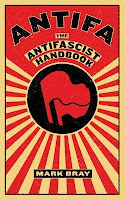
Antifa: The antifascist handbook by Mark Bray        $35
Traces the history of movements to counteract far-right, authoritarian and white supremacist movements from their roots in 1920s Europe to the grass-roots response to the fascist populism of Trump-era USA. The book also is a guide to recognizing and counteracting reactionary and racist invective and behaviour wherever it is found.
Mysteries of the Quantum Universe by Thibault Damour and Mathieu Burniat        $48
Quantum physics gets its graphic-novel explication as Bob and his dog Rick have crepes with Max Planck, chat with Einstein about atoms and hang out, uncertainly, with Heisenberg in Heligoland. 
"Billed as 'Tintin meets Brian Cox', the book was created by theoretical physicist Thibault Damour and illustrator Mathieu Burniat so it's as scientifically accurate as it is beautiful." - BBC Focus 


Colour by Marion Deuchars             $45
What makes a colour work? What do colours mean to artists or cultures? Why does grey make a colour stand out? What colour are the oceans? Why is the yellow of lemons something to treasure? Award-winning illustrator Marion Deuchars takes us on a journey through colour, showing how its language is at the centre of how we think and feel about the world.


What It Means When a Man Falls from the Sky by Lesley Nneka Arimah      $35
"When Enebeli Okwara sent his girl out in the world, he did not know what the world did to daughters." Twelve stories set in Nigeria and the US, each concerning the way women and girls are treated, mixing realism and magic realism to vary the texture. 
"One of the pleasures of reading Lesley Nneka Arimah’s  collection is the feeling of being thrown off balance: not knowing where this playful and adventurous new talent will take you next. " - Guardian
Co-Art: Artists on Creative Collaboration by Ellen Mara de Wachter       $60
An artist working with another artist or with other artists can, despite the difficulties, be creatively exciting. 25 duos or collectives share their perspectives on working together. 
"The notion that the best art can only come from a single artist working alone is something of a myth."—Linda Yablonsky
"Collaboration isn’t, for most artists, a recipe for making masterpieces but rather a way of breaking habits –and new ground."—Griselda Murray Brown
Up the River: Explore and discover New Zealand's rivers, lakes and wetlands by Gillian Chandler and Ned Barraud       $20/$30
The 'Explore and Discover' series is the perfect way for children to learn about New Zealand wildlife. 
>> Also new from Ned Barraud: Watch Out for the Weka!


As Kingfishers Catch Fire: Books and birds by Alex Preston and Neil Gower      $60
Ornithologists usually spend their time looking into the trees or out onto the water, but literary bird-spotter Alex Preston abandoned the outside world for the world of books. Here he surveys the incidence of avian specimens in literature: what do their wings carry into a reader's mind? Beautifully illustrated by Neil Gower. 
"Both a joyful and a wondrous book, one that successfully captures the otherness of birds, while celebrating our yearning to transcend our lot, our yearning to touch the unknowable." - Guardian
Precarity: Uncertain, insecure and unequal lives in Aotearoa New Zealand edited by Shiloh Groot et al                             $40
The precariat is a class-in-the-making. The precariat are our fellow citizens (if they are not us) for whom poverty, age, disability, homelessness, estrangement, mental or physical illness or estrangement from communities and cultures have resulted in uncertainty, dependency, powerlessness, perilousness and insufficiency. The precariat is very much an outcome of the dismantling of the welfare state and the violation of unwritten social contracts by the privileged. 
Floods Another Chamber by James Brown        $25
"Those who cannot remember the pasta / are condemned to reheat it."
Brown's sixth collection. 
I Was Told to Come Alone: My journey behind the lines of Jihad by Souad Mekhennet     $38
Why do young Muslim women and men reject their parents' dreams of economic betterment and personal freedom in favour of radical rebellion in the Middle East? Rooted in her own life story, Mekhennet reveals the Muslim immigrant roots of western Jihad. 


This Is How We Do It: One day in the lives of seven kids from around the world by Matt Lamothe       $38
Beautifully drawn comparisons between the everyday lives of seven actual children - how are they different and how are they the same? 

Ghosts of the Tsunami: Death and life in Japan's disaster zone by Richard Lloyd Parry         $38
In 2011 over 18000 people were killed by the tsunami that hit the coast of Japan following a Richter 9.1 earthquake. The trauma impacted deeply in the minds of the survivors and has manifested in several surprising ways, including the experience of 'ghosts'. Parry looks at the psychological and cultural wounds of the disaster. 
"A remarkable and deeply moving book - describing in plain and perfect prose the almost unimaginable devastation and tragedy of the Japanese tsunami." - Henry Marsh
The Legendary Cuisine of Persia by Margaret Shaida         $65
At last, a new edition of this classic book. 
"Margaret Shaida's exquisite collection of recipes and fascinating information on the background and history of the food is both a joy and precious contribution to the world of gastronomy." - Claudia Roden
Ornament is Crime: Modernist architecture by Matt Gibberd and Albert Hill            $70
"Journeys between the decades to liberate Modernism from its traditional definitions and proposes its continuing presence in the work of 21st century architects. With elegant spreads and striking examples, this is an intriguing manifesto. Quotes from figures as diverse as Leonard Cohen and Kazimir Malevich reframe Modernism as a timeless dialogue." -Aesthetica


Room Little Darker by June Caldwell         $30
"Room Little Darker, June Caldwell’s debut collection, couldn’t get much blacker. It reads like boiling tar. The whole collection is an account of 'so much ugly craving'. The shape and conception of the stories are often shocking enough, but Caldwell’s linguistic verve is what keeps you paying attention, fascinated and appalled. A work more attentive to – and understanding of – the terrible derangements of simply being alive I have not read in a long time." - Ian Sansom, Guardian


This Way, That Way by Antonio Ladrillo        $19
A very cleverly designed interactive picture book, in which flexure of the page segments creates a range of fascinating and hilarious characters. 
The White City by Karolina Ramqvist          $23
Now that Karin's high-flying criminal boyfriend is gone, how can she pull herself and her baby from the depths of her despair?
"A story of high tension, startling insights and lasting resonance." - Siri Hustvedt
"A short novel moving at a slow, suspenseful pace that matches Karin's post-natal sense of disconnection, and does a remarkable job of conveying the physicality of motherhood and the desperation of her circumstances." - Glasgow Sunday Herald
The Islamic Enlightenment: The modern struggle between faith and reason by Christopher de Bellaigue       $40
The Muslim world has often been accused of a failure to modernise, reform and adapt. But, from the beginning of the nineteenth century to the present day, Islamic society in its Middle Eastern heartlands has in fact been transformed by modern ideals and practices, including the adoption of modern medicine, the emergence of women from purdah and the development of democracy. Who were the scholars and scientists, writers and politicians that brought about these remarkable changes? And why is their legacy now under threat?
Anatoki Settlers: The story of two pioneering families, Spittal and Gooch by Gary Langford           $58
A Golden Bay local history with a remarkable collection of primary sources on Kotinga, Anatoki and Long Plain areas, with much research material on Takaka, land titles, inquests and new information about the Motupipi coal mine. 
Michael Faraday and the Electrical Century by Iwan Rhys Morus        $25
Albert Einstein kept a photograph of Faraday on his wall.
 "When we consider the magnitude and extent of his discoveries and their influence on the progress of science and of industry, there is no honour too great to pay to the memory of Faraday, one of the greatest scientific discoverers of all time." - Ernest Rutherford
Risking Their Lives: New Zealand abortion stories, 1900-1939 by Margaret Sparrow         $40
Fills the gap between Rough on Women: Abortion in 19th-Century New Zealand and Abortion Then and Now: New Zealand Abortion Stories from 1940 to 1980 to give a full picture of of the historic battle for women's bodies. 
Juridical Encounters: Maori and the colonial courts, 1840-1852 by Shaunnagh Dorsett            $50
In theory, Maori, as subjects of the Queen, were to be ruled by British law. But in fact, outside the small, isolated, British settlements, most Maori and many settlers lived according to tikanga. How then were Maori to be brought under British law? Influenced by the idea of 'exceptional laws' that was circulating in the Empire, the colonial authorities set out to craft new regimes and new courts through which Maori would be encouraged to forsake tikanga and to take up the laws of the settlers. 
Mobitecture: Architecture on the move by Rebecca Roke        $35
Full of inventive ideas and creative solutions to practical problems. Includes houseboats, huts, and tricked-out caravans, alongside disaster shelters, wearable structures, and futuristic prototypes.


David Bowie, A life by Dylan Jones          $40
Possibly the most intimate portrait of Bowie likely to be written, Jones bases his work on 200 interviews with key figures in Bowie's life and career, many of whom had not previously spoken. 
>> Launching a hundred faces
The Book of Bones by Gabrielle Balkan and Sam Brewster       $35
Have a look at the skeletons. Can you work out which animal they belong to, and where the animal lives? Why do these animals have the skeletons they do? Full colour images with textured skeletons give an idea how the animal operates in its natural habitat. 
>> Dry bones


Sunday, 10 September 2017


BOOKS @ VOLUME   #40 (9.9.17)

Our latest newsletter of reviews, news and new releases. 


Our Book of the Week for Maori Language Week is Sleeps Standing / Moetu by Witi Ihimaera, with parallel text in Maori by Hemi Kelly. 
The three-day siege of the Battle of Orakau in 1864, in which 1700 Imperial troops laid siege to a hastily constructed pa sheltering 300 Maori men, women and children, marked the effective end of the Waikato War. Ihimaera tells the history from the point of view of a Moetu, a boy on the side that refused to submit and fought to the end. First-hand accounts and documentary illustrations are included in this book. 

>> Read Stella's review

>> Rewi's Last Stand

>> Remembering the Tuhoe and Ngati Maniapoto who defended Orakau

>> A strange computer-generated simulation of the fortifications

>> Commemorative haka, 150 years later

>> Hemi Kelly on Radio New Zealand

>> "Ka whawhai tonu matou, Ake! Ake! Ake!"  Rewi Maniapoto continues to fight for Maori land

>> Vincent O'Malley's The Great War for New Zealand: Waikato, 1800-2000 gives excellent analysis of the wider Waikato War and its contexts. 


{Reviewed by STELLA}


Sleeps Standing / Moetū is a bilingual Maori-English novella from Witi Ihimaera with a translation by Hēmi Kelly. Set against the backdrop of the New Zealand Wars, it tells the story of the Battle of Ōrākau through the eyes of sixteen-year-old Moetū. A blend of fact and fiction, it draws on primary resources (some of which are included in the appendices) and other historical and cultural material (illustrations, photographs, and stills from the film Rewi’s Last Stand, and waiata). Ihimaera takes up the story as a retelling of ancestral history to a new generation. When Simon arrives from Sydney with his heavily pregnant girlfriend requesting the name  Moetū for their soon-to-arrive child, Papa Rua and his sister, the matriarch of the family, tell Moetū’s story, and here unfolds the defence of Ōrākau and the wider story of Maori fighting for their land and their lives against the colonial forces and the crown’s insatiable appetite for land and control. The defence of Ōrākau in 1864 lasted three days. The Maori group of 300, lead by Rewi Maniapoto, included Rangatira, leaders, and warriors of high standing from several tribal groups who joined together in defiance. The colonial troops numbered 1700 and far exceeded the Maori not only in numbers but in rations and weaponry, with more guns, ammunition, and grenades. The 300 at Ōrākau included women and children, and, between them, they had a small assortment of guns, their taiaha and mere. The colonial troops arrived earlier than expected, before all the fortifications were in place, and they quickly cut off access to food and water supplies. Before the end of the second day, water was scarce, food almost non-existent and many had been wounded or killed. The group had no intention of surrendering and clever ruses, as well as ingenious planning and fierce fighting, kept the troops at bay for a further day. While many lost their lives and the pa was overrun by the superior forces, several escaped - many to fight for their land and people in further battles. Moetū, a clever young man, is quickly recognised for his strategic abilities and is given the task of caring for the children and nursing mothers. He not only is able to care for them, but also takes control of the armory, and utilises the children to distribute the dwindling supplies of ammunition (some of which was peach stones and bullets fashioned from wood) to each fighting sector. When Ōrākau falls, Moetū, along with several others his age, is charged with taking the children to safety through the swamp, armed horse-backed soldiers at their heels, and into the forest, and finally to take these orphans home to their various iwi, a task that takes several months, hiding from colonial forces (Maori were banned from travelling in groups and had a 6pm curfew) and avoiding skirmishes. Few novels have been written about the New Zealand Wars. There are many stories to be told, particularly from the Maori viewpoint, and Ihimaera does this incredibly well, bringing this history to life in an accessible manner, writing a beautiful novella that is a love story, a fascinating account of an incredible battle - an account which is historically accurate and informative, a compelling and compassionate tale of one young man, and a glimpse into the courageous lives of those he fought with. Yet is more than this, it is a history that needs to be heard, that needs to be understood, injustices talked about and addressed. Reading this will compel you to seek out more accounts, both factual and fictional, to understand and learn from our histories. 


The Broken Book by Fiona Farrell   {Reviewed by STELLA}
In preparation for my conversation with Fiona Farrell at the Mapua Literary Festival about her latest novel Decline and Fall on Savage Street, I’ve been reading The Broken Book. This was meant to be a book about travel, about her passion for walking and noticing. It was a step into the world of non-fiction, a collection of essays triggered by her time in Menton as the Katherine Mansfield Fellow in 1995 and the Rathcoola Residency in Ireland in 2006. Writing this in Dunedin in 2011 (as the recipient of the Burns Fellowship), this book became a very different one from the one intended. The earthquakes of 2010 and 2011 changed everything. The essays are still there, three of them, entitled 'A Walk in the Cevennes', 'A Walk to the Winter Palace', 'A Walk to the Botanic Gardens', along with the fourth, 'A Walk on Shaky Ground'. Interspersed with these texts are 20 ‘earthquake’ poems, setting the scene for what is to come. It’s a disconcerting read, as we all know the impact of these earthquakes and how they continue (and will do so for several generations) to mark people’s lives, the landscape, and the psyche. When Farrell is walking the trails in France we walk alongside, carefree, taking the history, her stories of the past and present, in our stride - enjoying her meandering style walking-pace. Then we are thrown into self-doubt, into a shaken up world, as a poem presses itself between these jottings - with words like fractured, cracks, lost, broken, all prick and agitation. This displacement of the reader is cleverly arranged, making the book one that beguiles with places traveled and unsettled by the impending disruption of the earth quaking. The Broken Book was a nonfiction finalist for the New Zealand Book Awards in 2012 and, in 2016, The Villa at the Edge of the Empire (the companion work to her new novel) was just as well received.


My All by Sophie Calle     {Reviewed by THOMAS}
In the same way that photography is a crime against time, My All, a retrospective survey of photographer Sophie Calle’s various projects over her thirty-year career, is a crime against retrospective surveys, and for pretty much the same reasons. Calle eschews the magisterial tendencies of retrospective surveys by producing one comprised of 110 loose postcards, thus violating both any expected sequentiality (the cards can be arranged in any order, defeating any attempt at narration or development) and any expected omnitudity (the cards can be send or left out or lost or pinned up with no obvious detriment to the remainder). In doing so, she makes this collection into a project of its own. Almost all of Calle’s work has consisted of constraint-determined experiments (i.e. games) playing with the properties of the photograph as an instant wrenched out of time but so strongly implying a narrative that one will be created by the viewer of the image from their own charged mental fields (‘imagination’, in its literal sense). The divergence between the two contexts of the image tells us also something of the operations of memory, which similarly separates instants from the continuums that induced them and builds narratives to support them using disparate, unreliable and often inappropriate materials. All photographs are challenges to narrative and memory, and Calle is remarkable in the subtlety and in which she uses her camera to record and provoke at the edges of the acceptable and the expected. She is often particularly interested in the biographical power of images, and in the place of objects in bridging (or widening) the disjunction between time and the memory of time, between what is seen and what is hidden, between the public/shared and private/personal spheres. Always interested in transgressing limits as a way of understanding the mechanisms of those limits, Calle’s playful rigours move the viewer in and out of contexts and reveal in us motivations and responses that we had perhaps hitherto not suspected.


Essayism by Brian Dillon   {Reviewed by THOMAS}
An essay is at once a wound and an act of piercing. An essay is not only about (‘about’) its subject but also, whether the writer is aware of this or not, about (‘about’) writing about the subject (and also, by extension, about (‘about’) reading about the subject (although Brian Dillon in his excellent and thoughtful book Essayism is interested primarily the writing of essays (or rather in what he terms ‘essayism’: “not the practice of the form but an attitude to the form - to its spirit of adventure and unfinished nature - and towards much else. Essayism is tentative and hypothetical, and yet it is also a habit of thinking, writing and living that has definite boundaries.” (note here, incidentally, the introduction of the subject of this review within (closer to the surface, though, than this observation) two levels of parentheses)))). An essay is a transparent barrier, a means of focus at once providing intimacy with and distance from its subject, or, better metaphor (if any metaphor can be better than another (and better by what criteria, we might ask (though that is another matter))), an essay is a stick at once both joining and separating the writer and the subject, a tool by which the writer can lever weight upon the subject, which, although never able to be wrenched free from its context (what we might call the hypersubject), a context innately amorphous, unwieldable and inconceivable, provides a point of leverage from which the writer may rearrange the disposition of that grab-bag (or “immense aggregate” (William Gass)) of feelings, thoughts and impressions that is, out of convenience and little more, referred to as the self. To write is to continually and simultaneously pull apart and remake the ‘I’ that writes. An essay is, in Dillon’s words, “a combination of exactitude and evasion,” an eschewing of the compulsion for, or the belief in the possibility of, completion or absolutism, an affirming instead of the fragmentary, the transitory, the subjective. The operating principle of the essay is style, the advancing of the text “through the simultaneous struggle and agreement between fragments,” the production of “spines or quills whose owner evades and attacks at the same time.” Style is the application of form to content, or, rather, form results from the application of style to content. Style can be applied to any subject with equivalent results. Essayism is an essay about essays, or a set of essays about essays, about the reading and, more devotedly, the writing of essays, about the approaches to, reasons for and functions of essays. Dillon especially examines the connection, for him at least, between the essay and depression: “Writing had become a matter of distracting myself from the urge to destroy myself” (even though “away from my desk it was possible to suppress or ignore the sense of onrushing disaster” (suggesting perhaps that it was only writing itself that presents the void from which it must then rescue the writer (always at the risk of failure))). Is the essay a cure or palliative for depression, or a contributor to, or ‘styler’ of, depression? “What if the ruinous and rescuing affinity between depression and the essay is what got you into this predicament in the first place? Will a description of how you made your way along the dry riverbeds of prose and self-pity provide any clues as to how to get out of the gulch again? How to connect once more, if in fact you have ever really known it, with the main stream of human experience? Such questions seem too large, too embarrassing even - though they have never been too grand for the essay. Or they may seem too small, too personal. Same answer.” As the best essays do, Essayism provides understanding without answers and leaves the reader with a habit of thinking, writing and living which will help them to ask just the sorts of unanswerable questions about their own experience, so to call it, that will increase both their intimacy with and detachment from it.

Friday, 8 September 2017


NEW RELEASES
Any of these new books could be in your hands in a jiffy. 

Animal: A beastly compendium by Remi Mathis, Valerie Sueur-Hermel and Michel Pastoureau     $65
A beautifully illustrated and absorbing compendium of real and mythical beasts with 100 images from the collection of the Bibliotheque Nationale de France. 
Knots by Gunnhild Øyehaug       $45
"From my first reading of Knots I have been been captivated by Gunnhild Øyehaug's wit, imagination, ironic social commentary, and fearless embrace of any and every form of storytelling. These are stories to be relished, inspiring in their art and humanity both. How fortunate that we can now read them in Kari Dickson's sparkling and magically faithful English." - Lydia Davis
"Formally playful, poignant, understated, and often acutely funny. A near-perfect collection about the knots we tie ourselves into and the countless ways we intertwine in the pursuit of sex, love, compassion and family." - Kirkus
The Stolen Bicycle by Wu Ming-Yi          $37
On a quest to explain how and why his father mysteriously disappeared twenty years ago, a writer embarks on an epic journey in search of a stolen bicycle and soon finds himself immersed in the strangely overlapping histories of the Japanese military during World War II, Lin Wang, the oldest elephant who ever lived, and the secret world of antique bicycle collectors in Taiwan. 
From the author of The Man with the Compound Eyes
Wake Me When I'm Gone by Odafe Atogun        $33
A novel steeped in the folklore and traditions of life in a Nigerian village. 
“A beautiful, dreamlike story which lingers in the mind and heart. There is oppression and tragedy, sincerely conveyed, but there is also remarkable triumph, a stunning rebirth and shimmering hope. A treat - especially for fans of Ben Okri and Elechi Amadi” - Leila Aboulela
Elmet by Fiona Mozley         $35
A beautifully written novel about the relationship between a family and a landscape after the father's decision to withdraw from society. Long-listed for the 2017 Man Booker Prize. 
"I already feel like I've won.


Giacometti edited by Frances Morris, Lena Fritsch, Catherine Grenier and Mathilde Lecuyer     $60
A good survey of his work, well illustrated, with a thoughtful alphabetical exploration of themes and influences. 


Fear by Dirk Kurbjuweit        $37
Randolph, a successful architect, and his family move into a beautiful apartment in a desirable part of Berlin. Life seems perfect - until they meet the man living in the basement below them. Their downstairs neighbour is friendly at first, if a little strange, but then he starts to frighten them. And the situation quickly becomes intolerable.
"Fear shifts our moral codes. It makes us sympathetic to violent revenge, accessories to murder. Do we want the victim to survive? No, we don't. Long after I had put this book down I still didn't. A great achievement." - Herman Koch
Genuine Fraud by E. Lockhart          $23
Imogen is an heiress, a runaway, and a cheat. Jule is a fighter, a chameleon, and a liar. Imogen is done pretending to be perfect, and Jule refuses to go back to the person she once was. Somewhere between the mansions of Martha's Vineyard and the shores of Cabo San Lucas, their intense friendship takes a dark turn. From the author of We Were Liars


The Golden House by Salman Rushdie           $37
The last decade of life in Manhattan is distilled in the lives of the Golden tycoon family, as seen through the eyes of their neighbour.
"A modern masterpiece. If you read a lot of fiction, you know that every once in a while you stumble upon a book that transports you, telling a story full of wonder and leaving you marveling at how it ever came out of the author's head. The Golden House is one of those books." - NZ Herald
"This is a recognizably Rushdie novel in its playfulness, its verbal jousting, its audacious bravado, its unapologetic erudition, and its sheer, dazzling brilliance." - Thrity Umrigar, Boston Globe


My All by Sophie Calle          $45
A retrospective survey of the projects of this photographer in the form of 110 postcards, one for each of her experiments in the ambivalences of photography and memory.  


Camping on the Wye: Four Victorian gents row the Wye in a randan skiff in 1892 by S.K. Baker        $20
A rather charming facsimile edition of a hand-drawn and hand-lettered account. 
Why Are We Artists? 100 world art manifestos edited by Jessica Lack        $30
This collection of 100 artists' manifestos from across the globe over the last 100 years brings together activists, post-colonialists, surrealists, socialists, nihilists and a host of other voices. From the Negritude movement in Africa and Martinique to Brazil's Mud/Meat Sewer Manifesto, from Iraqi modernism to Australia's Cyberfeminist Manifesto, they are by turns personal, political, utopian, angry, sublime and revolutionary. Some have not been published in English before.
Made at Home: The food I cook for the people I love by Giorgio Locatelli          $60
Locatelli's books are remarkable not only for their exquisite, authentic and achievable recipes, but for the personable way in which he imparts his knowledge of Italian food and food culture. His Made in Italy is a classic in the field. 
A Field Guide to Getting Lost by Rebecca Solnit            $25
A new edition of Solnit's fascinating book on the benefits of wandering, being lost, losing yourself and things and other people, and in the uses of the unknown. 
>> Other books by Solnit at VOLUME
The Occupation Trilogy (La Place de l'Étoile/The Night Watch/Ring Roads) by Patrick Modiano        $25
Three earl novels recording the authors memories of growing up in occupied Paris, and of the antiSemitism practised by occupiers and occupied alike. The novels also bear witness to Modiano's emergence as a writer. 
Human Rights and the Uses of History by Samuel Moyn        $22
What are the origins of human rights? Who gets to decide what they are? Can human rights be legitimately used as a justification for political or even military intervention? 
Crazy About Cats by Owen Davey         $30
Beautifully illustrated and full of feline facts. 
>> Also available: Smart About Sharks and Mad About Monkeys.
Futurability: The Age of Impotence and the Horizon of Impossibility by Franco "Bifo" Berardi         $37
Stuck between global war and global finance, between identity and capital, we seem incapable of producing the radical change that is so desperately needed. Meanwhile the struggle for dominance over the world is a battlefield with only two protagonists: the forces of neoliberalism on one side, and the new order led by the likes of Trump and Putin on the other. How can we imagine a new emancipatory vision, capable of challenging the deadlock of the present? Is there still a way to disentangle ourselves from a global order that shapes our politics as well as our imagination? Is the Slough of Despond just beyond, or on this side of, the Horizon of Impossibility?
Futures of Black Radicalism edited by Gaye Theresa Johnson and Alex Lubin        $39
Surveys the black radical traditions since the nineteenth century to provide context for the new international wave of protests and awareness, tied to a critique of capitalism, privilege and power. 
>> Angela Davis on TV


A Girl Walks into a Book: What the Brontës taught me about life, love, and women's work by Miranda Pennington        $28
What is the relationship between the books we read and the lives we lead?


Basket of Deplorables by Tom Rachman        $24
Almost true stories for a post-truth world. Does being an American mean anything any more? 
"These bang-up-to-the-minute stories feel like essential reading as we get to grips with a bizarre new era." - Guardian

Lillian Boxfish Takes a Walk by Kathleen Rooney         $25
"Like taking a street-level tour through six decades of new York."  - New York Times


The Unwomanly Face of War by Svetlana Alexievich        $38
"Why, having stood up for and held their own place in a once absolutely male world, have women not stood up for their history? Their words and feelings? A whole world is hidden from us. Their war remains unknown. I want to write the history of that war. A women's history." An important oral history of Russian women's experiences in World War Two, in English for the first time. 
The Anatomy of Inequality: its social and economic origins - and solutions by Per Molander       $38
Why do some of the wealthiest countries, such as the US, have the greatest levels of inequality, and the poorest quality of life for many of their citizens? Molander looks widely at the causes of inequality and examines steps that can be taken to address injustice and to rectify inequality and its resulting social ills. 
""For a long time, I've been shaking the most debated book of the spring, Thomas Piketty's Capital in the Twenty-First Century. Now, out falls the core: Per Molander's The Anatomy of Inequality." - Aftonbladet
Living with a Dead Language: My romance with Latin by Ann Patty     $35
"Studying Latin for fun in later life is a niche fantasy, but the impulse to do something substantial is a more widely shared experience. So is the desire to repair some deficit of one's youth. Patty's book is an effort on the part of the author to decipher her own life by deciphering two-thousand-year old texts. Most vital are the moments in which Patty lets her word-nerd flag fly." - The New Yorker
>> She doesn't move her lips.
The 9th Floor: Conversations with five New Zealand Prime Ministers by Guyon Espiner and Tim Watkin         $40
Geoffrey Palmer (The Reformer); the Trader: Mike Moore (The Trader); Jim Bolger (The Negotiator); the Challenger: Jenny Shipley (The Challenger); Helen Clark (The Commander). 
>> The Podcasts
The Rookie: An odyssey through chess (and life) by Stephen Moss       $19
What is the essence of chess? How has chess developed alongside society? What can learning chess teach you about yourself and about how to operate in the world? Can you escape dilettantism in your chosen field and become an expert?  What does in mean to 'win'? Moss alternates 64 'black' and 'white' chapters in this engrossing book.
>> Personality is both the ultimate strength and the ultimate weakness


The Less You Know, the Sounder You Sleep by Juliet Butler       $35
Conjoined twins with very different personalities are trapped with each other and also hidden away s 'defective' in Soviet society. 
>> Based on a true story
Sky Full of Stars: Penpals across a century by Sheila Kennard and Harold Musson      $45
Harold Musson wrote almost daily to his wife from the trenches of France during World War One, giving a vivid picture of life under unnatural conditions. Kennard's return letters, written for this book, chart her journey of discovery about her grandfather's life. Local author. 


Consciousness: Confessions of a romantic reductionist by Christof Koch        $45
What links conscious experience of pain, joy, color, and smell to bioelectrical activity in the brain? How can anything physical give rise to nonphysical, subjective, conscious states?


The Teabowl: East and West by Bonnie Kemske        $88
Surveys the wider manifestations of this icon of ceramic art. 
>> The changing context of the teabowl. 

Little Bird Goodness by Megan May           $60
More than 130 irresistible, mostly raw, plant-based recipes from the author of The Unbakery.