Friday, 28 January 2022

 NEW RELEASES

A Sunday in Ville-d'Avray by Dominique Barbéris (translated by John Cullen)     $23
It's a Sunday in early September and a woman is going to visit her sister in the suburbs outside Paris. She remembers their childhood, when they had 'tender hearts and lots of imagination' and a shared infatuation with Mr Rochester. They reminisce about their past and Claire Marie tells her sister about an encounter that took place over ten years earlier. Set against the backdrop of the Corot ponds, Fausses-Reposes forest, and the footbridge above the Sevres-Ville-d'Avray station, this haunting novel explores half-shared truths and desires that can never be fully expressed.
"A little book filled with big questions. Barbéris’s cautious but tense novel is a subtle game of hide and seek with that void." —Guardian
On Tyranny: Twenty lessons from the twentieth century by Timothy Snyder, illustrated by Nora Krug             $38
This graphic edition of Snyder's insightful manual uses the darkest moments in twentieth-century history, from Nazism to Communism, to teach twenty lessons on resisting modern-day authoritarianism. Among the twenty include a warning to be aware of how symbols used today could affect tomorrow ("4: Take responsibility for the face of the world"), a point to use personalised and individualised speech rather than clichéd phrases for the sake of mass appeal ("9: Be kind to our language"), and more. Nora Krug's illustrations add extra depth, colour and urgency to the text.
>>Around the cat's tail
>>Snyder and Krug discuss the book
>>How the cover illustration was made
>>Heimat
Germs: A memoir of childhood by Richard Wollheim            $36
Germs is about first things, the seeds from which a life grows, as well as about the illnesses it incurs, the damage it sustains. Written at the end of the life of Richard Wollheim, a major British philosopher of the second half of the twentieth century, this memoir is not the usual story of growing up, but very much about childhood, that early world we all share in which we do not not know either the world or ourselves for sure, and in which things—houses, clothes, meals, parents, the past—loom large around us, seeming both inevitable and uncontrollable. Richard Wollheim's remarkable, moving, and entirely original book recovers this formative moment that makes us who we are before we really are who we are and that haunts us all our lives. Introduction by Sheila Heti. 
"Frighteningly good." —Andrew O’Hagan
"A great book, strange and beautifully written, candid yet ornate, as if Rousseau were being rewritten by Proust, with interpolations by another author familiar with Beckett." —Frank Kermode
"A radiant masterpiece, by turns exquisite, appalling, mysterious, and very, very funny. Brought this close up to what it feels like to be a child, or for that matter an adult, Wollheim helps us see with awful clarity what an emotional and moral predicament it is to be alive." —John Banville
Greek Myths: A new retelling by Charlotte Higgins            $40
A retelling, reassessment and resuscitation of the myths for a new generation. Taking her cue from Ovid, Charlotte Higgins has an intriguing structural device to thread her stories together. Inspired by the many moments in Greek myths in which women are seen to weave stories on to textiles (such as Helen of Troy in Homer, and Arachne and Minerva in Ovid), the tales are told as if they are scenes in the act of being woven onto textiles. And, while not operating as an explicitly feminist retelling, this adds a new dimension to her myths, bringing women narrators and characters into the foreground. With drawings by Chris Ofili. 
"The book would make a perfect introduction to the entrancing world of Greek myth for any secondary school student. Its thoughtful introduction, ample notes pointing to the ancient sources, bibliography of accessible further reading, maps, genealogies and glossary make it a useful resource for far more advanced adult readers. And Higgins’s simple yet sonorous style contains treats even for those lucky enough, like her, to have read her ancient sources in the original languages. She includes deft Homeric epithets, unobtrusive embedded quotations of resonant couplets from Sophoclean tragedy, and luscious Homeric similes at unexpected moments. This excellent book should delight many generations of story lovers to come." —Guardian
On a Sunbeam by Tillie Walden             $48
A ragtag crew travels to the deepest reaches of space, rebuilding beautiful, broken structures to piece the past together. Two girls meet in boarding school and fall deeply in love—only to learn the pain of loss. With interwoven timelines and stunning art, graphic novelist Tillie Walden creates an inventive world, breathtaking romance, and an epic quest for love.
"Tillie Walden is the future of comics, and On a Sunbeam is her best work yet. It's a 'space' story unlike any you've ever read, with a rich, lived-in universe of complex characters." —Brian K. Vaughan
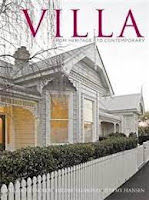
Villa: From classic to contemporary by Patrick Reynolds, Jeremy Salmond and Jeremy Hansen          $65
At last, a new edition of this book capturing something essential in New Zealand's domestic architectural history. 
A Feminist Mythology by Chiara Bottici         $44
A Feminist Mythology takes us on a poetic journey through the canonical myths of femininity, testing them from the point of view of our modern condition. A myth is not an object, but rather a process, one that Chiara Bottici practises by exploring different variants of the myth of "womanhood" through first- and third-person prose and poetry. We follow a series of myths that morph into each other, disclosing ways of being woman that question inherited patriarchal orders. In this metamorphic world, story-telling is not just a mix of narrative, philosophical dialogues and metaphysical theorizing: it is a current that traverses all of them by overflowing the boundaries it encounters. In doing so, A Feminist Mythology proposes an alternative writing style that recovers ancient philosophical and literary traditions from the pre-Socratic philosophers and Ovid's Metamorphoses to the philosophical novellas and feminist experimental writings of the last century.
The Eight Gifts of Te Wheke by Steph Matuku, illustrated by Laya Mutton-Rogers           $20
Te Wheke the octopus loves to collect things – pirate coins, glossy pearls, sparkly lamps, old toys, broken toasters. But one day, he wants to get eight treasures all at once, and that gets him into trouble. 
Ngā Taonga e Waru mā Te Wheke by Steph Matuku, illustrated by Laya Mutton-Rogers           $20
He tino rawe ki a Te Wheke te kohikohi taonga, he moni kaitiora, he peara muramura, he rama pīataata, he taonga tawhito, ērā momo mea katoa. Engari i tētahi rangi, ka kaiponu ia ki ngā taonga e waru, kāre e kore . . . he raru kei te haere.


The Sinner and the Saint: Dostoyevsky, a crime and its punishment by Kevin Birmingham          $65
In the summer of 1865, the former exile Dostoevsky found himself trapped in a cheap hotel in Wiesbaden, unable to leave until he'd paid the bill. Having lost the last of his money at the roulette table, his debts hung heavy over his head, his epileptic seizures were worsening, and his wife and beloved brother were dead. Desperate, a story came to him, a way to write himself out of his predicament: the murderer Rasolnikov, the hot, disorienting swirl of St Petersburg, the axe, the terrible crime, and the murderer's paranoia. The book was Crime and Punishment. The book also examines Pierre François Lacenaire, a notorious murderer and glamorous egoist who charmed and outraged Paris in the 1830s and whose sensational story provided the germ of the novel.
>>What about 1867? 
London Clay: Journeys in the deep city by Tom Chivers             $48
The past is below the present. Tom Chivers follows hidden pathways, explores lost islands and uncovers the geological mysteries that burst up through the pavement and bubble to the surface of our streets. From Roman ruins to a submerged playhouse, from an abandoned Tube station to underground rivers, Chivers leads us on a journey into the depths of London.
 From sofa suppers and comfort food to celebration meals and festive feasts, Victoria Moore helps you choose the wine that will taste most delicious with whatever you're eating.
Paul by Daisy Lafarge       $33
Frances is a young English woman spending a summer volunteering in rural France, hoping that picking vegetables and making honey will distract her from a scandal that drove her out of Paris, her degree unfinished and her sense of self unmoored. At Noa Noa, named for the ranch owner's adventures in Tahiti, she comes under the influence of Paul, a charismatic, dominant older man. As his hold over her tightens, Frances watches her plans fragment, and she finds herself entangled in a strange, uneven relationship

The World Turner Upside Down: A history of the Chinese Cultural Revolution by Yang Jisheng              $70
As a major political event and a crucial turning point in the history of the People's Republic of China, the Great Proletarian Cultural Revolution (1966-1976) marked the zenith as well as the nadir of Mao Zedong's politics. Reacting in part to the Soviet Union's 'revisionism' that he regarded as a threat to the future of socialism, Mao mobilized the masses in a battle against what he called 'bourgeois' forces within the Chinese Communist Party (CCP). This ten-year-long class struggle on a massive scale almost obliterated traditional Chinese culture as well as the nation's economy.
The Interest: How the British establishment resisted the abolition of slavery by Michael Taylor          $26
In 1807, Parliament outlawed the slave trade in the British Empire, but for the next quarter of a century, despite heroic and bloody rebellions, more than 700,000 people in the British colonies remained enslaved. And when a renewed abolitionist campaign was mounted, making slave ownership the defining political and moral issue of the day, emancipation was fiercely resisted by the powerful 'West India Interest'. Supported by nearly every leading figure of the British establishment - including Canning, Peel and Gladstone, The Times and Spectator - the Interest ensured that slavery survived until 1833 and that when abolition came at last, compensation worth billions in today's money was given not to the enslaved but to the slaveholders, entrenching the power of their families to shape modern Britain to this day. Now in paperback (but also in hardcover).
Stigma: The machinery of inequality by Imogen Tyler        $30
Stigma is a corrosive social force by which individuals and communities throughout history have been systematically dehumanised, scapegoated and oppressed.

Violeta by Isabelle Allende          $37
From pandemic to pandemic, Allende's latest novel covers a century of South American history as narrated through the life of one woman to her grandson. 
Fire and Ice: The volcanoes of the Solar System by Natalie Starkey          $37
Earth isn't the only planet to harbour volcanoes. In fact, the Solar System, and probably the entire Universe, is littered with them. Our own Moon, which is now a dormant piece of rock, had lava flowing across its surface billions of years ago, while Mars can be credited with the largest volcano in the Solar System, Olympus Mons, which stands 25km high. While Mars's volcanoes are long dead, volcanic activity continues in almost every other corner of the Solar System, in the most unexpected of locations. We tend to think of Earth volcanoes as erupting hot, molten lava and emitting huge, billowing clouds of incandescent ash. However, it isn't necessarily the same across the rest of the Solar System. For a start, some volcanoes aren't even particularly hot. Those on Pluto, for example, erupt an icy slush of substances such as water, methane, nitrogen or ammonia, that freeze to form ice mountains as hard as rock. While others, like the volcanoes on one of Jupiter's moons, Io, erupt the hottest lavas in the Solar System onto a surface covered in a frosty coating of sulphur.
Work: A history of how we spend our time by James Suzman            $25
The work we do brings us meaning, moulds our values, determines our social status and dictates how we spend most of our time. But this wasn't always the case: for 95% of our species' history, work held a radically different importance. How, then, did work become the central organisational principle of our societies? How did it transform our bodies, our environments, our views on equality and our sense of time? And why, in a time of material abundance, are we working more than ever before? New edition. 

Hegel in a Wired Brain by Slavoj Žižek         $30
Zizek gives us a reading of philosophical giant G.W.F. Hegel that changes our way of thinking about the new posthuman era. This work investigates what he might have had to say about the idea of the 'wired brain' — what happens when a direct link between our mental processes and a digital machine emerges. Zizek explores the phenomenon of a wired brain effect, and what might happen when we can share our thoughts directly with others. He hones in on the key question of how it shapes our experience and status as 'free' individuals and asks what it means to be human when a machine can read our minds.
A glimpse of post-war France through the eyes and words of 14 mostly expatriate journalists including Mavis Gallant, James Baldwin, A.J. Liebling, S.N. Behrman, Luc Sante, Joseph Mitchell, and Lillian Ross; plus, portraits of their editors William Shawn and New Yorker founder Harold Ross. Together they invented modern magazine journalism. Includes an introductory interview by Susan Morrison with Anderson about transforming fact into a fiction and the creation of his homage to these exceptional reporters, the film The French Dispatch
Us: A compendium        $30
This journal is filled with creative, enagaging prompts—both silly and serious—to help parents  and children learn more about each other and get everyone giggling. Shared journaling opens lines of communication, providing opportunities for self-expression. Through messages, sketches, and lists, you'll share memories, compare perspectives, uncover similarities, and celebrate uniqueness. And it's fun. 


Saturday, 22 January 2022


BOOKS @ VOLUME #263 (21.1.22)

Read our latest newsletter!


>> Read all Stella's reviews.


Azadi: Freedom, fascism, fiction by Arundhati Roy   {Reviewed by STELLA}
Azadi is a cry for freedom. It’s a chant originating in the struggle for a self-determined Kashmir, and the title of a collection of nine essays from the perceptive and passionate pen of Arundhati Roy. Famous for winning the Booker Prize for The God of Small Things and then not writing another novel until twenty years later, Roy has never stopped voicing her views on India, its politics and social constraints or excesses, depending on where you fall in this hugely various society. And she has never shied from the criticism she has encountered from some quarters — including from the ruling elites. Being accused of sedition in 2010 has not silenced her one bit. In Azadi, the essays, some previously published as long-form essays, others originally lectures, are urgent, demanding of your attention, and incredibly informative. Here she addresses the continuing rise of Hindu nationalism, the fascist traits of Modi, and the treatment of Kashmir (where an estimated 70,000 individuals have been killed in this conflict). She looks at the tensions between Pakistan and India, and the threat of nuclear weapons escalation. The essays vary in approach and style. 'The Language of Literature and 'The Graveyard Talks Back' both draw on her fiction work, analysing the thematic content of her novels, explaining particular social and cultural contexts or expressing her thoughts on the power of words and story to reach readers and to express the views of those who are often disadvantaged or maligned by society. Other essays, 'Election Season in a Dangerous Democracy' and 'There is Fire in the Ducts, the System is Failing', are more urgent and specific to political situations. In her final essay, written during the first wave of Covid, Roy likens the pandemic to a portal — otherworldly but also an opportunity for change. A slightly hopeful take in ‘the early days'. Since this collection went to print, she has continued to comment on India’s response and much of this has been fraught with anger and dismay. Azadi is a door into 21st century India, a country which Roy describes as a continent rather than a country — a place of 780 languages, different religions and various cuisines. Yet this is the same place where Modi and his supporters push the doctrine of "One Nation, One Language, One Religion, One Constitution”. Whether you read her fiction or essays, all Arundhati Roy’s writing is urgent, thoughtful and forceful. This collection is a welcome addition and a great introduction to her non-fiction.


 >> Read all Thomas's reviews. 


Nostalgia Has Ruined My Life by Zarah Butcher-McGunnigle    {Reviewed by THOMAS}
There is nothing funnier than depression, he thought, at least nothing funnier to me than my own depression. There is nothing more ludicrous than my inability to do even the simplest things, the kind of inability you would ordinarily expect to belong to the most difficult things, but really the simplest things are for me the most difficult, or at least indistinguishable from the most difficult, there is no difference between the simplest and the most difficult, but not in a way that would make the most difficult things achieveable, though really there is no reason why this should not be the case, other than my inability to imagine myself as the person who has achieved even the simplest, let alone the most difficult, things, he thought. There is nothing more ludicrous and perforce nothing funnier than that, he thought. There is a rupture of some kind, he thought, between me and my fortunate place in the world, making one of those self-obsessed, self-indulgent, grandiloquent statements that he found intolerable when others made them and so usually pretended not to hear them, which probably made him appear unsympathetic when he was in fact oversympathetic, which is just as useless. Is there any point in being oversympathetic to the self-revulsion of others, he wondered, no, this is just as pointless as my own self-revulsion, experience is disjoined from reality, neither revulsion is reasonable or appropriate, these revulsions are entirely ludicrous and perforce funny. That there is nothing funnier than my own self-revulsion should make my self-revulsion tolerable, but then it would hardly be self-revulsion and therefore not ludicrous enough to be funny, he thought. If I could find relief in this way from my suffering, he thought, recognising the self-obsession, self-indulgence and grandiloquence of this statement about suffering even as he made it, if I could find relief in this way from my suffering it wouldn’t be suffering and therefore wouldn’t be ludicrous enough to qualify as a relief. There is no relief, which only makes my suffering all the more ludicrous and perforce all the more funny. The more pathetic my suffering, the more inappropriate and ludicrous my suffering, the more self-obsessed and self-indulgent and grandiloquent and entirely pointless and unreasonable my suffering, the more I perforce suffer, and the funnier it is. Nothing funnier, he thought. Is this why I enjoyed this book, Nostalgia Has Ruined My Life, he wondered, this book he had read almost inadvertently, this book concerning a depressed young woman’s heroic efforts to achieve not very much and the degrees of shortness to which those efforts fall, this book concerning the disjunction between this young woman and her place in the world, this book at once funny and pathetic and, he supposed, terribly sad, written in the first person by Zarah Butcher-McGunnigle but, as it says on the front cover, fiction, just like what he is writing now. He could not decide if he was oversympathetic or undersympathetic when he found this supposedly fictional woman’s depression so funny, but, he thought with a ludicrously grandiose thought, the tragic is only more tragic for not existing in the context of a tragedy, and it is this disjunction, he thought, that makes depression so ludicrous. Taking it seriously would increase the disjunction and make it more ludicrous still. 

Friday, 21 January 2022


Our Book of the Week is THE DAWN OF EVERYTHING: A NEW HISTORY OF HUMANITY by David Graeber and David Wengrow. This remarkable book challenges our received narratives of historical determinism and the myths of cultural ‘progress’ devised to justify the status quo. If we unshackle ourselves from these preconceptions and look more closely at the evidence, we find a wide array of ways in which humans have lived with each other, and with the natural world. Many of these could provide templates for new forms of social organisation, and lead us to rethink farming, property, cities, democracy, slavery, and civilisation itself.

 NEW RELEASES

Mothers, Fathers, and Others by Siri Hustvedt             $33
Siri Hustvedt's relentlessly curious mind and expansive intellect are on full display in this new collection of essays, whose subjects range from the nature of memory and time to what we inherit from our parents, the power of art during tragedy, misogyny, motherhood, neuroscience, and the books we turn to during a pandemic. Drawing on family history as well as her own life and experiences, she examines the porousness of borders of all kinds in an intellectual journey that is at once personal and universal.
"It is Hustvedt's gift to write with exemplary clarity of what is by necessity unclear." —Hilary Mantel
To Paradise by Hanya Yanagihara            $38
From the author of A Little Life, a remarkable novel spanning three centuries and three different versions of the American experiment. In an alternative version of 1893 America, New York is part of the Free States, where people may live and love whomever they please (or so it seems). The fragile young scion of a distinguished family resists betrothal to a worthy suitor, drawn to a charming music teacher of no means. In a 1993 Manhattan besieged by the AIDS epidemic, a young Hawaiian man lives with his much older, wealthier partner, hiding his troubled childhood and the fate of his father. And in 2093, in a world riven by plagues and governed by totalitarian rule, a powerful scientist’s damaged granddaughter tries to navigate life without him – and solve the mystery of her husband’s disappearances. Yanagihara sets up resonances between the three stories, enriching them all. 
"A masterpiece for our times." —The Guardian
Magma by Thora Hjörleifsdóttir            $40
20-year old Lilja is in love. As a young university student, she is quickly smitten with the intelligent, beautiful young man from school who quotes Derrida and reads Latin and cooks balanced vegetarian meals. Before she even realises, she’s moved in with him, living in his cramped apartment. As the newfound intimacy of sharing a shower and a bed fuels her desire to please her partner, his acts of nearly imperceptible abuse continue to mount undetected. Lilja desperately tries to be the perfect lover, attempting to meet his every need. But in order to do so, she gradually lets go of her boundaries and starts to lose her sense of self. Hjörleifsdóttir sheds light on the commonplace undercurrents of violence that so often go undetected in romantic relationships. 
>>Read an extract
Until Proven Safe: The history and future of quarantine by Geoff Manaugh and Nicola Twilley            $50
Quarantine has shaped our world, yet it remains misunderstood. It is our most powerful response to uncertainty, but it operates through an assumption of guilt: in quarantine, we are considered infectious until proven safe. An unusually poetic metaphor for moral and mythic ills, quarantine means waiting to see if something hidden inside of us will be revealed. Until Proven Safe tracks the history and future of quarantine around the globe, chasing the story of emergency isolation through time and space – from the crumbling lazarettos of the Mediterranean to the hallways of the corporate giants hoping to disrupt the widespread quarantine imposed by Covid-19 before the next pandemic hits through surveillance and algorithmic prediction. Yet quarantine is more than just a medical tool: Manaugh and Twilley drop deep into the Earth to tour a nuclear-waste isolation facility beneath the New Mexican desert, strip down to nothing but protective Tyvek suits to see plants stricken with a disease that threatens the world’s wheat supply, and meet NASA’s Planetary Protection Officer tasked with saving the Earth from extraterrestrial infections. 
In My Mother's Footsteps: A Palestinian refugee returns home by Mona Hajjar Halaby               $28
When Halaby moved from California to Ramallah to teach conflict resolution in a school for a year, she kept a journal. Within its pages, she wrote her impressions of her homeland, a place she had only experienced through her mother's memories. As she settled into her teaching role, getting to know her students and the challenges they faced living in a militarised, occupied town, Halaby also embarked on a personal pilgrimage to find her mother's home in Jerusalem. Halaby had dreamed of being guided by her mother down the old souqs, and the leafy streets of her neighborhood, listening to the muezzin's call for prayer and the medley of church bells. But after fifty-nine years of exile, it was Halaby's mother who needed her daughter's guidance as they visited Jerusalem together, walking the narrow cobblestone alleys of the Old City. 
About Time: A history of civilisation in twelve clocks by David Rooney            $40
From the city sundials of ancient Rome to the era of the smartwatch, clocks have been used throughout history to wield power, make money, govern citizens and keep control.
The Goddess Chronicle by Natsuo Kirino             $23
On an island in the shape of a teardrop live two sisters. One is admired far and wide, the other lives in her shadow. One is the Oracle, the other is destined for the Underworld. But what will happen when she returns to the island? Based on the Japanese myth of Izanami and Izanagi.

Forecast: A diary of the lost seasons by Joe Shute       $35
The changing seasons have shaped all of our lives, but what happens when the weather changes beyond recognition? Shute has spent years unpicking Britain's long-standing love affair with the weather. He has pored over the literature, art and music our weather systems have inspired and trawled through centuries of established folklore to discover the curious customs and rituals created in response to the seasons. But in recent years Shute has discovered a curious thing: the seasons are changing far faster and far more profoundly than we realise. Even the language we use to describe them is changing.

The False Rose by Jakob Wegelius           $28
In this much-anticipated sequel to The Murderer's Ape, Sally Jones and The Chief discover a curious rose-shaped necklace hidden onboard their beloved Hudson Queen, and it's the start of another perilous adventure for the seafaring gorilla and her faithful friend. Determined to get to the bottom of the mystery, they set sail for Glasgow, but there fall into the clutches of one of the city's most ruthless gangs, commanded by a fearsome smuggler queen who will stop at nothing to snatch the necklace for herself. Held prisoner hundreds of miles from friendship and safety, Sally Jones must use all her strength, determination and compassion to escape and unravel the mysterious story of the False Rose.
Move! The new science of body over mind by Caroline Williams         $33
Exercise changes the brain. But which exercises have what effect? Did you know that walking can improve your cognitive skills? That strengthening your muscular core reduces anxiety? That light stretching can combat a whole host of mental and bodily ailments, from stress to inflammation? We all know that exercise changes the way you think and feel. But scientists are just starting to discover exactly how it works.

Terrific! by Sophie Gilmore            $30
Mandrill, Owl, Badger, Turtle, and Anteater want to do something terrific together. Anteater suggests climbing—but that is not terrific for them all. Mandrill suggests hanging upside down, but that is not terrific for them all, either. And so it goes, until Snake slithers into the group and nearly upends the whole lovely afternoon.
From the author/illustrator of Little Doctor and the Fearless Beast


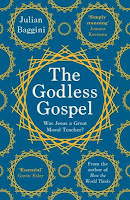
The Godless Gospel by Julian Baggini         $25
Stripping away the religious elements, Baggini, an atheist, asks how we should understand Jesus's attitude to the renunciation of the self, to politics or to sexuality. Do Jesus's teachings add up to a coherent moral system? If so, could this still be relevant today?

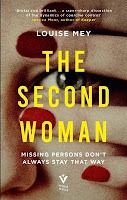
The Second Woman by Louise Mey       $33
Missing persons don't always stay that way... Sandrine lives alone, rarely speaking to anyone other than her colleagues. She is resigned to her solitary life, until she sees on TV a man despairing for his wife who has mysteriously disappeared. Sandrine is drawn to him and eventually the two strike up a relationship. When the man's wife reappears, Sandrine is forced to confront the truth about him. Is he all she thought he was, or is he hiding an abusive and manipulative character? Who can she trust—the man she loves now, or the woman he loved first?
The Secret Doctor: What really goes on inside your GP's surgery by Max Skittle        $25
Spilt urine bottles, the patients who should have been in hospital months ago, existential crises, utterly unexplainable health problems, awkward silences...

Lockwood travels the world, often by bicycle, collecting first-person accounts of climate change. She talks to indigenous elders and youth in Fiji and Tuvalu about drought and disappearing coastlines, attends the UN climate conference in Morocco, and bikes the length of New Zealand and Australia, interviewing the people she meets about retreating glaciers, contaminated rivers, and wildfires. She rides through Thailand, Laos, and Cambodia to listen to marionette puppeteers and novice Buddhist monks. From Denmark and Sweden to China, Turkey, the Canadian Arctic, and the Peruvian Amazon, she finds that ordinary people sharing their stories does far more to advance understanding and empathy than even the most alarming statistics and studies.


Saturday, 15 January 2022


BOOKS @ VOLUME #262 (14.1.22)

Read our newsletter and find out what you'll be reading next!


Our Book of the Week is monumental both in scope and in content. Nobel Prize-winner Olga Tokarczuk's novel The Books of Jacob surrounds the historical figure of Jacob Frank, whose iconoclastic mysticism saw him either condemned as a heretic by the establishment or lauded as a messiah by his various Jewish, Islamic or Catholic followers, with a vast cloud of often bizarre historical detail, demonstrating the Enlightenment as a pivotal period in the development of many of the social, intellectual and aesthetic ills that have beset Europe since and also now. Tokarczuk is against fixity, limitation, authority and prejudice, and her magnum opus is an exhilarating and transforming experience. 


>> Read all Stella's reviews.


The Hotel by Sophie Calle   {Reviewed by STELLA}
This book is exquisite. It’s not just the packaging, even though this is a great start: cloth-covered, gilt-edged, and excellent layout make this a pleasure to hold in the hand and eye. The cover is a triptych of patterns, reminiscent of wallpaper, fabric sheets or curtains and the golden edges are just the right touch of tack and glamour. The endpapers are the perfect hotel green. For this is a book about hotels, or rather those who stay in them through, the eyes of a chambermaid. In fact, a not-a-chambermaid. French artist Sophie Calle spent a few months in 1981 employed at a Venetian hotel. Here she conducted a series of observations in photography and text of the rooms she cleaned when the guests were absent. She was a voyeur, an explorer into what is both intimate and anonymous. She cleaned rooms and took photographs, read guests postcards, noted their underwear, the way in which they slept in the beds. She opened suitcases and clicked her camera. She pried. The result was an exhibition and later a book — a book which until now has been available only in French. This new English-language edition from Silglo is a welcome addition to Calle’s other artist books. The photographs are a mix of black and white and stunning colour. The elaborate decor (the floral glitz and the formal wooden furniture) of the hotel rooms is lovingly juxtaposed with the personal effects of the visitors: some drab, commonplace; others surprising and cumulatively interesting. Why does this guest have a letter from 16 years ago on holiday with them? What can it be but nostalgia? The two women in Room  26 have near-matching pyjamas, porn magazines and cigarettes — they leave behind the two coke bottles, mostly empty and the magazines in the rubbish. The family in Room 47 have a balloon tied to a drawer handle, towels piled up in the bidet, repetitive postcards, and Calle’s assessment on day one, “On the luggage stand, a second suitcase. It is full. I don’t go through it; I just look. I am bored with these guests already.” And what do they leave behind — a deflated balloon and stale biscuits. Some guests are neat, others unpack everything. Calle notes their nightclothes, whether they use them, the arrangement of their pillows — the different approaches between couples. What medicines and cosmetics do they carry with them? She leaves us to draw our own conclusions as to the why. The photographs are intriguing — the objects, the angles with which Calle captures these fleeting moments, these ‘peepings’ into others’ lives through things and the way in which they interact with their environment — the hotel room. The careful calculations of light that cross these rooms, highlighting a crease in the sheet, or a slight rucking of the carpet, or the shine of new luggage or the wear and tear of old, is testament to Calle's skill behind the lens. And the text adds another dimension. It tells us what Calle does, how she sees the guests and what she does in the rooms. Each episode is recorded by Room, date and time. The best episodes straddle multiple days — with each visit to a room (with the same occupants) Calle seems bolder and more intrigued with the evidence of the guests. This isn’t merely reportage — Calle laces her words with droll humour and a storyteller’s gift, taking us, the readers, into our own imagination as we become voyeurs alongside her. Somehow it never seems that she is stepping over a border, although she trends very closely to the edge. We are briefly submerged in the lives of others while remaining at a distance, remote, despite this most intimate experience.


 >> Read all Thomas's reviews. 


Strange Hotel by Eimear McBride  {Reviewed by THOMAS}
To ‘stay’ in a hotel (as opposed to ‘staying’ home) does not mean to remain but merely to await departure. A hotel is not a home away from home but is the opposite of a home, a place where, as McBride puts it, “nothing is at stake,” a place where action and inaction begin to resemble each other, a place where the absence of context allows or invites unresolved pasts or futures to press themselves upon the present without consequence. There is no plot in a hotel; everything is in abeyance. The protagonist in Strange Hotel is present (or presented) in a series of hotels — in Avignon, Prague, Oslo, Auckland, and Austin (all hotels are, after all, one hotel) — over a number of years in what we could term her early middle age. She spends the narrated passages of time mainly not doing something, choosing not to sleep with the man in the room next door, not to throw herself from the window as she waits for a man to leave her room, not to stay in the room of the man with whom she has slept until he wakes up, not to meet a man at the hotel bar, not to let in the man with whom she has slept and who she almost fails to keep at the distance required by her rigour of hotel behaviour. Her ritual self-removal from the stabilising patterns of her ordinary existence — about which we learn little — in the hotels seems designed to reconfigure herself following the death of her partner without either wearing out the memory she has of him or being worn out by it. Slowly, through the series of hotels, she becomes capable of reclaiming herself from her loss, moving from instances where even slight resemblances to experiences associated with her dead partner close down thought (as with the speaker in Samuel Beckett’s Not I) to a point where memory begins to not overwhelm the rememberer, when the hold on the present of the past begins to loosen, when the path to grief loses its intransigence and coherence and no longer precludes the possibility that things could have been and could be different. McBride’s linguistic skill and introspective rigour in tracking the ways in which her protagonist negotiates with her memories through language is especially effective and memorable. Language is a way of avoiding thought as much as it is a way of achieving it: “Even now, she can hear herself doing it. Lining words up against words, then clause against clause until an agreeable distance has been reached from the original unmanageable impulse which first set them all in train.” Her self-interrogation and her “interrogating her own interrogation” “serves the solitary purpose of keeping the world at the far end of a very long sentence,” but as her ‘hotel-praxis’ (so to call it) starts to erode the structures of her ‘grief-taxis’ (so to call it), language is no longer capable of — or, rather, no longer necessary for and therefore no longer capable of — buffering her from loss: “I do like all these lines of words but they don’t seem to be helping much with keeping the distance anymore.” At the start of the the book she feels as if she has “outlived her use for feeling” and clinically observes that, in another, “sentiment must be at work somewhere, unfortunately”; in Prague she observes of the man whose departure from her room she awaits on the balcony: “She hadn’t intended to hurt his feelings. To be honest, she’s not even sure she has. His feelings are his business alone. She just wishes he hadn’t presumed she possessed quite so many of her own. She has some, naturally, but spread thinly around—with few kept available for these kinds of encounters.” By the end of the process, though — “to go on is to keep going on” — the possibility of feeling begins to emerge from beneath her grief, the present is no longer overwhelmed by actual or even possible alternative pasts, and she begins to sense that she can “turn too and return again from this most fitly resolved past that was never really an option — to the life which, in fact, exists.”  


 Hotel by Joanna Walsh  {Reviewed by THOMAS}
As a relief from an unhappy marriage, Walsh got a job as a hotel reviewer and spent a period of time living only in places that are intended to be alternatives to home. In this series of short pieces, with occasional appearances by Freud, Dora (the subject of Freud’s early work on hysteria), Katherine Mansfield, KM (her alter ego), and the Marx brothers, Walsh plays rigorously with the idea of the hotel and with the idea of home that is its complement and shadow. Throughout the book, she does such a thorough job of picking away at ideas that vertiginous spaces open up within them, terrifying emptinesses in what had seemed like smooth and continuous thought. She is, understandably, intent on the mechanisms and ellipses by which her marriage has disintegrated: is the fault in the idea of marriage, in her husband or in herself, or is this “only ordinary unhappiness”? Walsh is adept at the re-flexing of banal tropes into fresh and sturdy thought: “We went into marriage to fulfil our individual desires, but we found ourselves required to be fulfilled by what we found there. The marriage problem is the same as the hotel problem. I have second-guessed your desires, and those of others. I have made myself into a hotel.” She is under no illusion that thinking can provide resolution (indeed the benefits of thought are magnified when resolution is impossible or eschewed), aware that problems will remain problems (we may at best hope for them to be problems we to some extent understand): “Plot is good in books but bad in life. There is no plot in a hotel. When I am in a hotel, the bad thing in abeyance but it is waiting to happen outside the hotel nevertheless.”