Saturday, 9 April 2022

 NEW RELEASES

Happy Stories, Mostly by Norman Erikson Pasaribu (translated by Tiffany Tsao)           $33
"A powerful blend of science fiction, absurdism and alternative-historical realism that aims to destabilise the heteronormative world and expose its underlying rot." Inspired by Simone Weil’s concept of ‘decreation’ and drawing on Batak and Christian cultural elements, in Happy Stories, Mostly Pasaribu puts queer characters in situations and plots conventionally filled by hetero characters. In one story, a staff member is introduced to their new workplace - a department of Heaven devoted to archiving unanswered prayers. In another, a woman’s attempt to vacation in Vietnam after her gay son commits suicide turns into a nightmarish failed escape. And in a speculative-historical third, a young man finds himself haunted by the tale of a giant living in colonial-era Sumatra.
Long-listed for the 2022 International Booker Prize.
A Brief History of Equality by Thomas Piketty (translated by Steven Rendall)        $55
A surprisingly optimistic history of human progress toward equality despite crises, disasters, and backsliding. Piketty guides us through the movements that have made the modern world for better and worse: the growth of capitalism, revolutions, imperialism, slavery, wars, and the building of the welfare state. It's a history of violence and social struggle, punctuated by regression and disaster. But through it all, Piketty believes, human societies have moved fitfully toward a more just distribution of income and assets, a reduction of racial and gender inequalities, and greater access to health care, education, and the rights of citizenship. To keep moving, Piketty argues, we need to learn and commit to what works, to institutional, legal, social, fiscal, and educational systems that can make equality a lasting reality. 
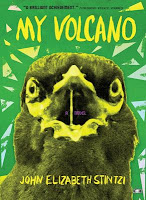
My Volcano by John Elizabeth Stintzi             $38
In this inventive, enjoyable and audacious novel — at once science fiction, myth, eco-horror, parable, and a shout for gender liberation and creative freedom — divers characters in diverse times and places undergo diverse personal eruptions (mostly metaphorical). On June 2, 2016, a protrusion of rock growing from the Central Park Reservoir is spotted by a jogger. Three weeks later, it is nearly two-and-a-half miles tall, and has been determined to be an active volcano. As the volcano grows and then looms over New York, an eight-year-old boy in Mexico City finds himself transported 500 years into the past, where he witnesses the fall of the Aztec Empire; a Nigerian scholar in Tokyo studies a folktale about a woman of fire who descends a mountain and destroys an entire village; a white trans writer in Jersey City struggles to write a sci-fi novel about a thriving civilization on an impossible planet; a nurse tends to Syrian refugees in Greece while grappling with the trauma of living through the bombing of a hospital in Kunduz, Afghanistan; a nomadic farmer in Mongolia is stung by a bee, magically transforming him into a green, thorned, flowering creature that aspires to connect every living thing into its consciousness.
Raiment by Jan Kemp             $35
Poet Jan Kemp's memoir of her first 25 years is a vivid and frank account of growing up in New Zealand in the 1950s, and of university life in the late 1960s and early 1970s. It tracks from an innocent Waikato childhood to the seedy flats of Auckland, where anarchic student life, drugs, sexual experimentation and a failing marriage could not keep her away from poetry. Kemp became one of the few young women poets of her era to be allowed into then-male poet circles. Raiment shines a clear-eyed light on the heady, hedonistic hothouse of the New Zealand literary community in the 1970s. 
Portrait of an Unknown Lady by Maria Gainza (translated by Thomas Bunstead)          $35
An Argentinian art critic recalls how she was drawn into the world of forgery, and becomes increasingly fascinated by three women who challenge the fundamentals of art discourse and other cultural norms. 
"Gainza’s novel becomes a puzzle as we question the most improbable biographical details. How much has been fabricated by the narrator? Does authenticity really matter? And exactly whose life story is she really interested in: artist, forger or authenticator? This is a novel with many beautiful, confounding moments. Maria Gainza is sharp, modern and playful, a writer who multiplies the possibilities for fiction." —Guardian
Tūnui | Comet by Robert Sullivan             $20
Rolling easily between kōrero Māori and the canonical traditions of English-language poetry, through karakia and pōwhiri, treaty training and decolonisation wiki entries, Robert Sullivan takes readers on a marvellous poetic hīkoi. Guided by Māui and Tāwhirimātea, Moana Jackson and Freddie Mercury, we walk from K’Rd council flats to Kaka Point, finding ourselves and our ancestors along the way.
Crane Guy: A game of I Spy from on high by Sally Sutton and Sarah Wilkins           $20
Spend the day with Crane Guy and see how many things you can spy from up high in his crane. Crane Guy, up so high, Building towers in the sky, Tell me, tell me what you spy. Something beginning with . . . Join Crane Guy for a game of I Spy up high in a crane - how many things can you see that begin with the letter B? Or S? Or P? This superb rhyming picture book by acclaimed author Sally Sutton and illustrator Sarah Wilkins makes a very fun game of learning letters and their sounds. Readers will love exploring the gorgeously detailed city scenes over and over again. Bustling with people, construction machines and vehicles of all kinds, this is an exciting book. 
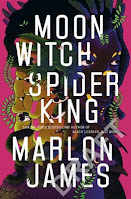
Moon Witch, Spider King ('Dark Star' #2) by Marlon James             $38
In the much-anticipated sequel to Black Leopard, Red Wolf, James continues his powerful fantasy, drawing from roots in African mythology and history. In the first book, Sogolon the Moon Witch proved a worthy adversary to Tracker as they clashed across a mythical African landscape in search of a mysterious boy who disappeared. In Moon Witch, Spider King, Sogolon takes center stage and gives her own account of what happened to the boy, and how she plotted and fought, triumphed and failed as she looked for him. It's also the story of a century-long feud — seen through the eyes of a 177-year-old witch — that Sogolon had with the Aesi, chancellor to the king. It is said that Aesi works so closely with the king that together they are like the eight limbs of one spider. Aesi's power is considerable — and deadly. It takes brains and courage to challenge him, which Sogolon does for reasons of her own.
"In the second book of his 'Dark Star' trilogy, James coaxes beauty from dark thoughts, leaving readers with a concaved, mystical and African-inspired world that begins in free-fall. In a world as thoroughly imagined as J.R.R. Tolkien's, no detail seems spared. Full-figured and richly drawn, Moon Witch, Spider King is the bridge of a trilogy and also a creation that, like James's talent, stands alone." —Los Angeles Times
Another Beautiful Day Indoors by Erik Kennedy          $25
Out on the pleasure pier on that benign afternoon,
the air heavy with the blossom of vinegar and old tyres,
you asked what was the closest I had come to death. 
Another Beautiful Day Indoors is more likely to end with a dark flood than a beautiful sundown. As these poems grapple with climate catastrophe, precarious labour, and love, they draw on the full, rich weirdness of the human-made world, with its self-driving cars, official geese and open-plan offices modelled on heaven. A sequence of magical realist short fictions explore ‘essential work’; elsewhere Erik Kennedy wonders what it is like to work in the satellite insurance sector. Somehow he gets away with rhyming ‘guesses’ with ‘yeses’. And somehow, even as this book comes up against the most ominous aspects of our future, it uplifts. 
Dogs in Early New Zealand Photographs edited by Mike White         $35
This entertaining selection of over 100 photos of New Zealand dogs reveals some of the more curious ways in which they have appeared in photographic collections from the nineteenth and early twentieth centuries. Dogs named Terror, Betsey Jane, Floss and Erebus appear alongside canines whose names are longer known. The photos range from carefully staged studio portraits to New Zealand landscapes. Many of the photographs are from Nelson's Tyree Collection. 

Run and Hide by Pankaj Mishra                $35
In Mishra's long-awaited new novel, Arun knows there is only way out of this small railway town. He is about to enrol in the prestigious Indian Institute of technology, determined to make something of himself. But once there, he meets two friends who are prepared to go to unimaginable lengths to succeed. In just a few years, Arun's friends become the success stories of their generation. In private planes and expensive cars, from New York to Tuscany, they play out their Gatsby-style fantasies. In reality, these men are about to pay for their transgressions, but who exactly will pay the price? Will it be Arun? Will it be Alia, a female writer and influencer, who is piecing together the story of a big global financial scandal?
"A spectacular, illuminating work of fiction." —Jennifer Egan
"Elegantly written, incisively observed, and deeply satisfying to read." —Kamila Shamsie
Lambda by David Musgrave          $35
Outwardly alien arrivals from a distant sea, the lambdas are genetically human. They slip quietly into low- to middle-income jobs and appear to want nothing more than to be left alone. For Cara Gray, they are first a haunting presence in her otherwise ordinary childhood, then the inscrutable target of her police surveillance work. When a bomb goes off at a school, a nebulous group of lambda extremists claims responsibility for the attack-but how could a vulnerable community of tiny aquatic humans, barely visible in society and seemingly indifferent to their own exploitation, be capable of something so horrific? In Cara's world a toothbrush can be legally alive, a quantum computer has the power to decide who dies, and a government employee made of slime mould protein needs help to relieve his neuroses. As Cara's relationship with the lambdas deepens, she must decide whether to accept her place in a pattern of technology, violence and deceit, or to take action of her own.
"Literary SF at its best." —Guardian
OST: Letters, memoirs and stories from Ostarbeiter in Nazi Germany edited by MEMORIAL (translated by Georgia Thomson)           $70
An extraordinary assemblage of moving and revelatory documents and testimony from the Nazi forced labor camps. An Ostarbeiter was an 'Eastern Worker', rounded up by Nazi Germany from the captured territories in Central and Eastern Europe. By the end of the war, it is estimated that approximately 3 million to 5.5 million Ostarbeiter were forced to work in guarded work camps, many of them younger than 16 years old — at which age they would be conscripted for military service. Ostarbeiter worked 12 hours a day on starvation on rations; as ethnic Slavs, they were treated with extraordinary brutality by Nazi guards who considered them 'sub-human' by the standards of the Aryan master race. They were distinguished by the label 'OST' sewn onto their uniforms. OST is based on over two hundred personal accounts, hundreds of hours of interviews, and over 350,000 letters. 
Nature Boy: The photography of Olaf Petersen edited by Catherine Hammond et al        $60
A gull chick running across Muriwai Beach. Cabbage trees at Lake Wainamu. Tyre tracks, tugs of war and tramping trips. Olaf Petersen produced an unrivalled photographic account of the people and natural world of Auckland's wild west coast, from the 1930s to the 1980s. 

Some Collages by Jim Jarmusch            $65
Although Jim Jarmusch is best known for his storied career in independent cinema, over the years he has produced hundreds of pieces of collage art, the majority of which has been rarely seen by the public. Drawing inspiration from the largest medium of cultural documentation—newspapers—Jarmusch crafts each work by layering newsprints on cardstock. 
The Slowworm's Song by Andrew Miller          $38
An ex-soldier and recovering alcoholic living quietly in Somerset, Stephen Rose has just begun to form a bond with the daughter he barely knows when he receives a summons — to an inquiry into an incident during the Troubles in Northern Ireland. It is the return of what Stephen hoped he had outdistanced. Above all, to testify would jeopardise the fragile relationship with his daughter. And if he loses her, he loses everything. Instead, he decides to write her an account of his life; a confession, a defence, a love letter. Also a means of buying time. But time is running out, and the day comes when he must face again what happened in that faraway summer of 1982.

Economics and the Left: Interviews with progressive economists edited by C. J. Polychroniou          $55
Twenty-four economists discuss how they promote egalitarianism, democracy and ecological sanity through research, activism, and policy engagement. A combustible brew of ideas and reflections on major historical events, including the Covid-19 pandemic and its impact on the global economy. Interviewed are: Michael Ash, Nelson Henrique Barbosa Filho, James K. Boyce, Ha-Joon Chang, Jane D'Arista, Diane Elson, Gerald Epstein, Nancy Folbre, James K. Galbraith, Teresa Ghilarducci, Jayati Ghosh, Ilene Grabel, Costas Lapavitsas, Zhongjin Li, William Milberg, Léonce Ndikumana, Ozlem Onaran, Robert Pollin, Malcolm Sawyer, Juliet Schor, Anwar Shaikh, William Spriggs, Fiona Tregenna and Thomas Weisskopf.
The Sinner and the Saint: Dostoevsky, a crime and its punishment by John Birmingham          $65
In the summer of 1865, the former exile Dostoevsky found himself trapped in a cheap hotel in Wiesbaden, unable to leave until he'd paid the bill. Having lost the last of his money at the roulette table, his debts hung heavy over his head, his epileptic seizures were worsening, and his wife and beloved brother were dead. Desperate, a story came to him, a way to write himself out of his predicament: the murderer Rasolnikov, the hot, disorienting swirl of St Petersburg, the axe, the terrible crime, and the murderer's paranoia. The book was Crime and Punishment. But how did this haunting tale of guilt come to be, and why does it still hold such a sway over us all these years later? The Sinner and the Saint gives us the story of the two men so central to it: Dostoevsky himself, and Pierre François Lacenaire, a notorious murderer and glamorous egoist who charmed and outraged Paris in the 1830s and whose sensational story provided the germ of the novel. As reports of his trial tore through Europe, readers asked themselves: could the instincts of nihilism, the philosophy inspiring a new generation of Russian revolutionaries, also drive a man to murder? Showing how both men's lives were directed by the intoxicating new ideas swirling around Europe in the nineteenth century, The Sinner and the Saint also reveals why they still appall and entice us today.
How to count to ONE (and don't even THINK about bigger numbers!) by Caspar Salmon and Matt Hunt           $25
"You know how to count, right? GREAT! There are LOADS of fun things to count in this book. Whales, baboons, rainbows, pyramids...There's just ONE rule. You must ONLY ever count to ONE. So don't even about THINK bigger numbers. OK?!" A lot of fun!

Meat Lovers by Rebecca Hawkes          $25
Wellington poet and Canterbury farm-girl Rebecca Hawkes takes a generous bite from the excesses of earthly flesh — first 'Meat', then 'Lovers'. 'Meat' is a coming of age in which pony clubs, orphaned lambs and dairy-shed delirium are infused with playful menace and queer longings. Between bottle-fed care and killing-shed floors, the farm is a heady setting for love and death.In 'Lovers', the poet casts a wry eye over romance, from youthful sapphic infatuation to seething beastliness. Sentimental intensity is anchored by an introspective comic streak. This collection of queasy hungers offers a feast of explosive mince & cheese pies, accusatory crackling, lab-grown meat and beetroot tempeh burger patties, all washed down with bloody milk or apple-mush moonshine. It teems with sensuous life, from domesticated beasts to the undulating mysteries of eels, as Hawkes explores uneasy relationships with our animals and with each other. Tender and brutal, seductive and repulsive, Meat Lovers introduces a compelling new mode of hardcore pastoral.
The Exhibitionist by Charlotte Mendelson           $38
Meet the Hanrahan family, gathering for a momentous weekend as famous artist and notorious egoist Ray Hanrahan prepares for a new exhibition of his art — the first in many decades — and one he is sure will burnish his reputation for good. His three children will be there: beautiful Leah, always her father's biggest champion; sensitive Patrick, who has finally decided to strike out on his own; and insecure Jess, the youngest, who has her own momentous decision to make. And what of Lucia, Ray's steadfast and selfless wife? She is an artist, too, but has always had to put her roles as wife and mother first. What will happen if she decides to change? For Lucia is hiding secrets of her own, and as the weekend unfolds and the exhibition approaches, she must finally make a choice.
Long-listed for the 2022 Women's Prize for Fiction. 
"It takes the most ferocious intelligence, skill, and a deep reservoir of sadness to write a novel as funny as this." —Meg Mason
What Is Right and What Is Wrong? Who Decides? Where Do Values Come From? And other big questions by Michael Rosen and Annemarie Young         $24
This book is a highly topical look at how our decisions about what is right and wrong play out on an individual, local, national and global scale. It examines topics that are strongly connected to the values people hold and their ideas of right and wrong, such as democracy, justice, fairness, prejudice and discrimination, education, climate change and war. A very good resource to help children learn to think for themselves. 
At the Bookshop: A memory game by Kim Siew          $30
Match 25 of the most iconic books with one of their famed characters. Featuring books such as Pride and Prejudice, To Kill a Mockingbird, Breakfast at Tiffany's, The Hunger Games, Twilight, The Hound of the Baskervilles, Little Women, The Lord of the Rings, American Psycho, A Game of Thrones, The Girl with the Dragon Tattoo, IT, Great Expectations, Beloved, Frankenstein, Where the Wild Things Are, Midnight's Children, The Outsiders, The Hate U Give, The Book Thief, High Fidelity, White Teeth and The Joy Luck Club.
France: An adventure history by Graham Robb           $45
An original and entertaining history of France, from the first century BC to the present day, based on countless new discoveries and thirty years of exploring France on foot, by bicycle and in the library. 

From noisy izakayas, ramen joints and tempura bars, to gyoza pit-stops, curry restaurants and the iconic convenience stores that stitch the city together, Tokyo after dark generates a vast array of interesting food. This book immerses you in that excitement without having to leave your own kitchen. 


Saturday, 2 April 2022


BOOKS@VOLUME #272 (1.4.22)

Read our latest newsletter for all the latest news, books, recommendations, competitions, amusements, and reviews.


Our Book of the Week is one of four excellent novels short-listed for the Jann Medlicott Acorn Prize for Fiction at the 2022 Ockham New Zealand Book Awards. 
In A Good Winter, Gigi Fenster takes us inside the head of the obsessive and judgmental Olga, whose helpfulness towards her neighbour, her neighbour's daughter and her child leads them all down a path to tragedy. Highly accomplished, the book is both sympathetic and cutting, both bleak and darkly funny, both insightful and unnerving. Olga's voice is pitch-perfect and unforgettable. 


>> Read all Stella's reviews.


Burning Questions by Margaret Atwood   {Reviewed by STELLA}
If you need good company, look no further than Margaret Atwood’s Burning Questions. Like a popular guest at a dinner party, Atwood’s collected essays (and occasional pieces) 2004-2021 are articulate, forthright (but never overbearing), thoughtful, and of course, witty — some wryly so. The essays are a collection of reviews, forewords to other authors’ books, speeches, and reflections on her own writing. The topics are diverse, but always topical:  feminism, ecology — in particular climate change, democracy, the role of literature and art. This third collection of essays begins in the aftermath of the Twin Towers and ranges over the financial crash of 2008, the Obama years, the advent of Trump, the #metoo movement, and the pandemic. Atwood’s published work of these years includes the 'MaddAddam' trilogy, Payback and The Testaments (on the back of the hugely popular TV series of The Handmaid’s Tale). Also during this time, her partner, Graeme Gibson, was diagnosed with dementia. The foreword she wrote for his Bedside Book of Birds is particularly beautiful and heartfelt (Gibson died in 2019). There are other forewords (such as for Rachel Carson’s Silent Spring) as well as highly observant pieces on authors such as Alice Munro, Ryszard Kapuscinski and Ursula Le Guin. In the area of literature and language, she touches on translation, the roles and responsibilities of the author, the power of language, and the relationship between writer and reader. The essays about her own writing are intriguing, and offer insights into her thinking in retrospect on genre and thematic choices. If, like me, you have read most of her novels, you will find these enlightening. The title Burning Questions reflects the urgency Atwood senses in responding to climate change — we are burning; the need to change the power imbalance towards a more equal society — burn the house down; and her own curiosity — a burning inquisitiveness — as a lover of language and words, people and places. No one essay stands out. As with all collections, some are better or will interest you more than others. This is a collection to wander through and be surprised by a clever turn of phrase, a witty remark, an insightful observation or a forthright call to arms. And you get to be in very good company.


 >> Read all Thomas's reviews. 


Proleterka by Fleur Jaeggy (translated by Alastair McEwan)   {Reviewed by THOMAS}
“Children lose interest in their parents when they are left. They are not sentimental. They are passionate and cold. In a certain sense some people abandon affections, sentiments, as if they were things. With determination, without sorrow. They become strangers. They are no longer creatures that have been abandoned, but those who mentally beat a retreat. Parents are not necessary. Few things are necessary. The heart, incorruptible crystal.” Fleur Jaeggy’s unforgettable short novel, named after the ship upon which the narrator, aged fifteen, and her estranged father (unreachable, “aloof from himself”) spend an unprecedented and unrepeated fourteen day cruise in the Greek Islands with members of the Swiss guild to which the father belongs, is a catalogue of mental retreat, relinquishment, estrangement, loss, and turning away: enervations towards a non-existence either hurried or postponed but inevitable to all. Jaeggy’s short sentences each have the precision of a stiletto: each stabs and surprises, making tiny wounds, each with a drop of glistening blood. When the narrator looks at her father Johannes’s diary, “written by a man precise in his absence,” her description of it could be of her own narration: “It is proof. It is the confirmation of an existence. Brief phrases. Without comment. Like answers to a questionnaire. There are no impressions, feelings. Life is simplified, almost as if it were not there.” Jaeggy writes with absolute, clinical precision but narrow focus, as if viewing the world down a tube, to great effect. Johannes, for example, is described as having “Pale, gelid eyes. Unnatural. Like a fairy tale about ice. Wintry eyes. With a glimmer of romantic caprice. The irises of such a clear, faded green that they made you feel uneasy. It is almost as if they lack the consistency of a gaze. As if they were an anomaly, generations old.” The account of the Greek cruise forms the core of the novel, but it is preceded, intercut and followed by memories of childhood and of subsequent events (mostly the deaths of almost everyone mentioned), all related closely in the present tense, but non-sequential, resulting in a sense of time not dissimilar to that experienced when repeatedly tripping over an unseen obstacle. Most of the book is narrated in the first person but the narrator achieves a degree of detachment from incidents that threaten “the exceedingly fine line between equilibrium and desperation” by relating them in the third person, referring to herself as “Johannes’s daughter”: the death of Orsola (the maternal grandmother with whom she lived after her parents’ divorce, her mother’s effective disappearance, her father’s sudden poverty and his effective exile from her life) and the violent sexual experiences to which she opens herself with two of the sailors: “I don’t like it, I don’t like it, she thinks. But she does it all the same. The Proleterka is the locus of experience. By the time the voyage is over, she must know everything. At the end of the voyage, Johannes’s daughter will be able to say: never again, not ever. No experience ever again.” The narrator writes her memories not so much to remember as to forget, to relinquish. Words turn experience into story, which interposes itself between experience and whoever is oppressed by it. As Jaeggy writes, “people imagine words in order to narrate the world and to substitute it.”

Friday, 1 April 2022

 NEW RELEASES

Joanna Margaret Paul — Imagined in the Context of a Room by Lucy Hammonds et al           $65
Joanna Paul was intensely responsive to the world around her, she depicted her surroundings, constantly reworking the conventions of drawing and watercolour painting to capture something of inward experience. Paul also documented her environment in photographs and experimental short films, and published poetry, criticism and non-fiction. Her impulse was towards complexity in honouring the mystery she perceived in her subject, whether it was a domestic still life, the view from her kitchen window, or one of her children. She brought an innovative interdisciplinary approach to her practice, often blurring the boundaries between media. This beautiful book illuminates the whole of Paul's career.
White on White by Ayşegül Savaş           $35
A student moves to the city to research Gothic nudes, renting an apartment from a painter, Agnes, who lives in another town with her husband. One day, Agnes arrives in the city and settles into the upstairs studio. In their meetings on the stairs, in the studio, at the corner café, the kitchen at dawn, Agnes tells stories of her youth, her family, her marriage, and ideas for her art - which is always just about to be created. As the months pass, it becomes clear that Agnes might not have a place to return to. The student is increasingly aware of Agnes's disintegration. Her stories are frenetic; her art scattered and unfinished, white paint on a white canvas. What emerges is the menacing sense that every life is always at the edge of disaster, no matter its seeming stability. Alongside the research into human figures, the student is learning, from a cool distance, about the narrow divide between happiness and resentment, creativity and madness, contentment and chaos.
“In the middle ages, human skin was seen as a blanket stretched to cover a secret, inner life, writes Ayşegül Savaş. Reading White on White for me is like an outer skin which you open layer by layer as you read; gentle, mysterious and profound.” —Marina Abramović
“Ayşegül Savaş’s White on White is marvellous, as elegant as an opaque sheet of ice that belies the swift and turbulent waters beneath.” —Lauren Groff
“The story at the heart of Ayşegül Savaş’s White on White is— like the title— subtly camouflaged. Savaş’s characters watch each other as they avoid themselves, in a slow, acute and obliterating double portrait." —Leanne Shapton
The Night Will Be Long by Santiago Gamboa (translated by Andrea Rosenberg)           $33
A boy witnesses a violent confrontation in a remote part of town in the state of Cauca, Colombia. Minutes later, someone arrives at the scene to clear up all trace of the incident. No one in town claims to have heard or seen anything, and yet an anonymous accusation launches a dangerous investigation that unfolds within the corrupt world of the Christian churches of Latin America. The story reveals the inequality and violence that seem to govern an entire country,


Learwife by J.R. Thorp          $35
Care-bent King Lear is dead, driven mad and betrayed. His three daughters too, broken in battle. But someone has survived: Lear's queen. Exiled to a nunnery years ago, written out of history, her name forgotten. Now she can tell her story. Though her grief and rage may threaten to crack the earth open, she knows she must seek answers. Why was she sent away in shame and disgrace? What has happened to Kent, her oldest friend and ally? And what will become of her now, in this place of women? To find peace she must reckon with her past and make a terrible choice - one upon which her destiny, and that of the entire abbey, rests.
"Impressive. I ended Learwife feeling utterly involved: moved and exhausted." —Guardian

Grand: Becoming my mother's daughter by Noelle McCarthy       $35
From Catholic Ireland in the '70s, '80s and '90s to sparkling Auckland in the first years of the new millennium, Grand is a story of the invisible ties that bind us, of bitter legacies handed down through the generations, and of the leap of faith it takes to change them.
Look for Me and I'll Be Gone by John Edgar Wideman          $40
"Never satisfied to simply tell a story, Wideman continues to push form, with stories within stories, sentences that rise like a jazz solo with every connecting clause, voices that reflect who he is and where he's from, and an exploration of time that entangles past and present. Whether historical or contemporary, intimate or expansive, the stories here represent a pioneering American writer whose innovation and imagination know no bounds. Undoubtedly the foremost chronicler of the urban African-American experience. A master storyteller, Wideman is both a witness and a prophet." —Caryl Phillips
"Wideman's stories have a wary, brooding spirit, a lonely intelligence. They carry a real but atrophied affection for America. He airs the problems of consciousness, including the fragile contingency of our existence." —Dwight Garner
The Impostor by Silvina Ocampo            $23
Whimsical and sinister, each story by Silvina Ocampo is like a knife of spun sugar that can still pierce between your ribs. A thief breaks into the house of a psychic with disastrous results, a bride has her personality subsumed by the previous occupant of her home, and two men switch destinies for a change of pace. The Impostor offers a comprehensive collection from one of the twentieth century's great forgotten writers. Here are tales of doubles and living dolls, angels and demons, a beautiful seer who writes the autobiography of her own death.
Three Summers by Margarita Liberaki (translated by Karen van Dyck)       $24
A tender Greek modern classic of three sisters growing up in the countryside near Athens before the Second World War. Living in a ramshackle old house with their divorced mother are flirtatious, hot-headed Maria, beautiful but distant Infanta, and dreamy and rebellious Katerina, through whose eyes the story is mostly observed. Over three summers, the girls share and keep secrets, fall in and out of love, try to understand the strange ways of adults and decide what kind of adults they hope to become.


Mother's Boy by Patrick Gale             $38
Gale's seventeenth novel is his first fully historical one since A Place Called Winter. It is based around the known facts of the boyhood and youth of the great Cornish poet, Charles Causley and the life of the mother who raised him singlehandedly. Laura, an impoverished Cornish girl, meets her husband when they are both in service in Teignmouth in 1916. They have a baby, Charles, but Laura's husband returns home from the trenches a damaged man, already ill with the tuberculosis that will soon leave her a widow. In a small, class-obsessed town she raises her boy alone, working as a laundress, and gradually becomes aware that he is some kind of genius. As an intensely private young man, Charles signs up for the navy with the new rank of coder. His escape from the tight, gossipy confines of Launceston to the colour and violence of war sees him blossom as he experiences not only the possibility of death, but the constant danger of a love that is as clandestine as his work. Mother's Boy is the story of a man who is among, yet apart from his fellows, in thrall to, yet at a distance from his own mother; a man being shaped for a long, remarkable and revered life spent hiding in plain sight. But it is equally the story of the dauntless mother who will continue to shield him long after the dangers of war are past.
>>Charles Causley, poet
Magritte: A life by Alex Danchev           $65
Danchev makes a compelling case for Magritte as the single most significant purveyor of images to the modern world. Magritte's surreal sensibility, deadpan melodrama, and fine-tuned outrageousness have become an inescapable part of our visual landscape.
I Wanna Be Yours by John Cooper Clarke            $25
The Poet Laurate of Punk's autobiography suitably displays his acerbic wit, encyclopedic knowledge of both the subtleties and unsubtleties of twentieth cenutry popular culture, and his agile writing style. Enjoyable and insightful, and now in paperback. 
>>The hardback is still available, too

Cosmogramma by Corttia Newland             $33
Speculative short stories set in an alternate future as lived by the African diaspora. Robots used as human proxies in a war become driven by all-too-human desires; Kill Parties roam the streets of a post-apocalyptic world; a matriarchal race of mer creatures depends on inter-breeding with mortals to survive; mysterious seeds appear in cities across the world, growing into the likeness of people in their vicinity. Through transfigured bodies and impossible encounters, Newland brings a sharp, fresh eye to age-old themes of the human capacity for greed, ambition and self-destruction, strength and resilience.


Not Your Average Maths Book by Anna Weltman and Paul Boston           $23
A fun and accessible look at numbers, filled with great facts and fascinating insights into numbers, their history and the mathematicians who made key breakthroughs in their fields. From how long it would take to count to a billion, to why bubbles are always round, to what the ham sandwich theorem is, this book answers all these questions and many many more.
Esther's Notebooks: Tales from my twelve-year-old life by Riad Satouf (translated by Sam Taylor)          $28
Every week, the Parisian comic book artist Riad Sattouf has a chat with his friend's daughter, Esther. She tells him about her life, about school, her friends, her hopes, dreams and fears, and then he works it up into a comic strip. This book consists of 52 of those strips, telling between them the story of a year in the life of this sharp, spirited and hilarious child. The result is a moving, insightful and utterly addictive glimpse into the real lives of children growing up in today's world.
Our Wives Under the Sea by Julia Armfield            $38
Miri thinks she has got her wife back, when Leah finally returns after a deep sea mission that ended in catastrophe. It soon becomes clear, though, that Leah may have come back wrong. Whatever happened in that vessel, whatever it was they were supposed to be studying before they were stranded on the ocean floor, Leah has carried part of it with her, onto dry land and into their home. To have the woman she loves back should mean a return to normal life, but Miri can feel Leah slipping from her grasp. Memories of what they had before – the jokes they shared, the films they watched, all the small things that made Leah hers – only remind Miri of what she stands to lose. Living in the same space but suddenly separate, Miri comes to realise that the life that they had might be gone.
Night Race to Kawau by Tessa Duder               $20
What started as an exciting challenge turns into a nightmare when a gale unexpectedly blows up during the night race to Kawau Island. Sam and her mother suddenly find themselves in charge of their yacht with a dangerous task ahead of them. Will Sam be able to save her family? A new edition of this classic story. 


Chronicles of Dissent by Noam Chomsky and David Barsamian          $38
A good overview of Noam Chomsky's political thought. In sixteen extended talks with Alternative Radio's David Barsamian, Noam Chomsky explains why the 'war on drugs' is really a war on poor people; how attacks on political correctness are attacks on independent thought; how historical revisionism has recast the United States as the victim in the Vietnam War. 
The Etymologicon is an occasionally ribald, frequently witty and unerringly erudite guided tour of the secret labyrinth that lurks beneath the English language. What is the actual connection between disgruntled and gruntled? What links church organs to organised crime, California to the Caliphate, or brackets to codpieces? Nice illustrated hardback 10th anniversary edition. 
"Witty and erudite. Stuffed with the kind of arcane information that nobody strictly needs to know, but which is a pleasure to learn nonetheless." —Independent
Making Numbers Count: The art and science of communicating numbers by Karla Starr and Chip Heath             $37
Until recently, most languages had no words for numbers greater than five. While the numbers in our world have become increasingly complex, our brains are stuck in the past. Yet the ability to communicate and understand numbers has never mattered more. So how can we effectively translate numbers and statistics so that the data comes alive? 
How to Read a Dress: A guide to changing fashion from the 16th to the 21st century by Lydia Edwards           $55
With overviews of each key period and detailed illustrations for each new style, How to Read a Dress is a useful guide to women's fashion across five centuries. Each entry includes annotated color images of historical garments, outlining important features and highlighting how styles have developed over time, whether in shape, fabric choice, trimming, or undergarments. Readers learn how garments were constructed and where their inspiration stemmed from at key points in history - as well as how dresses have varied in type, cut, detailing and popularity according to the occasion and the class, age and social status of the wearer. This new edition includes additional styles to illustrate and explain the journey between one style and another; larger images to allow closer investigation of details of dress; examples of lower and working-class, as well as middle-class, clothing; and a completely new chapter covering the 1980s to 2020.
On Democracy by Robert A. Dahl            $36
Arising from his studies of decision-making structures in institutions, cities and nations, Dahl delineates what constitutes a democracy and details the mechanisms by which competing interests may approach this ideal. 

The Islands by Emily Brugman               $33
There are few places wilder than Little Rat, a small island in an archipelago off the coast of Western Australia. Beautiful, harsh and lonely, the landscape is still haunted by the many ships that have wrecked on its reefs across the centuries. Yet it is here that the Saari family try to build their future, thousands of miles from the cold lowlands of Finland. A crayfishing family, Onni and his wife Alva work hard. Against this spectacular and brutal backdrop, small tragedies and immense joys are shared by the fishing families of Little Rat: Alva makes a perilous journey across rough seas with a tiny newborn baby, where, against all odds, she feels safe; their young daughter Hilda watches as a small boy tumbles from a jetty and very nearly drowns; an old story of shipwreck and mutiny intrigues two adolescent boys; a mysterious and tortured fisherman rows into the eye of a storm; and Hilda, on the brink of womanhood, comes to know the cruelty and the ecstasy of desire, while distances expand between her and her migrant parents.
Formica by Maggie Rainey-Smith          $25
A memoir in poems. Formica begins in 1950s Richmond with the author’s family struggling in the aftermath of a war that took her father to Crete to fight and then Poland as a prisoner of war. At the Formica kitchen table, Maggie’s mother is reciting poems while chopping the veggies for tea. Maggie listens while tying her boots for marching practice. Poems follow her as she makes her way in the world – working as a typist, doing her OE, becoming a wife, a mother and grandmother.

1000 Years of Joys and Sorrows by Ai Weiwei              $55
The artist's memoir both presents a remarkable history of China over the last 100 years and illuminates his artistic process. Once an intimate of Mao Zedong, Ai Weiwei's father was branded a rightist during the Cultural Revolution, and he and his family were banished to a desolate place known as 'Little Siberia', where poet Ai Qing was sentenced to hard labour cleaning public toilets. Ai Weiwei recounts his childhood in exile, and his difficult decision to leave his family to study art in America, where he befriended Allen Ginsberg and was inspired by Andy Warhol.