Saturday, 8 October 2022


 >> Read all Thomas's reviews. 


Exteriors by Annie Ernaux (translated by Tanya Leslie) {Reviewed by THOMAS}
I would like the work to be a non-work, I thought, though it was not exactly my thought or a new thought. I would like a literature that revealed as much as possible of what we call real life, that was as close as possible to real life, so close, perhaps that it cannot be distinguished from what we call real life. Is such a thing possible, I wondered, as I read Annie Ernaux’s Exteriors, a book drawn from her journal entries over a period of seven years, entries in which she is attempting to exclude as much as possible of herself and of her past from her writing and, as much as this is possible, and her work is perhaps testing to what extent this is possible, to observe and record the actual particulars that present themselves to her as she travels on Métro or the RER after moving to a New Town just outside Paris, if it is the case that details are themselves active in their presentation, which is somehting of which I am not certain. “It is other people,” Ernaux writes, “who revive our memory and reveal our true selves through the interest, the anger or the shame that they send rippling through us.” She cannot help but write some of her own thoughts, probably more than she knows or intends, which is not surprising, I thought, it is not that easy to excise yourself entirely, everything you notice points primarily to you who do the noticing. “(By choosing to write in the first person, I am laying myself open to criticism. … The third person is always somebody else. … ‘I’ shames the reader,)” she writes. Meticulously recording her observations gives Ernaux insight not just into the people she observes, their lives are mostly withheld from her, after all, there are only the moments, but, I thought, we exist in any case only in moments, but into the society, into the world, for which these particulars are what literary types might call text and what medical types might call symptoms. As Ernaux observes she observes herself being the kind of person who observes in the way that only she observes. “(I realise that I am forever combing reality for signs of literature,)” she says in an aside. “(Sitting opposite someone in the Métro, I often ask myself, ‘Why am I not that woman?’)” For Ernaux so-called real life is a text, but artless, raw. She observes the performative efforts of other people in public places, on public transport. “Contrary to a real theatre, members of the audience here avoid looking at the actors and affect not to hear their performance. Embarrassed to see real life making a spectacle of itself, and not the opposite.” The extent to which artifice can be removed is the extent to which, ultimately, our mostly unconscious responses to the external reveal something about ourselves. This is what it means to exist. “It is outside my own life that my past existence lies: in passengers commuting on the Métro or the RER; in shoppers glimpsed on escalators at Auchan or in the Galleries Lafayette; in complete strangers who cannot know that they possess part of my story; in faces and bodies which I shall never see again. In the same way, I myself, anonymous among the bustling crowds on streets and in department stores, must secretly play a role in the lives of others.” The purpose of art is to remove itself. Or to reduce itself. Just as the perfect crime is one so subtle that is never discovered, so it is with the perfect artwork, I thought, the perfect art ‘passes' as ordinary life. The work becomes a non-work. Well, I thought, I will write no more. 


{Reviews by STELLA}>> Read all Stella's reviews.


It’s the time of the year when the publishing industry cranks out the cookbooks. Here are a few that have arrived this week worthy of your attention.

First up, the local and wonderful Nicola Galloway has produced another winning title, The Homemade Table — beautifully photographed, with plenty of recipes and, as always, excellent and clear information. Fermentation, preserving, sourdough and fresh seasonal delights make this the perfect addition to your bookcase and it is sure to be a favourite for everyday recipes, pantry staples and harvesting delights. Not to be missed. 

Hamed Allahyari’s refugee journey from Iran was dangerous and risky. He has made Australia his home and shares his love of food at his Melbourne restaurant, SalamaTea. His first book, Salamati, is a collection of his recipes from his life as a restauranteur in Iran, his many online cooking classes, and his deep love of food and Persian culture. Food and people are at the core of his approach to cooking. “By eating my food, you come into my family. You are sitting with me, with my grandparents, parents and cousins, talking, sharing and enjoying the feeling of being together.”  A wonderful introduction to this cuisine, there’s plenty of joy, inspiration and all-together deliciousness. Perfect for outdoor gatherings this season. 

And there’s a new Ottolenghi! The Test Kitchen is back with Extra Good Things, under the influence of the excellent Noor Murad. She’s been with the Ottolenghi crew since 2016 and brings to her cooking her Bahrani roots, alongside her interest in Arabic, Persian and Indian cuisines and flavours. As with all Ottenghi cookbooks, there’s plenty of inventive play, excellent tips and recipes which invariably offer comfort and satisfaction, flavoursome twists and exciting ingredient combinations. And working your way through this will guarantee your pantry is full of excellent additions — those extra good things — ready to make your next meal vibrant and delectable. Flexible cooking at its best.


Friday, 7 October 2022

 NEW RELEASES

Rombo by Esther Kinsky (trasnalted by Caroline Schmidt)          $38
In May and September 1976, two earthquakes ripped through north-eastern Italy, causing severe damage to the landscape and its population. About a thousand people died under the rubble, tens of thousands were left without shelter, and many ended up leaving their homes in Friuli forever. The displacement of material as a result of the earthquakes was enormous. New terrain was formed that reflects the force of the catastrophe and captures the fundamentals of natural history. But it is far more difficult to find expression for the human trauma, the experience of an abruptly shattered existence. In Rombo, Esther Kinsky’s new novel, seven inhabitants of a remote mountain village talk about their lives, which have been deeply impacted by the earthquake that has left marks they are slowly learning to name. From the shared experience of fear and loss, the threads of individual memory soon unravel and become haunting and moving narratives of a deep trauma.
"A tragic travelogue to the underworld-turned-world that recasts a newly lost Italian past with a climate-wise chorus straight out of the most harrowing Greek drama." —Joshua Cohen
"In Esther Kinsky’s new novel, language becomes the highest form of compassion and solidarity – not only with us human beings, but with the whole world, organic, non-organic, speaking out with many mouths and living voices. A miracle of a book; should be shining when it gets dark." —Maria Stepanova
>>Read Thomas's reviews of the excellent Kinsky's Grove and River.
The Homemade Table: Seasonal recipes, preserves and sourdough by Nicola Galloway              $60
If you have enjoyed cooking and eating and learning from Nicola Galloway's Homegrown Kitchen, or from her website, you won't be able to resist her much-anticipated new book, which is packed with mouth-watering recipes, deep food knowledge, lifestyle advice, and wonderful photography. This book, which is even better than her first, expands on her approach to cooking, and contains new seasonal recipes and in-depth sections on sourdough bread, preserves and fermentation. Whether you are familiar with Nelsonian Nicola Galloway's approach to food, or whether you are yet to enrich your life with it, this book will soon be a firm and frequent favourite. 
>>Look inside the book!
Best of Friends by Kamila Shamsie           $33
The powerful new novel from the author of Home Fire contrasts the fates of two school friends whose lives are set on different tracks by an incident in their teenage years. Bridging Karachi and London, the novel unpicks the operations of power through class and gender, both in Pakistan and abroad, and explores the tensions and bonds of friendship and culture. Another subtle and insightful novel from this fine writer. 
"A new Kamila Shamsie novel is always worth celebrating, but Best of Friends is something else: an epic story that explores the ties of childhood friendship, the possibility of escape, the way the political world intrudes into the personal, all through the lens of two sharply drawn protagonists." —Observer
>>Read Stella's review!
Eastbound by Maylis de Kerangal (translated by Jessica Moore)           $35
A fast-paced story of two fugitives on the Trans-Siberian Railway, where a desperate Russian conscript hopes a chance encounter with an older French woman will offer him a line of flight. Eastbound breathes new life into the Russian literary archetype of the rebel soldier and revives the reality of disempowerment of the Soldiers’ Mothers of Saint Petersburg protest. Inspired by Kerangal’s observations on the ground, the novella developed from a France Culture radio commission for a short story, written whilst travelling on the Trans-Siberian from Novossibirsk to Vladivostok in 2010.
"Richly atmospheric and full of suspense, Eastbound combines a vibrant account of one of the most magical train journeys in the world, with a narrative of a double escape, depicting an unlikely alliance of a French woman trying to leave her lover by travelling in the wrong direction, and a heartbreakingly young Russian draft dodger. It takes a great writer to manage all that so convincingly in one hundred and twenty thrilling pages." –Vesna Goldsworthy
"The whole thing has a unique rhythm, a sense of breathless speed: the sort of graceful rockslide that only she can pull off." –Le Monde des Livres
Ottolenghi Test Kitchen: Extra Good Things by Noor Murad and Yotam Ottolenghi             $55
The Ottolenghi Test Kitchen is the creative hub of the wonderful recipes from Yotam Ottolenghi and his associates, and an international crucible of culinary creativity. In this remarkable book, you will learn to 'cook it forward' and create dishes than can be used to enhance other dishes the next day. 
"As with all Ottenghi cookbooks, there’s plenty of inventive play, excellent tips and recipes which invariably offer comfort and satisfaction, flavoursome twists and exciting ingredient combinations. And working your way through this will guarantee your pantry is full of excellent additions — those extra good things — ready to make your next meal vibrant and delectable. Flexible cooking at its best." —Stella
Septology by Jon Fosse (translated by Damion Searls)          $45
What makes us who we are? And why do we lead one life and not another? Asle, an ageing painter and widower who lives alone on the southwest coast of Norway, is reminiscing about his life. His only friends are his neighbour, Åsleik, a traditional fisherman-farmer, and Beyer, a gallerist who lives in the city. There, in Bjørgvin, lives another Asle, also a painter but lonely and consumed by alcohol. Asle and Asle are doppelgängers — two versions of the same person, two versions of the same life, both grappling with existential questions about death, love, light and shadow, faith and hopelessness.
Fosse's masterpiece of 'slow prose' is now available for the first time in a single volume in English. 
>>Read Thomas's review of parts I and II
>>It writes itself. 
Children of Paradise by Camilla Grudova              $33
When Holly applies for a job at the Paradise — one of the city's oldest cinemas, squashed into the ground floor of a block of flats — she thinks it will be like any other shift work. She cleans toilets, sweeps popcorn, avoids the belligerent old owner, Iris, and is ignored by her aloof but tight-knit colleagues who seem as much a part of the building as its fraying carpets and endless dirt. Dreadful, lonely weeks pass while she longs for their approval, a silent voyeur. So when she finally gains the trust of this cryptic band of oddballs, Holly transforms from silent drudge to rebellious insider and gradually she too becomes part of the Paradise — unearthing its secrets, learning its history and haunting its corridors after hours with the other ushers. It is no surprise when violence strikes, tempers change and the group, eyes still affixed to the screen, starts to rapidly go awry. From the author of The Doll's Alphabet. 
"Camilla Grudova is Angela Carter's natural inheritor. Her style is effortlessly spare and wonderfully seductive. Read her! Love her! She is sincerely strange — a glittering literary gem in a landscape awash with paste and glue and artificial settings." —Nicola Barker
I Paint What I Want to See by Philip Guston      $30
How does a painter see the world? Philip Guston, one of the most significant artists of the twentieth century, spoke about art with unparalleled candour and commitment. Touching on work from across his career as well as that of his fellow artists and Renaissance heroes, this selection of his writings, talks and interviews draws together some of his most incisive reflections on iconography and abstraction, metaphysics and mysticism, and, above all, the nature of painting and drawing. 
"Among the most important, powerful and influential American painters of the last 100 years. He's an art world hero." —Jerry Saltz
The Unfolding by A.M. Homes             $37
The Big Guy loves his family, money and democracy. Undone by the results of the 2008 Presidential election, he taps a group of like-minded men to reclaim their version of America. As they build a scheme to disturb and disrupt, the Big Guy also faces turbulence within his family and must take responsibility for his past actions. For his wife and daughter are having their own awakenings: self-denying Charlotte enters rehab, and eighteen year old Megan, who has voted for the first time, explores a political future that deviates from her father's ideology, while delving into deeply buried family secrets. Dark, funny and prescient, The Unfolding explores the implosion of the dream and how we arrived in today's divided world.
"From her first book onward, A. M. Holmes has been challenging us to look at fiction, the world, and one another as we haven't done—because we haven't had the nerve, the eyes, the dire and dispassionate imagination. Gripping, sad, funny, by turns aching and antic and, as always, exceedingly well-observed and written, The Unfolding opens up another one of her jagged windows, at times indistinguishable from a crack, in the world that is always unfolding, and always vanishing, around us." —Michael Chabon
The Little Witch by Otfried Preussler, illustrated by Winnie Gebhardt-Gayler        $40
Once upon a time there was a little witch who was only a hundred and twenty-seven years old that s how the story of the little witch and her talking raven Abraxas begins, and though one hundred and twenty-seven isn't at all old for a witch, Little Witch already has a big problem. Every year, on Walpurgis Night, all the witches of the land meet to dance on Brocken Mountain. Little Witch is still too little to be invited, but this year she decided to sneak in anyway and got caught by her evil aunt Rumpumpel! Little Witch is in disgrace. Her broomstick has been burned. She s been made to walk home. She s been told that she has a year to pull off some seriously good witchcraft if she wants to be invited to Walpurgis Night ever. And then there s an even bigger problem: What after all does it mean to be a good witch? A very nice hardback edition of one of Thomas's favourite books of childhood. 
Hamed Allahyari’s refugee journey from Iran was dangerous and risky. He has made Australia his home and shares his love of food at his Melbourne restaurant, SalamaTea. His first book, Salamati, is a collection of his recipes from his life as a restauranteur in Iran, his cooking classes and his deep love of food and Persian culture. Food and people are at the core of his approach to cooking. “By eating my food, you come into my family. You are sitting with me, with my grandparents, parents and cousins, talking, sharing and enjoying the feeling of being together.”  A wonderful introduction to this cuisine, there’s plenty of joy, inspiration and all-together deliciousness. Perfect for outdoor gatherings this season. 
Of Sunshine and Bedbugs: Essential stories by Isaac Babel (translated by Boris Dralyuk)          $28
Isaac Babel honed one of the most distinctive styles in all Russian literature. Brashly conversational one moment, dreamily lyrical the next, his stories exult in the richness of everyday speech and sensual pleasure only to be shaken by brutal jolts of violence. These stories take us from the underworld of Babel's native Odessa, city of gangsters and lowlives, of drunken brawls and bleeding sunsets, to the terror and absurdity of life as a soldier in the Polish-Soviet War. This newly translated collection captures the irreverence, passion and coarse beauty of Babel's singular voice.
"Fractured, jarring, beautiful, alive to humour — they have the ring of contemporaneity, and probably always will." —Guardian
A History of Words for Children by Mary Richards and Rose Blake           $35
THis beautiful book, packed with fun and information, explores the uniquely human ability to transfer thoughts from one brain to another using words. Written in a lively narrative style, the book presents a history of the world and human development through the prism of language, introducing readers to the civilisations, inventions and wordsmiths who have shaped the way we communicate. Divided into themed chapters, the book explores what words are and how humans communicate using spoken language and sign; the development of written scripts and writing implements, including paper; the history of manuscripts and printed books, including worldwide bestsellers and famous libraries; the process of learning another language; dialects and accents and the way language can reflect our identity; the power of words to calm, inspire, rally crowds and rule nations; graffiti's role in spreading messages; codes and invented languages; the patterns of poetry; the future of words, including emojis; and languages facing extinction.
Against Borders: The case for abolition by Gracie Mae Bradley and Luke de Noronha         $25
The government of mobility has become the central problem of the 21st century, as states develop new and terrifying ways to fix and manage unequal populations in space and in law. The violence of borders is everywhere visible — in the brutality of the UK's hostile environment, clarified in chilling detail by the Windrush scandal; in the so-called refugee crisis at Europe's borders; and in the violent caging and separation of migrant children and families in the U.S. Today's borders and walls are both cause and effect of the converging constellation of fascist movements across Europe, the U.S. and Australia, in which we see the cultural and political re-mainstreaming of overt forms of racism and white supremacy. In response to both left nationalisms and liberal campaigns for nicer immigration regimes, Against Borders argues for border abolition as the only viable response to the nightmarish realities of our present.
Hiding in Plain Sight: How a Jewish girl survived Europe's heart of darkness by Pieter van Os            $40
Polish Catholics believed she was one of them. A devoted Nazi family took her in as if she was their own daughter. She fell in love with a German engineer who built aeroplanes for the Luftwaffe. What none of these people knew was that Mala Rivka Kizel had been born into a large orthodox Jewish family in Warsaw, Poland, in 1926. By assuming different identities, she was the only member of her family to survive the Second World War.


Blood and Bone: Revelations of an orthopaedic surgeon by Russell Tregonning            $40
Russell Tregonning finished his fifty-year career in medicine as one of New Zealand's leading orthopaedic surgeons and as a Senior Clinical Lecturer at the Otago School of Medicine. This memoir takes the reader through his journey from medical student to orthopaedic surgeon - from introducing pioneering techniques in reconstructive surgery, to personal struggles with depression, medical mishaps, run-ins with senior surgeons, and sexism in the workplace. It is a fascinating look behind the facade of one of the most respected of professions.
"This is the best kind of memoir. It is very honest, including talking about mental health troubles. It doesn't skip the controversial bits, including outrageous bullying of women and junior staff by some senior surgeons. And it's interesting, taking readers into the operating theatre and describing the remarkable daily job of sawing and hammering people's bones." —Nicky Hager
The Bastard Factory by Chris Kraus              $38
A drama of betrayal and self-delusion spanning the years 1905 to 1975, taking us from Riga to Moscow, Berlin and Munich to Tel Aviv. Hubert and Konstantin Solm are brothers, born in Riga at the beginning of the twentieth century, they will find themselves — along with their Jewish adopted sister, Ev Solm — caught up in in the maelstrom of their changing times. As the two brothers climb the rungs of society — working first for the government in Nazi Germany, then as agents for the Allied Forces, and eventually becoming spies for the young West Germany — Ev will be their constant companion, and eventually a lover to them both. The passionate love triangle that emerges will propel the characters to terrifying moral and political depths. The story of the Solms is also the story of twentieth-century Germany: the decline of an old world and the rise of a new one — under new auspices but with the same familiar protagonists.


 VOLUME FOCUS : Japan


Saturday, 1 October 2022


BOOKS @ VOLUME #298 (30.9.22)

Read our latest newsletter and find out what we've been reading and recommending!


>> Read all Stella's reviews.


Where the Wild Ladies Are by Matsuda Aoko (translated by Polly Barton)  {Reviewed by STELLA}
If a ghost door-to-door salesperson called at your place, what would you do? In the opening story of Matsuda Aoko’s collection, Shinzaburō tries to ignore the doorbell. It’s persistent and there’s no getting out of answering the door. They know he’s home. His attempts at turning them away are fruitless. There they are — two women dressed identically, yet with different manners. “..the younger one,...raised her head to look towards the spyhole, and said in a weak, sinuous voice, “Come now, don’t be so inhospitable! O-pen up!” If a willow tree could speak, Shinzaburō thought, this is the kind of voice…He blinked and found himself in the living room.” And so, the story carries on, with our hapless Shinzaburō finding himself unable to resist the two women and their special lanterns. His wife is none too pleased when she returns and sees how he’s been duped by the ghost women. The story is premised by a traditional folktale of love and woe, 'The Peony Lantern'. Matsuda Aoko takes these traditional ghost stories and bends them into contemporary settings with her own sense of intrigue and humour. The short stories are variously gothic and satirical in their feminist reinterpretations. In 'Smartening Up', a young woman, obsessed with her body hair, is visited by her interfering dead aunt, an aunt who has definite opinions about an ex-boyfriend, and money wasted on beauticians and clothes. Mostly though she’s concerned — the young woman is destroying the power of her hair! After a bit of a tussle, the two women settle into a discussion about the aunt’s suicide and a housewife’s lot. It’s a conversation that entwines the legend of Kiyohime and ultimately, triggers a programme of hair restoration for our young heroine. “Let’s become monsters together.” Some ghosts just want to be recognised. 'Quite A Catch' dredges up a ghost from the depths, a beautiful woman who long ago in the past was murdered finds a willing partner in Shigemi who fishes her skeleton from the lake. Haunting, it’s an observant eye on expectation and loneliness. The rakugo (a Japanese form of verbal storytelling) Tenjinyama is the inspiration for the tale 'A Fox’s Life', the story of a striking unusual woman. Brilliant, at school she excels in all her subjects and in sports, always finding a shortcut to problems, finding beautiful solutions with little effort, yet she has no desire to take her learning to the next level. At work, this was no different: everything comes easily to her, but she eschews success. She marries a kind-hearted man, stays home, has children, who grow and leave home. Something remains buried within her — a reticence to fully engage all her skills. “Throughout her life, Kuzuha had always had the feeling that she was just pretending to be a regular woman. Of course, that was the path she had selected as a shortcut, and she had never once doubted her decision had been the right one…one day…it occurred to Kazuha that maybe she really was a fox.” Each story in the collection recounts a woman’s life and her place within contemporary Japanese society with links to folktales of love, woe, revenge and mystery. Running throughout the book is another thread — a fascinating twist which draws some of these stories and characters together. It’s a thread that concerns a factory, populated by both a ghost and living human workforce, producing magical or special items which find their way into the world of the living. What these items represent is never fully articulated, but the idea of this place is intriguing and it seems to represent a bridge between the two worlds of the living and dead — each fascinated by the other. 


 >> Read all Thomas's reviews. 


Chasing Homer by László Krasznahorkai (translated by John Batki), with paintings by Max Neumann and music by Szilveszter Miklós   {Reviewed by THOMAS}
It seemed sometimes that they were even wanting the worst to happen, if only to be relieved of the terrible anticipation that the worst may happen. It seemed sometimes that the worst thing sucks everything else towards it, even our resistance to the worst thing, and the closer we get to the worst thing it seems the less we resist it, just when we would be better to resist it more, until we are drawn over the acquiescence horizon, so to call it, until we are drawn past the point at which the possibility of relief from the effort to resist is stronger than our exhausting effort to resist, the point at which we either try to resist more, which just increases the degree of relief offered by giving up, or we resist less, which draws us closer to giving up. We give up. Of course, we don’t want to be seen to be giving up, not even by ourselves, what we want is a way to be seen to be resisting when in fact we are giving up, what we want is some mechanism that will make it appear that, when the worst happens, it might not have been as bad as it could have been even though it is worse than we could have imagined. How could that *they* have become a *we* so easily? A threat presses unrelentingly on the narrator of Krasznahorkai’s text, the threat of the worst thing, the nullification of that narrator, the narrator *knows* there are assassins on the narrator’s trail, they from whom the narrator flees, they whom the narrator has never seen and may never see, no matter, this just makes the fleeing more urgent, the threat more imminent, the worst that could happen always just on the point of happening if never actually happening. “I know they’ll never relent,” the narrator writes, “it’s as if their orders aren’t to make quick work of me … but rather to keep pursuing me.” The narrator must keep fleeing so as to continue being what a narrator is, the narrator must flee nullification, the narrator must flee into the new. “I have no memories whatever … the past doesn’t exist for me, only what’s current exists … and I rush into this instant, an instant that has no continuation.” The narrator flees in the present tense, the narrator flees by narrating. The text we read is the result of the narrator’s resistance to their own nullification, or, rather, the text *is* the narrator’s resistance to their own nullification. Obviously. “Life is forever merely the incalculable consequence facing the oncoming process, because there’s nothing that lurks behind the process … for me nothing exists that goes beyond the situation that happens to be at hand,” states the narrator, and if fate, or, rather, the causal mechanisms that we mistakenly label as *fate*, is nothing but an ineluctable process of destruction, if nullification is a corrolary of being, then we can only exist in our errors, we can only exist to the extent that we make a mistake. “The decisions I make must be the utterly wrong ones.” the narrator states, “that’s how I can confound my pursuers.” Great forces grapple through the text, through the narrator caught within themselves. We all share this pressure upon us that many would mistake for paranoia, no such luck, we all share this problem with time, this snagging in the moment, this agony of being forced on but this terror of no longer going on. “If I were to divine a plan of action of some kind, it would be all over for me,” the narrator states, though, really, is the threat coming from within or from without? But the narrator *does* divine a plan of action, the narrator *is* seduced by story, the narrator *does* start to abrade against their surroundings and against the people in those surroundings by the very fact of their interaction with those surroundings and with those people. The narrator passes the acquiescence horizon without being aware that they are passing the acquiescence horizon. All is lost. Giving up is no less fatal for looking like merely a change of plan. 


Book of the Week: Always Italicise: How to write while colonised by Alice Te Punga Somerville       

"Always italicise foreign words," a friend of the author was advised. In her first book of poetry, Māori scholar and poet Alice Te Punga Somerville does just that. In wit and anger, sadness and aroha, she reflects on how to write in English as a Māori writer, and how to trace links between Aotearoa and wider Pacific, Indigenous and colonial worlds.
>>Writing while colonised
>>English has broken my heart.
>>English has broken my heart on the radio
>>Two Hundred and Fifty Ways to Start an Essay About Captain Cook.
>>Our stories about Cook.
>>(Not quite) 250 ways.
>>250 ways.
>>Writing the new world.
>>Interconnections.
>>Te Punga Somerville wrote a standout essay in Ngā Kete Mātauranga.
>>Environment and identity. 
>>Challenging stories. 
>>A bibliography of writing by Māori in English.
>>Your copy of Always Italicise

 NEW RELEASES

Always Italicise: How to write while colonised by Alice Te Punga Somerville       $28
"Always italicise foreign words," a friend of the author was advised. In her first book of poetry, Māori scholar and poet Alice Te Punga Somerville does just that. In wit and anger, sadness and aroha, she reflects on 'how to write while colonised' — how to write in English as a Māori writer; how to trace links between Aotearoa and wider Pacific, Indigenous and colonial worlds; how to be the only Māori person in a workplace; and how — and why — to do the mahi anyway.
>>Writing while colonised
>>English has broken my heart
>>English has broken my heart on the radio.  
>>Find out more
Fight Night by Miriam Toews              $33
You are a small thing, and you must learn to fight. Swiv has taken her grandmother's advice too literally. Now she's at home, suspended from school. Her mother is pregnant and preoccupied — and so Swiv is in the older woman's charge, receiving a very different form of education from a teacher with a style all her own. Grandma likes her stories fast, troublesome and funny. She's known the very worst that life can throw at you - and has met it every time with a wild, unnamable spirit, fighting for joy and independence every step of the way. But will maths lessons based on Amish jigsaws and classes on How to Dig a Winter Grave inspire the same fire in Swiv, and ensure it never goes out? Time is running short. Grandma's health is failing, the baby is on the way, as a family of three extraordinary women prepare to face life's great changes together. From the author of Women Talking and All My Puny Sorrows
Ti Amo by Hanne Ørstavik (translated by Martin Aitken)      $36
A woman is in a deep and real, but relatively new relationship with a man from Milan. She has moved there, they have married, and they are close in every way. Then he is diagnosed with cancer. It’s serious, but they try to go about their lives as best they can. But when the doctor tells the woman that her husband has less than a year to live – without telling the husband – death comes between them. She knows it’s coming, but he doesn’t – and he doesn’t seem to want to know. Ti Amo is a beautiful and harrowing novel, filled with tenderness and grief, love and loneliness. It delves into the complex emotions of bereavement, and in less than 100 pages manages to encapsulate both scope and depth, asking how and for whom we can live, when the one we love best is about to die.
Duck's Backyard by Ulrich Hub, illustrated by Jörg Mühle          $20
A duck spends her days limping around her backyard with the help of a crutch until one day a blind hen stumbles in, lost, and persuades the duck to embark on an adventurous journey. The duck will guide the hen; the hen will steady the duck's wonky leg. They leave together for a place where their most secret wishes will come true. The pair come upon astonishing obstacles along the way—a wild forest, a cavernous gorge and many differences of opinion. The hen starts to wish she’d taken a guide dog rather than a duck! When the two finally arrive at their destination after all the hardships, they realise that their own backyard plus a little imagination offers as much adventure as a whole world.
Great Women Painters edited by Alison Gingeras           $120
Featuring over 300 artists and covering almost 500 years, this well presented and well illustrated book gives depth to familiar works and delivers many surprises. 
Immanuel by Matthew McNaught           $28
At what point does faith turn into tyranny? Blending essay, memoir and reportage, this exceptional debut explores community, doubt, and the place of faith in the twenty-first century. In Immanuel, McNaught explores his upbringing in an evangelical Christian community in Winchester. As McNaught moved away from the faith of his childhood in the early 2000s, a group of his church friends were pursuing it to its more radical fringes. They moved to Nigeria to join a community of international disciples serving TB Joshua, a charismatic millionaire pastor whose purported gifts of healing and prophecy attracted vast crowds to his Lagos ministry, the Synagogue Church of All Nations (SCOAN). Years later, a number of these friends left SCOAN with accounts of violence, sexual abuse, sleep deprivation and public shaming. In reconnecting with his old friends, McNaught realised that their journey into this cult-like community was directly connected to the teachings and tendencies of the church of their childhood. Yet speaking to them awakened a yearning for this church that, despite everything, he couldn't shake off. Was the church's descent into hubris and division separable from the fellowship and mutual sustenance of its early years? Was it possible to find community and connection without dogma and tribalism? Blending essay, memoir and reportage, Immanuel is about community, doubt, and the place of faith in the twenty-first century.
Towards a Grammar of Race in Aotearoa New Zealand edited by Anisha Sankar, Lana Lopesi and Arcia Tecun      $40
A search for new ways to talk about the social construct of race in Aotearoa brought together this powerful group of scholars, writers and activists. For these authors, attempts to confront racism and racial violence often stall against a failure to see how power works through race, across our modern social worlds. The result is a country where racism is all too often left unnamed and unchecked, voices are erased, the colonial past ignored and silence passes for understanding. By ‘bringing what is unspoken into focus’, Towards a Grammar of Race seeks to articulate and confront ideas of race in Aotearoa New Zealand – an exploration that includes racial capitalism, colonialism, white supremacy, and anti-Blackness. A recurring theme across the book is the inescapable entanglement of local and global manifestations of race. Each of the contributors brings their own experiences and insights to the complexities of life in a racialised society, and together their words make an important contribution to our shared and future lives on these shores. Contributors: Pounamu Jade Aikman, Faisal Al-Asaad, Mahdis Azarmandi, Simon Barber, Garrick Cooper, Morgan Godfery, Kassie Hartendorp, Guled Mire, Tze Ming Mok, Adele Norris, Nathan Rew, Vera Seyra, Beth Teklezgi, Selome Teklezgi and Patrick S. Thomsen.
On the Farm: New Zealand's invisible women by David Hall          $40
This interesting book tells the stories of Kiwi farm women largely in their own words, drawing from the vast archive of letters written to New Zealand farming magazines throughout the 20th century. It reveals the daily routines, the various roles women held on farms: from mother to teacher, baker to accountant, cleaner to farm worker, and how their extraordinarily busy work loads were carried out largely unacknowledged and unseen. It shows how women struggled for greater recognition for their contributions to farming, tracing a time from when it was impossible for a woman to get a bank loan to own or operate a farm, to a period when women were often considered equal partners in the running of a farm and regularly became individual farm owners.
The Collectors by Philip Pullman, illustrated by Tom Duxbury          $25
A Gothic-feeling, atmospheric mystery story set in the world of 'His Dark Materials' and 'The Book of Dust', and revealing the early life of the complex pivotal character Mrs Coulter. On a dark winter's night in 1970, Horley and Grinstead huddle for warmth in the Senior Common Room of a college in Oxford. Conversation turns to the two impressive works of art that Horley has recently added to his collection. What the two men don't know is that these pieces are connected in mysterious and improbable ways; and they are about to be caught in the cross-fire of a story which has travelled time and worlds.

More Zeros and Ones: Digital technology, maintenance and equity in Aotearoa New Zealand edited by Anna Pendergrast and Kelly Pendergrast           $15
Many of today's digital technologies inadvertently amplify the power structures and prejudices of wider society. By examining the way digital tools and platforms are designed, built, and maintained, this BWB Text aims to identify where and what we can do better for everyone in Aotearoa. Following on from the success of Shouting Zeros and Ones, this fresh collection includes writers with specific expertise in applying topics such as environmental science, law and Te Tiriti o Waitangi to recent developments in technology. More Zeros and Ones continues the exploration of emerging issues for digital technology and society in Aotearoa New Zealand. Contributors include Dr Nessa Lynch, Amber Craig, Hiria Te Rangi, Dr Sarah Bickerton, Sarah Pritchett, Hannah Blumhardt, Dr Paul Smith, Professor Graeme Austin, Siobhan McCarthy, Dr Karaitiana Taiuru, Dr Andrew Chen, Dr Karly Burch, Dr Moana Nepia, Nicholas Jones, Dr Marama Muru-Lanning, Dr Henry Williams, Mira O'Connor and Professor Anna Brown.
Bushline by Robbie Burton            $40
Nelson publisher and tramper Robbie Burton shows us the paths that led him to publish some of Aotearoa's best and pivotal non-fiction books, and to love the mountains. 
>>On publishing Nicky Hager and hitting a political nerve

Culture in a Small Country: The arts in New Zealand by Roger Horrocks          $45
A wide-ranging account of the state of the arts in Aotearoa, combining new perspectives on the past with a view of the situation today and considering the impact of the pandemic on the sector. It includes interviews with writers, painters, composers, filmmakers and other artists, who accepted the challenge of making a creative career in a country which is often blind to the value of the arts. The book looks not only at artistic innovations but also at practical problems, public scandals, and the struggle in a small society to reach critical mass.
“Like so many others, I have been waiting for this book. Horrocks’s big picture history is convincing and revelatory because his insider’s knowledge of the arts is so uniquely broad and deep.” — Wystan Curnow
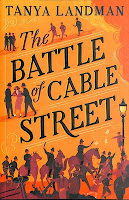
The Battle for Cable Street by Tanya Landman         $17
In 1936 the British Union of Fascists staged a provocative march through London's Jewish East End. They were met by a massive antifascist counter-protest, which fought the fascists and the police until Mosley was instructed by the police to leave the area. This important but overlooked piece of history is told for younger readers in the context of the lives of young people in the area. 
McKinnon takes readers on a vegetable-by-vegetable journey, packed with clever and inventive ways to combine ingredients, flavours and texture. With practicality, accessibility and economy in mind, Hetty devotes one chapter to each of her 22 favourite everyday vegetables, from Asian greens to zucchini. As is Hetty's signature, the flavours are globally inspired, with an emphasis on simple yet inventive weeknight cooking. 

This Devastating Fever by Sophie Cunningham          $37
Alice had not expected to spend the first twenty years of the twenty-first century writing about Leonard Woolf. When she stood on Morell Bridge watching fireworks explode from the rooftops of Melbourne at the start of a new millennium, she had only two thoughts. One was: the fireworks are better in Sydney. The other was: was the world's technology about to crash down around her? The world's technology did not crash. But there were worse disasters to come: Environmental collapse. The return of fascism. Wars. A sexual reckoning. A plague. Uncertain of what to do she picks up an unfinished project and finds herself trapped with the ghosts of writers past. What began as a novel about a member of the Bloomsbury set, colonial administrator, publisher and husband of one the most famous English writers of the twentieth century becomes something else altogether. 
One Hundred Havens: The settlement of the Marlborough Sounds by Helen Beaglehole        $60
History has played out in the many coves of the Marlborough Sounds in complex ways - Maori and Pakeha, land and sea, boom and bust, locals and tourists. It's a glorious but challenging environment, and generations of farmers, miners and tourism operators have faced obstacles that range from the merely difficult to the nearly impossible. Well illustrated. 

Rooms of Their Own: Where great writers write by Alex Johnson, illustrated by James Oses        $45
The perennial question asked of all authors is How do you write? What do they require of their room or desk? Do they have favourite pens, paper or typewriters? And have they found the perfect daily routine to channel their creativity? Crossing centuries, continents and genres, Alex Johnson has pooled 50 of the best writers and transports you to the heart of their writing rooms - from attics and studies to billiard rooms and bathtubs. Discover the ins and outs of how each great writer penned their famous texts, and the routines and habits they perfected. Meet authors who rely on silence and seclusion and others who need people, music and whisky. Meet those who travel half-way across the world to a luxury writing retreat, and others who just need an empty shed at the bottom of the garden. Some are particular about pencils, inks, paper and typewriters, and others will scribble on anything - including the furniture. But whether they write in the library or in cars, under trees, private islands, hotel rooms or towers - each of these stories confirms that there is no best way to write. 
A Message for Nasty by Roderick Fry            $40
December 8, 1941. Marie Broom wakes in her home on Hong Kong’s Fortress Hill to the sound of bombs falling nearby. Within days, Japanese soldiers have seized the surrounding ​buildings. Soon afterwards they take over the whole island. Most of its British residents are forcibly interned. Marie’s husband Vincent, a New Zealander, is away on business, trapped in Singapore as it too comes under Japanese attack. Macau-born Marie, 27, her three young daughters, baby son and the family’s amahs must face Hong Kong’s increasingly brutal occupation alone. A well-researched novel based on actual events and experiences. 
"The most chilling depiction of the Japanese occupation of Hong Kong and the particular horrors facing young women unprotected I have ever come across" —Peter Graham
"Change your life today. Don't gamble on the future, act now, without delay." So said Simone de Beauvoir. In this galvanising tour of her existentialist philosophies for life, we learn how de Beauvoir can teach us to free ourselves of fears and stereotypes and live more authentically.