BOOKS @ VOLUME #269 (11.3.22)
Read our latest NEWSLETTER, find out what we've been reading, and about new and interesting books.
BOOKS @ VOLUME #269 (11.3.22)
Read our latest NEWSLETTER, find out what we've been reading, and about new and interesting books.

| >> Read all Stella's reviews. | |
 | There's a Ghost in this House by Oliver Jeffers {Reviewed by STELLA} From the wrap-around translucent tracing paper dust-jacket to the hand-lettered font, to the wonderfully apt dimensions and quality of the paper, There’s a Ghost in this House will immediately draw you in. And this is even before you get to the best bits. This delightful ghostly tale of a girl determined to discover the ghost in her house is another standout from illustrator and author Oliver Jeffers. I loved the muted tones in this picture book, and how Jeffers has integrated his drawings and characters in a collage style with black-and-white images of furniture and interiors gleaned from old books and catalogues — predominately photographic. Add to this the clever use of tracing paper to expose the ghosts who are hiding in plain sight, small detail drawings, and the simple evocative text, and the appeal of this picture book is complete. The young girl who lives in the supposedly haunted house spends her days wandering the large old house looking in all the usual places where ghosts might be: in the attic, in the cupboard under the stairs, in the hall — where she may have heard them rattling their chains, under the bed, and up the chimney, and of course, in the rooms where the lights are off. Alas, to no avail. She wonders what they look like. She’s heard “some say they are white with holes for eyes”. The joy of this picture book lies in the ‘appearance’ of the ghosts as you turn the tracing paper pages. At first, they are quiet and hardly noticeable, but after a while, they become bolder and the relationship between the reader and ghosts, who are still invisible to the young girl, becomes a shared secret. There's plenty of quirky fun here, and Jeffers’s humour comes to the fore: the baby ghost, complete with a dummy, peeping over the edge of the cot. The ghosts under the table — one looking directly out of the page to the reader with a 'shh' finger raised to its lips. Ghosts that swing from chandeliers, ghosts that stop for a cup of tea and a chat, ghosts reading in the library and jumping on the bed. The ghosts are watching our brightly coloured girl and following her every move as she tours the house in her never-ending search, sure that someone is watching her. But where is the ghost? And the more you look, the more you see! Irresistible. |
| >> Read all Thomas's reviews. | |
 | Tropisms by Nathalie Sarraute (translated by Maria Jolas) {Reviewed by THOMAS} In biology, the directional response of a plant’s growth either towards or away from an external stimulus that either benefits or harms it is termed tropism. Nathalie Sarraute, in this subtly astounding book, first published in 1939, applies the term to her brief studies of ways in which humans are affected by other humans beneath the level of cognitive thought. In these twenty-four pieces she is interested in describing “certain inner ‘movements’, which are hidden under the commonplace, harmless appearances of every instant of our lives. These movements, of which we are hardly cognisant, slip through us on the frontiers of consciousness, in the form of undefinable, extremely rapid sensations. They hide behind our gestures, beneath the words we speak. They constitute the secret source of our existence.” We are either attracted or repulsed by the presence of others, though attraction and repulsion are indistinguishable at least in the degree of connection they effect, we are either benefitted or harmed by others, or both at once (which is much more harmful), but we cannot act upon or even acknowledge our impulses without making intolerable the life we have striven so hard to make tolerable in order to survive. Neurosis may be a sub-optimal functional mode, but it is a functional mode all the same. We wish to destroy but we fear, rightly, being also destroyed. We sublimate that which would overwhelm us, preferring inaction to action for fear of the reaction that action would attract, but we cannot be cognisant of the extent to which this process forms the basis of our existence for such awareness would be intolerable. We must deceive ourselves if we are to make the intolerable tolerable, and we must not be aware that we so deceive ourselves. Such devices as character and plot, which we both apply to ‘real life’ and practise in the reading and writing of novels, are “nothing but a conventional code that we apply to life” to make it liveable. Sarraute’s brilliance in this book, which is the key to her other novels, and which constitutes an object lesson for any writer, is to observe and convey the impulses “constantly emerging up to the surface of the appearances that both conceal and reveal them.” Subliminal both in its observations and in its effects, the book suggests the urges and responses that form the understructure of relationships, unseen beneath the effectively compulsive conventions, expectations and obligations that comprise our conscious quotidian lives. Many of the pieces suggest how children are subsumed, overwhelmed and harmed by adults: “They had always known how to possess him entirely, without leaving him an inch of breathing space, without a moment’s respite, how to devour him down to the last crumb.” Sarraute is not interested here in character or plot, but in the unacknowledged impulses and responses that underlie our habits, attitudes and actions. Each thing emerges from, or tends towards, its opposite. All that is beautiful moves towards the hideous. Against what is hideous, something inextinguishable moves to rebel, to survive. ‘Tropism’ also suggests the word ‘trop’ in French, in the sense of ‘too much’. The ideas we have of ourselves are flotsam on surging unconscious depths in which there is no individuality, only impulse and response. Sarraute’s tropisms give insight into the patterns, or clustering tendencies, of these impulses and responses, and are written in remarkable, beautiful sentences. “And he sensed, percolating from the kitchen, squalid human thought, shuffling, shuffling in one spot, going round and round, in circles, as if they were dizzy but couldn’t stop, as if they were nauseated but couldn’t stop, the way we bite our nails, the way we tear off dead skin when we’re peeling, the way we scratch ourselves when we have hives, the way we toss in our beds when we can’t sleep, to give ourselves pleasure and to make ourselves suffer, until we are exhausted, until we’ve taken our breath away.” |
NEW RELEASES





| >> Read all Stella's reviews. | |
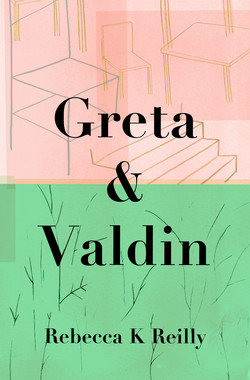
 | Greta & Valdin by Rebecca K Reilly {Reviewed by STELLA} Greta and Valdin are siblings. They live together in central Auckland. Greta is working on her Master’s thesis in comparative literature, enamoured with fellow student Holly and navigating her queerness and her mixed cultural heritage. Valdin has thrown in his career in astrophysics at the University, and has found a new role as a TV presenter — something he is unexpectedly doing well at — and is pining for his ex-boyfriend, Xabi. Basically, he’s having a crisis. In Rebecca K Reilly’s assured debut novel the chapters move between the narratives of these two siblings, their voices distinct and compelling, as they live and love in Tāmaki Makaurau. The city itself, richly described and lively, is a character in itself. While some readers will fall into this novel with little effort — the dialogue and character interactions relatable and the cultural references (films, music and memes) relevant — others will ease in more slowly as they walk along with these 20-somethings in contemporary Aotearoa. For this is a story at first glance about being young, about finding your way and being in love. It has those Sally Rooney hooks. But Reilly has more going on here and you can take this as a sharp, funny and romantic escape or dig a little deeper. The Vladisavljevic family is a blend of Maori, Russian and Catalan, which makes for some great family conversations and interesting experiences for the characters. Here, Reilly, uses humour as well as anger to put the spotlight on racism and prejudice. From the outburst of Valdin on location in Queenstown to the more subtle undercurrents in Betty’s life, from Greta’s annoyance at being pigeonholed to Ell’s exclusion from her family. As we get a glimpse into the lives of other family members, Greta & Valdin becomes a richer novel — more assertive and nuanced. What is family? Why and how does circumstance dictate choices made, paths taken. And how can love be exhilarating, sad and wonderful simultaneously? Whether it is Reilly’s intention or not, Greta & Valdin sings from a similar song sheet as a Dickensian family saga or a Jane Austin classic. The novel opens with despair and ends with a wedding, and is an emotional rollercoaster in-between. There are the complex family interchanges, the tales of woe and happiness, and machinations between characters that lead to both misunderstanding and revelation and acceptance, hurt and forgiveness, romantic and familial love, and humour — complete with witty dialogue. And all set in a distinctly vibrant contemporary Aotearoa complete with all its flaws and charm. And who can resist a happy ending? Shortlisted for the Acorn Prize 2022. |
| >> Read all Thomas's reviews. | ||
 | Mouthpieces by Eimear McBride {Reviewed by THOMAS}
|

NEW RELEASES