Friday, 15 April 2022


BOOKS @ VOLUME
#274 (16.4.22)

Read our latest newsletter!


>> Read all Stella's reviews.


As Needed, As Possible: Emerging conversations about art, labour and collaboration in Aotearoa edited by Sophie Davis and Simon Gennard  {Reviewed by STELLA}
As Needed, As Possible is a collection of writing and reflections on and discussions about art, labour and collaboration in Aotearoa. Spearheaded by Enjoy Contemporary Art Space, editors Sophie Davis and Simon Gennard, and invited contributors explore the roles of artist-run spaces, collaboration, community and dialogue between artists and curators to engage readers of this publication in thoughtful writing and ongoing discussion. As often is the case with the best writing, it is questions that lead to the best innovation. Published in conjunction with GLORIA Books, designer Katie Kerr has captured the ‘ready to go’ aesthetic of the print-ready PDF file in a perfectly bound and attractive ‘hand’book retaining the autonomy of the individual pieces while embracing the collective whole — a description that could be used in underpinning the concerns of many of the writers in this publication. As conversations weave through the challenges and rewards of running artist-spaces; balancing, or in the cases of James Tapsell- Kururangi and Zoe Thompson-Moore embracing, the domestic sphere with their art practice; reflecting on the political and economic aspects of art within the wider neoliberal construct; and the role of collaboration for artists, the art sector and the wider community, the reader is aware of a breadth of thinking and research, of reflection, in the small pieces presented in this publication. Written over a number of years, some before the pandemic, others during Lockdown, they are varied in presentation and approach. The email exchange between Sarah Hudson and Zoe Thompson-Moore, artists and mothers of young children, in “The Making of Bread”, is lively and punchy, laced with humour amid the reality of domesticity — when you never have enough time, but ideas spark nevertheless — a bit like a well-made loaf. They discuss bread as the memories it sparks, sustenance which it gives, its necessity, and the words they list to describe it — maintenance, attention, fermentation, transformation etc — are delightfully applicable to the creative process. In his photo essay and reflections, “Gains? Grandmother. Grey Street.” James Tapsell-Kururangi also approaches the domestic as he documents and explores ‘a year of living' as an art project. In the essays “Finding Time to Discuss Nothing” from the Ōtautahi Kōrerotia collective and “Risky Business” a conversation between curators Emma Budgen and Chloe Geoghegan, artist-run spaces are considered from functional and analytical viewpoints providing insight and food for thought. The conversation between Budgen and Geoghegan, reflecting on past and present, their personal experiences in artist-run spaces, alongside political and social constructs (“Funding is never neutral” - EB) and the wider arts sector is particularly engaging in the labour/value/art discussion and the consideration of otherness or the embracing of an ethos of ‘relative autonomy'. In her closing statement, Budgen reveals that the conversation which reads seamlessly has occurred over many months in the moments after everything else, in the ‘gaps’. Another example of the value afforded art practice and conversation. While this necessity to exist in spite of challenges, time constraints, financial risk and the limits of a capitalist system (deftly explored in No nSense by Public Space — so simple, so perfect and so political) can be seen as a positive (it is often a barrier) towards stimulating engaging dialogue and creativity, it is interesting to note the recent acknowledgement of the ‘value’ of art in Ireland’s new Basic Income for artists scheme. A thought-provoking collection of writing for artists and anyone engaged with making space, literally or metaphorically, for art.


 >> Read all Thomas's reviews. 


An Attempt at Exhausting a Place in Paris by Georges Perec (translated by Marc Lowenthal)  {Reviewed by THOMAS}
You’re soaking in it, he thought, not for the first time. Could he quote David Hume, he wondered, and say, All there is is detail and anything else is conjecture, no, he could not quote Hume, at least not accurately, with that particular sequence of words, though of course he could not be certain that Hume did not say or think such a thing. The thought stands though, he thought, or the words that seemed at least to him to convey the thought, not that anyone reading the words would be in a position to judge the distance, if any distance is possible, between the thought and the words he wrote, but this is a whole other story and already he had come unfortunately quite far from that about which he purposed to write, he carefully wrote. All there is is detail, actually, he qualified deliberately, and we use these details to construct the sad narratives of our lives, or happy narratives, why not, though it would be more accurate to say that the narratives choose the details and not the other way round, neurology will back me up on this, he thought, no footnotes forthcoming, the narratives choose the details and not the other way round, he wrote, living and reading are not so different after all, the damage or whatever to the brain is the same whatever other harms may be avoided. Reality is produced by our failure to reach the actual, he wrote, but who he wondered could he pin this quote on. Anybody’s guess. A novel is more or less full of details, if there’s such a thing as more than full, in fact literature is all detail of one sort or another, supposedly all relevant and chosen by the authority, the reader has no business to think that there’s anything more, but also, he thought, no business to think that there isn’t anything more, in any case in the world of detail that we’re soaking in we assume there is more than those morsels of which we are aware, though in fact there may not be and no experiment can relieve us of this possibility, how claustrophobic, but let us assume for the sake of argument, if you want an argument, or for the sake of the opposite of claustrophobia, whatever that is, agoraphobia perhaps, the terrifying infinitude of possibility from which we protect ourselves with stories, to not be overwhelmed, that if we could let down our stories just for a moment we could expose ourselves to other details, unstoried or unstoried-as-yet, which could support quite other stories and all that attaches to those, or whatever. For three days in October in 1974 Georges Perec challenged himself to merely observe whatever passed before him in Saint-Sulpice, recording his observations as fast as he could write, except for when he was ordering coffee or Vichy water or Bourgueil. Observing without presupposing a story gives an equivalence to all details, the ordinary and what Perec calls the infraordinary are full participants in a thoroughly democratic ontology, every detail shines with significance even if it signifies nothing beyond its own existence. Almost it is as hard a discipline to stop a story suggesting itself as it is to suspend the stories we bring, although, I suppose, he thought, any story that suggests itself is in fact a story I have somehow brought with me even if I was unaware that I had it on board, which is interesting, he thought, in itself. No conjectures! Of course Perec cannot write fast enough, time, whatever that is, moves on or whatever it is that it does, the moment is torn away before he can catch much of it, the limits of his capacities affect his ability to observe, he is overwhelmed by his task but not destroyed so not in fact overwhelmed, so many details are suppressed by practicality, there must be some story taking place, the story of the observing I, of the capacities and the limitations that make up Georges Perec perhaps. Why these details and not other details given that we generally assume there to be a limitless amount of details out there, are we to conclude that every attempt at objectivity is autobiography, someone’s story, by necessity, at best. Subjectivity is a product of time, he thought, or produces time, whatever that is, the progression of our attention through a certain set of details, the constraining force that suppresses all but the supporting details, the readable details or at least the ones that we read, in either literature or life, the subjectivity that burdens us with personhood and other what we could call spectres of the temporal. He couldn’t get all the infraordinary down, he wrote, referring to Perec, Perec made an attempt at exhausting a place in Paris but his attempt was doomed to fail, just as it was revealing possibilities which made it a success it failed, due to time, due to the particular set of limitations that passes in this instance for Perec, he couldn’t get more of the infraordinary down without stopping time, without removing himself or at least seeming to, without taking a place, a small place, perhaps of necessity a fictional place but I’m not sure of this, without taking a place and truly exhausting it, stopping time, recording every infraordinary detail and watching them vibrate with the potential for unrealised story, without in other words sitting down and writing, soon after writing this book, his masterwork of detail, Life, A User’s Manual, he wrote.

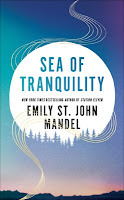
Our Book of the Week sees Emily St. John Mandel (author of Station Eleven and The Glass Hotel) return with Sea of Tranquility, a novel of art, time, love, and plague that takes the reader from Vancouver Island in 1912 to a dark colony on the moon five hundred years later. Unfurling a story of humanity across centuries and space, this is a novel of time travel and metaphysics, but it is firmly rooted in the reality and issues of our current moment.
>>The apocalypse is always now. 
>>Stepping into her own multiverse. 
>>Marquee moon. 
>>The autofiction element. 
>>Sars Twelve. 
>>A moment of beauty. 
>>Some essays by E.St.J.M.
>>Read Station Eleven.

 NEW RELEASES

Never Did the Fire by Diamela Eltit (translated by Daniel Hahn)         $36
Never Did the Fire unfolds in the humdrum of everyday working class existence, making the afterlife of an agitator that of anyone living next door. For one old couple, brought together years ago in an underground cell, the revolution has ended in a small apartment, a grinding job caring for the bodies of the unwell well-to-do, and all the aches and pains that go with a long life and a long marriage. Untethered from the political action that defined them, and mourning the loss of their child, their bonds dissolve, but the consequences of their former life, and their dependence on each other, won't let them go. A literary icon in Chile and a major figure in the anti-Pinochet resistance, Diamela Eltit is at the height of her powers in this novel of breakdowns. Never Did the Fire evokes the charged air of Chile's violent past, and the burdens it carries into the present-day. What happens, when the structures we built, and the ones we succumbed to, no longer offer us any comfort or prospect of salvation?
Catching Fire: A translation diary by Daniel Hahn             $36
In Catching Fire, the translation of Diamela Eltit's Never Did the Fire unfolds in real time as a conversation between works of art, illuminating both in the process. The problems and pleasures of conveying literature into another language — what happens when you meet a pun? a double entendre? — are met by translator Daniel Hahn's humour, deftness, a deep appreciation for what sets Eltit's work apart, and his evolving understanding of what this particular novel is trying to do. The book offers superb insight into the process of translation. 
Young Mungo by Douglas Stuart                $38
Stuart won the 2020 Booker Prize for Shuggie Bain, and the new book is said to be even better. Set in an area of 1990s Glasgow knocked hard by unemployment, alcohol, Margaret Thatcher and violence, Young Mungo is a story of a family under stress but also of love and of romantic and sexual awakening. 
>>"Stuart is a genius."
Sea of Tranquility by Emily St. John Mandel            $38
The author of Station Eleven and The Glass Hotel returns with a novel of art, time, love, and plague that takes the reader from Vancouver Island in 1912 to a dark colony on the moon five hundred years later, unfurling a story of humanity across centuries and space. Sea of Tranquility is a novel of time travel and metaphysics firmly rooted in the reality of our current moment.
 “One of Mandel’s finest novels and one of her most satisfying forays into the arena of speculative fiction yet.” —The New York Times
Fragments from a Contested Past: Remembrance, denial and New Zealand history by Joanna Kidman, Vincent O'Malley, Liana MacDonald, Tom Roa and Keziah Wallis         $15
"What a nation or society chooses to remember and forget speaks to its contemporary priorities and sense of identity. Understanding how that process works enables us to better imagine a future with a different, or wider, set of priorities." History has rarely felt more topical or relevant as, all across the globe, nations have begun to debate who, how and what they choose to remember and forget. In this BWB Text addressing ‘difficult histories’, a team of five researchers, several from iwi invaded or attacked during the nineteenth-century New Zealand Wars, reflect on these questions of memory and loss locally.
>>Remembering and forgetting difficult histories. 
Tomb of Sand by Geetanjali Shree (translated by Daisy Rockwell)          $38
In northern India, an 80-year-old woman slips into a deep depression at the death of her husband, then resurfaces to gain a new lease of life. Her determination to fly in the face of convention confuses her bohemian daughter, who is used to thinking of herself as the more ‘modern’ of the two. To her family’s consternation, Ma then insists on travelling to Pakistan, confronting the unresolved trauma of her teenage experiences of Partition. 
"Despite its serious themes, Geetanjali Shree’s light touch and exuberant wordplay ensures that Tomb of Sand remains constantly playful — and utterly original." —Judges' commendation on short-listing the book for the 2022 International Booker Prize
In Cars: On Diana by Leeanne Shapton            $35
A visual essay, a poem, a study of Princess Diana, image, celebrity and identity. Leanne Shapton has painted Princess Diana from the hundreds of photographs of her getting out of cars, examining her iconography and meaning in gesture and form. In Cars: On Diana is about photography, celebrity, identity, facsimile, and where to hold the beheld. It is also an obsessive and loving collection of studies, abstracted and haunting.
"Leanne Shapton is one of the most broadly creative and gifted people at work today; a true artist, both visual and verbal." —David Rakoff
"Leanne Shapton writes with such curiosity ruefulness intelligence and grace.' —Sheila Heti 
"A strange and evocative poem, nesting in a sequence of paintings, both the art and the words examining Diana having her photograph taken getting out of cars — each path taking us inevitably to the final car ride. Like a gentler, kinder, J. G. Ballard, Leanne takes us on a journey into cars and iconography and the spirit of ecstasy." — Neil Gaiman
>>"We're on a definite warped thing."
>>The desire to always go bigger. 
Cain's Jawbone by 'Torquemada' [Edward Powys Mathers]         $23
Six murders. One hundred pages. Millions of possible combinations... but only one is correct. Can you solve Torquemada's murder mystery?  In 1934, the Observer's cryptic crossword compiler, Edward Powys Mathers (a.k.a. Torquemada), released a novel that was simultaneously a murder mystery and the most fiendishly difficult literary puzzle ever written.   The pages have been printed in an entirely haphazard order, but it is possible — through logic and intelligent reading — to sort the pages into the only correct order, revealing six murder victims and their respective murderers. Only three puzzlers have ever solved the mystery of Cain's Jawbone: do you have what it takes to join their ranks?  
Warning: This puzzle is extremely difficult and not for the faint-hearted.
Seven Steeples by Sara Baume             $36
It is the winter following the summer they met. A couple, Bell and Sigh, move into a remote house in the Irish countryside with their dogs. Both solitary with misanthropic tendencies, they leave the conventional lives stretched out before them to build another—one embedded in ritual, and away from the friends and family from whom they've drifted. They arrive at their new home on a clear January day and look up to appraise the view. A mountain gently and unspectacularly ascends from the Atlantic, "as if it had accumulated stature over centuries. As if, over centuries, it had steadily flattened itself upwards." They make a promise to climb the mountain, but—over the course of the next seven years—it remains unclimbed. We move through the seasons with Bell and Sigh as they come to understand more about the small world around them, and as their interest in the wider world recedes. 
>>"I will probably live to see the end of the world."
Portugal: The cookbook by Leandro Carreira         $90
With its diverse cuisine and intriguing culinary history, Portugal is a focus for food lovers worldwide. Portugal: The Cookbook gathers together over 550 recipes from every region of the country, including fish and shellfish dishes from the Algarve coast, hearty stews from the Douro Valley, and the famous pastries of Lisbon.
Accidental Gods: On men unwittingly turned divine by Anna Della Subin      $45
Unorthodox devotions have seen Prince Philip deified on a small island in the South Pacific, while a National Geographic article elevated Haille Selassie from Emperor toMessiah. Unlikely Gods blossomed in India, where British officers and bureaucrats found themselves at the centre of new religions. When Spanish explorers landed in the New World they spoke with the natives and heard the word 'God' on their lips. These transformations have attended on moments of emancipation and rebellion; they have excused enslavement and fuelled revolution. Spanning the globe and five centuries, Accidental Gods is a revelatory history of the unwanted divine, which tells the stories of the men and women who have profited and suffered from these curious apotheoses. In its bravura final part, Subin traces the colonial desire for deification through to the creation of 'race' and the white power movement today, and argues that it is time we rid ourselves of the 'White Gods' among us.
Radio Benjamin by Walter Benjamin (translated by Jonathan Lutes, Lisa Harries Schumann and Diana Reese)         $25
From 1927 to 1933, Walter Benjamin wrote and presented more than eighty broadcasts over the new medium of radio. Radio Benjamin gathers, for the first time in English, the surviving transcripts. This eclectic collection shows the range of Benjamin's thinking and includes stories for young and old, plays, readings, book reviews, a novella, and discussions of topics ranging from finding a job to the architecture of Berlin to an account of the railway disaster at the Firth of Tay. Now in paperback.
Nistisima: The secret to delicious vegan cooking from the Mediterranean and beyond by Georgina Hayden         $55
Nistisima means 'fasting food' — food traditionally eaten during lent and other times of fasting observed by those of Orthodox faith. Mostly this involves giving up meat and dairy and instead using vegetables, pulses and grains to create easy, delicious dishes that all just happen to be vegan. In this book, Hayden draws on the history and culture around nistisimo cooking in the Mediterranean, the Middle East and Eastern Europe to share the simple, nutritious and flavour-packed recipes at the heart of the practice.
So Far For Now by Fiona Kidman            $38
It is a little over a decade since Fiona Kidman wrote her last volume of memoir. But her story did not end on its last page; instead her life since has been busier than ever, filled with significant changes, new writing and fascinating journeys. From being a grandmother to becoming a widow, from the suitcase-existence of book festivals to researching the lives and deaths of Jean Batten and Albert Black, she has found herself in new territory and viewed the familiar with fresh eyes. She takes us with her to Paris and Pike River, to Banff, Belfast and Bangkok, searching for houses in Hanoi and Hawera, reliving her past in Waipu and experiencing a stint in Otago.
Why Didn't You Just Do What You Were Told? by Jenny Diski         $25
Jenny Diski was a fearless writer, for whom no subject was too difficult, even her own cancer diagnosis. Her columns in the London Review of Books — selected here by her editor and friend Mary-Kay Wilmers, on subjects as various as death, motherhood, sexual politics and the joys of solitude — have been described as virtuoso performances, and small masterpieces. From Highgate Cemetery to the interior of a psychiatric hospital, from Tottenham Court Road to the icebergs of Antarctica, Why Didn't You Just Do What You Were Told? is an interrogation of universal experience from a very particular psyche: original, opinionated — and mordantly funny. With an afterword by her daughter, Chloe Diski, this is a must-have for essay lovers everywhere. Now in paperback. Recommended.
"Diski expanded notions about what nonfiction, as an art form, could do and could be." —New Yorker
The Uses of Disorder: Personal identity and city life by Richard Sennett          $23
When first published in 1970, The Uses of Disorder was a call to arms against the deadening hand of urban planning upon the thriving chaotic city. Written in the aftermath of the 1968 student uprising in the US and Europe, it demands a reimagination of the city and how class, city life and identity combine. Too often, this leads to divisions, such as the middle class flight to the suburbs, leaving the inner cities in desperate straits. In response, Sennett offers an alternative image of a dense, disorderly, overwhelming cities that allow for change and the development of community. Fifty years later this book is as essential as it was when it first came out, and remains an inspiration to architects, planners and urban thinkers everywhere.
Amongst Our Weapons ('Rivers of London' #9) by Ben Aaronovitch           $38
There is a world hidden underneath this great city... The London Silver Vaults — for well over a century, the largest collection of silver for sale in the world. It has more locks than the Bank of England and more cameras than a celebrity punch-up. Not somewhere you can murder someone and vanish without a trace — only that's what happened. The disappearing act, the reports of a blinding flash of light and memory loss amongst the witnesses all make this a case for Detective Constable Peter Grant and the Special Assessment Unit. Alongside their boss DCI Thomas Nightingale, the SAU find themselves embroiled in a mystery that encompasses London's tangled history, foreign lands and, most terrifying of all, the North! And Peter must solve this case soon because back home his partner Beverley is expecting twins any day now. But what he doesn't know is that he's about to encounter something -—and somebody — that nobody ever expects.
This Mortal Coil: A history of death by Andrew Doig           $33
Dementia, heart failure and cancer are now the leading causes of death in industrialised nations, where life expectancy is mostly above 80. A century ago, life expectancy was about 50 and people died mainly from infectious diseases. In the Middle Ages, death was mostly caused by famine, plague, childbirth and war. In the Palaeolithic period, where our species spent 95% of its time, we frequently died from violence and accidents. Causes of death have changed irrevocably across time. In the course of a few centuries we have gone from a world where disease or violence were likely to strike anyone at any age, and where famine could be just one bad harvest away, to one where in many countries excess food is more of a problem than a lack of it. Why is this? Why don't we die from scurvy or smallpox any more? And why are heart attacks, Alzheimer's and cancer so prevalent today? This Mortal Coil explains why we died in the past, the reasons we die now and how causes of death are about to profoundly change.
What Colour Is the Sky? by Laura Shallcrass         $30
Explores the idea that all of us have different perspectives and opinions in life. This Aotearoa picture book for young children explores the wonder of nature and shows the importance of listening and respecting other opinions, even when we see things differently.
Witherward by Hannah Mathewson          $23
Welcome to the Witherward, and to a London that is not quite like the one we know. Here, it's summertime in February, the Underground is a cavern of wonders and magic fills the streets. But this London is a city divided, split between six rival magical factions, each with their own extraordinary talents – and the alpha of the Changelings, Gedeon Ravenswood, has gone rogue, threatening the fragile accords that have held London together for decades. Ilsa is a shapeshifting Changeling who has spent the first 17 years of her life marooned in the wrong London, where real magic is reviled as the devil's work. Abandoned at birth, she has scratched out a living first as a pickpocket and then as a stage magician's assistant, dazzling audiences by secretly using her Changeling talents to perform impossible illusions. When she's dragged through a portal into the Witherward, Ilsa finally feels like she belongs. But her new home is on the brink of civil war, and Ilsa is pulled into the fray. The only way to save London is to track down Gedeon, and he just so happens to be Ilsa's long-lost brother, one of the last surviving members of the family who stranded her in the wrong world. Beset by enemies on all sides, surrounded by supposed Changeling allies wearing faces that may not be their own, Ilsa must use all the tricks up her sleeve simply to stay alive.
Ways of Looking at Art: 50 cards to shift your perspective by Martin Jackson and George Wylesol          $30
Transform your relationship to art with fifty illustrated prompts. Rethink how you see. Each card offers a different way of looking at anything from graffiti to sculpture, painting to tapestry. Have a fresh encounter with whatever artwork comes your way.


Saturday, 9 April 2022


BOOKS @ VOLUME #273 (8.4.22)

For all sorts of good reasons, read our latest newsletter!


>> Read all Stella's reviews.


Eating   {Two cookbook reviews by STELLA}
This is the season to discover new cuisines or expand your baking repertoire. Here are two very very different cookbooks that I have been dipping into this year:
Having a themed Japanese birthday for a family member encouraged me to expand on my limited, predominantly sushi-focused, recipes. Maori Murota's Tokyo Cult Recipes was just the right level, expanding my pantry and knowledge of Japanese cooking. I like the 'Cult Recipes' series of cookbooks for their liveliness, not-too-complicated recipes, and interesting cultural outtakes. The bonuses are the street photography and the clear instructions, sometimes illustrated by photographs. A Japanese omelette was a simple joy to make, rolling the thin crepe-like layers around itself, and the photographic instructions made it perfectly comprehensible. There’s detailed information about ingredients, like different types of miso; and recipes for pantry staples, e.g. dashi. The feast meant many bowls of small dishes and all the elements on the go, but it was worth it!  On the menu from this cookbook, Edamame, Agedashi-Dofu, Ebi No Kousai Ae (Prawns with Coriander — delicious!) and some pickles.
And an occasion isn’t complete without baking — a cake, of course, and a breakfast treat. The Nordic Baking Book is a standard in our household, and I had looked at this and been a bit overwhelmed by its breadth, thinking the recipes were beyond my baking skill. Mistake! The recipes are wonderful, with many variations on a theme, so you can choose a lesser or more complex style to suit your circumstances or, in many cases, your regional preference. Magnus Nilsson’s knowledge of Nordic baking draws on his professional skills as well as his family knowledge. His lively writing and sometimes very amusing opinions make for fine reading. The recipes, so many of them, are well explained and the results excellent. There’s bread, crackers, pancakes and waffles, sweet pastries, kringles, sweets and cakes, to name just a few of the sections! There are recipes from the whole region, including Norway, Sweden, Iceland, Finland and Denmark, highlighting similarities as well as differences in approach and ingredients. Breakfast’s choice was Solbullar (Sun Buns), a moreish wheaty bun filled with vanilla custard cream with sugared coating — straightforward to make, impressive to behold, and easy to eat. The cake, Ambrosiakaka (Glazed Orange Sponge Cake) — light and delicious — was perfect for the occasion. I added a little extra decoration to give it that birthday lift. Other recipes that I enjoyed making and consuming include the many types of waffles and pancakes, especially the delicate sugared pancakes, which are like an upmarket pikelet but light as air and perfect for a weekend breakfast or snack! 


 >> Read all Thomas's reviews. 


The Lost Writings by Franz Kafka (translated by Michael Hofmann)  {Reviewed by THOMAS}

“People are individuals and fully entitled to their individuality, though they first must be brought into an acceptance of it.” If I write more of this it will mean nothing, but this does not stop me sitting at my little desk, here in the hall of our apartment, writing away each night after the others have gone to sleep. The clock in the sitting room slices away the seconds with each swing of its pendulum; the seconds, the minutes, the hours, each moment a decapitation of all that I have written, these sentences just as deserving of being considered shavings from my pencil as the shavings that accumulate at my page-side. Which is the better monument to my labour? It is hard to begin to write, but I am one who believes that beginning to write is possible, perhaps with superhuman effort, or with effort that is human if superhuman effort is not attainable by humans, but I do not believe that it is possible to bring writing to completion, and so I complete nothing. Not that it is not easy to stop; nothing could be easier. Anyone who writes has an equal ability to stop writing; though the ability to write may be very unequally distributed, to stop writing is within the reach of all. Why then, if stopping is so easy, do so many writers not improve the quality of their work by availing themselves more often of this common ability? If a good writer is one who manages not to write bad books, a reasonable definition, then, and I state this without conceit, though I complete nothing I am a better writer than many writers more famous than me. If it is possible to begin and possible to stop but impossible to complete, at least for me who does not believe in the possibility of completion and who does not believe that the world contains completion, only beginnings and stoppings, what is produced by all this writing? I produce nothing but fragments. I believe in nothing but fragments. Even the great sheaf of pages that I call The Proceedings is a fragment, an interminable fragment, uncompletable, and I would rather this is burned after my death than turned into a work by an editor or executor, no matter how well-intentioned. Will there come a day, perhaps a hundred years from now, when the fragment is recognised as a literary form in itself, perhaps the only literary form, the only form that can approach the truth, no matter that it limps in its approach. The smaller the fragment, then, the more perfectly it expresses its inability to be anything other than a fragment, but how shall these fragments be assembled and arranged? Fragments are best arranged in a fragmentary way. Just as dust accumulates throughout an unswept house, but more in some places than in others, such as in the space between an unclosed door and the wall against which it rests, so fragments naturally become lost within the drifts of which they are part. How shall they be found among all the other fragments in which in plain sight they are as good as lost? There is nothing lost about these lost writings. The writer and the reader are more lost than what is written, but only when they write and read. I write to be rid of myself. I write to be rid of thought. I write to be rid of what I have written but every fragment adds to this burden I write to put down. I sharpen my pencil again as the pendulum swings and add to the pile of shavings that is my more fitting legacy, the one that my executor will not hesitate to burn, should they happen to survive that long. I write as the birds begin to sing in the trees in the street below. I will not complete what I write. It is not possible to complete what I write. Whether I wish to complete what I write or not affects nothing, I will produce a fragment, but the question of whether I should strive for completion remains. I will be found where I am lost. Every opportunity is a trap, but I leap in regardless [...]

Our Book of the Week is the endlessly fascinating and inspiring NUKU: Stories of 100 indigenous women by Qiane Matata-Sipu. Beautifully photographed and speaking in their own words, the women in this book are remarkable for doing extraordinary and/or ordinary things with strength, dedication, imagination and authenticity, blending their various heritages with a creative approach to the present and a firm eye on the future.  
>>A project by wāhine, for wāhine.
>>100 podcasts! 
>>An interview with Qiane Matata-Sipu.
>>"This is exactly what I need right now."
>>Your copy is waiting for you (or we can send one to a friend). 
>>Other books short-listed for the 2022 Ockham New Zealand Book Awards. 
>>Vote for the book on the VOLUME Ockhameter. 
 

 NEW RELEASES

Happy Stories, Mostly by Norman Erikson Pasaribu (translated by Tiffany Tsao)           $33
"A powerful blend of science fiction, absurdism and alternative-historical realism that aims to destabilise the heteronormative world and expose its underlying rot." Inspired by Simone Weil’s concept of ‘decreation’ and drawing on Batak and Christian cultural elements, in Happy Stories, Mostly Pasaribu puts queer characters in situations and plots conventionally filled by hetero characters. In one story, a staff member is introduced to their new workplace - a department of Heaven devoted to archiving unanswered prayers. In another, a woman’s attempt to vacation in Vietnam after her gay son commits suicide turns into a nightmarish failed escape. And in a speculative-historical third, a young man finds himself haunted by the tale of a giant living in colonial-era Sumatra.
Long-listed for the 2022 International Booker Prize.
A Brief History of Equality by Thomas Piketty (translated by Steven Rendall)        $55
A surprisingly optimistic history of human progress toward equality despite crises, disasters, and backsliding. Piketty guides us through the movements that have made the modern world for better and worse: the growth of capitalism, revolutions, imperialism, slavery, wars, and the building of the welfare state. It's a history of violence and social struggle, punctuated by regression and disaster. But through it all, Piketty believes, human societies have moved fitfully toward a more just distribution of income and assets, a reduction of racial and gender inequalities, and greater access to health care, education, and the rights of citizenship. To keep moving, Piketty argues, we need to learn and commit to what works, to institutional, legal, social, fiscal, and educational systems that can make equality a lasting reality. 
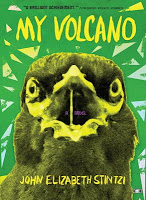
My Volcano by John Elizabeth Stintzi             $38
In this inventive, enjoyable and audacious novel — at once science fiction, myth, eco-horror, parable, and a shout for gender liberation and creative freedom — divers characters in diverse times and places undergo diverse personal eruptions (mostly metaphorical). On June 2, 2016, a protrusion of rock growing from the Central Park Reservoir is spotted by a jogger. Three weeks later, it is nearly two-and-a-half miles tall, and has been determined to be an active volcano. As the volcano grows and then looms over New York, an eight-year-old boy in Mexico City finds himself transported 500 years into the past, where he witnesses the fall of the Aztec Empire; a Nigerian scholar in Tokyo studies a folktale about a woman of fire who descends a mountain and destroys an entire village; a white trans writer in Jersey City struggles to write a sci-fi novel about a thriving civilization on an impossible planet; a nurse tends to Syrian refugees in Greece while grappling with the trauma of living through the bombing of a hospital in Kunduz, Afghanistan; a nomadic farmer in Mongolia is stung by a bee, magically transforming him into a green, thorned, flowering creature that aspires to connect every living thing into its consciousness.
Raiment by Jan Kemp             $35
Poet Jan Kemp's memoir of her first 25 years is a vivid and frank account of growing up in New Zealand in the 1950s, and of university life in the late 1960s and early 1970s. It tracks from an innocent Waikato childhood to the seedy flats of Auckland, where anarchic student life, drugs, sexual experimentation and a failing marriage could not keep her away from poetry. Kemp became one of the few young women poets of her era to be allowed into then-male poet circles. Raiment shines a clear-eyed light on the heady, hedonistic hothouse of the New Zealand literary community in the 1970s. 
Portrait of an Unknown Lady by Maria Gainza (translated by Thomas Bunstead)          $35
An Argentinian art critic recalls how she was drawn into the world of forgery, and becomes increasingly fascinated by three women who challenge the fundamentals of art discourse and other cultural norms. 
"Gainza’s novel becomes a puzzle as we question the most improbable biographical details. How much has been fabricated by the narrator? Does authenticity really matter? And exactly whose life story is she really interested in: artist, forger or authenticator? This is a novel with many beautiful, confounding moments. Maria Gainza is sharp, modern and playful, a writer who multiplies the possibilities for fiction." —Guardian
Tūnui | Comet by Robert Sullivan             $20
Rolling easily between kōrero Māori and the canonical traditions of English-language poetry, through karakia and pōwhiri, treaty training and decolonisation wiki entries, Robert Sullivan takes readers on a marvellous poetic hīkoi. Guided by Māui and Tāwhirimātea, Moana Jackson and Freddie Mercury, we walk from K’Rd council flats to Kaka Point, finding ourselves and our ancestors along the way.
Crane Guy: A game of I Spy from on high by Sally Sutton and Sarah Wilkins           $20
Spend the day with Crane Guy and see how many things you can spy from up high in his crane. Crane Guy, up so high, Building towers in the sky, Tell me, tell me what you spy. Something beginning with . . . Join Crane Guy for a game of I Spy up high in a crane - how many things can you see that begin with the letter B? Or S? Or P? This superb rhyming picture book by acclaimed author Sally Sutton and illustrator Sarah Wilkins makes a very fun game of learning letters and their sounds. Readers will love exploring the gorgeously detailed city scenes over and over again. Bustling with people, construction machines and vehicles of all kinds, this is an exciting book. 
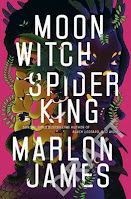
Moon Witch, Spider King ('Dark Star' #2) by Marlon James             $38
In the much-anticipated sequel to Black Leopard, Red Wolf, James continues his powerful fantasy, drawing from roots in African mythology and history. In the first book, Sogolon the Moon Witch proved a worthy adversary to Tracker as they clashed across a mythical African landscape in search of a mysterious boy who disappeared. In Moon Witch, Spider King, Sogolon takes center stage and gives her own account of what happened to the boy, and how she plotted and fought, triumphed and failed as she looked for him. It's also the story of a century-long feud — seen through the eyes of a 177-year-old witch — that Sogolon had with the Aesi, chancellor to the king. It is said that Aesi works so closely with the king that together they are like the eight limbs of one spider. Aesi's power is considerable — and deadly. It takes brains and courage to challenge him, which Sogolon does for reasons of her own.
"In the second book of his 'Dark Star' trilogy, James coaxes beauty from dark thoughts, leaving readers with a concaved, mystical and African-inspired world that begins in free-fall. In a world as thoroughly imagined as J.R.R. Tolkien's, no detail seems spared. Full-figured and richly drawn, Moon Witch, Spider King is the bridge of a trilogy and also a creation that, like James's talent, stands alone." —Los Angeles Times
Another Beautiful Day Indoors by Erik Kennedy          $25
Out on the pleasure pier on that benign afternoon,
the air heavy with the blossom of vinegar and old tyres,
you asked what was the closest I had come to death. 
Another Beautiful Day Indoors is more likely to end with a dark flood than a beautiful sundown. As these poems grapple with climate catastrophe, precarious labour, and love, they draw on the full, rich weirdness of the human-made world, with its self-driving cars, official geese and open-plan offices modelled on heaven. A sequence of magical realist short fictions explore ‘essential work’; elsewhere Erik Kennedy wonders what it is like to work in the satellite insurance sector. Somehow he gets away with rhyming ‘guesses’ with ‘yeses’. And somehow, even as this book comes up against the most ominous aspects of our future, it uplifts. 
Dogs in Early New Zealand Photographs edited by Mike White         $35
This entertaining selection of over 100 photos of New Zealand dogs reveals some of the more curious ways in which they have appeared in photographic collections from the nineteenth and early twentieth centuries. Dogs named Terror, Betsey Jane, Floss and Erebus appear alongside canines whose names are longer known. The photos range from carefully staged studio portraits to New Zealand landscapes. Many of the photographs are from Nelson's Tyree Collection. 

Run and Hide by Pankaj Mishra                $35
In Mishra's long-awaited new novel, Arun knows there is only way out of this small railway town. He is about to enrol in the prestigious Indian Institute of technology, determined to make something of himself. But once there, he meets two friends who are prepared to go to unimaginable lengths to succeed. In just a few years, Arun's friends become the success stories of their generation. In private planes and expensive cars, from New York to Tuscany, they play out their Gatsby-style fantasies. In reality, these men are about to pay for their transgressions, but who exactly will pay the price? Will it be Arun? Will it be Alia, a female writer and influencer, who is piecing together the story of a big global financial scandal?
"A spectacular, illuminating work of fiction." —Jennifer Egan
"Elegantly written, incisively observed, and deeply satisfying to read." —Kamila Shamsie
Lambda by David Musgrave          $35
Outwardly alien arrivals from a distant sea, the lambdas are genetically human. They slip quietly into low- to middle-income jobs and appear to want nothing more than to be left alone. For Cara Gray, they are first a haunting presence in her otherwise ordinary childhood, then the inscrutable target of her police surveillance work. When a bomb goes off at a school, a nebulous group of lambda extremists claims responsibility for the attack-but how could a vulnerable community of tiny aquatic humans, barely visible in society and seemingly indifferent to their own exploitation, be capable of something so horrific? In Cara's world a toothbrush can be legally alive, a quantum computer has the power to decide who dies, and a government employee made of slime mould protein needs help to relieve his neuroses. As Cara's relationship with the lambdas deepens, she must decide whether to accept her place in a pattern of technology, violence and deceit, or to take action of her own.
"Literary SF at its best." —Guardian
OST: Letters, memoirs and stories from Ostarbeiter in Nazi Germany edited by MEMORIAL (translated by Georgia Thomson)           $70
An extraordinary assemblage of moving and revelatory documents and testimony from the Nazi forced labor camps. An Ostarbeiter was an 'Eastern Worker', rounded up by Nazi Germany from the captured territories in Central and Eastern Europe. By the end of the war, it is estimated that approximately 3 million to 5.5 million Ostarbeiter were forced to work in guarded work camps, many of them younger than 16 years old — at which age they would be conscripted for military service. Ostarbeiter worked 12 hours a day on starvation on rations; as ethnic Slavs, they were treated with extraordinary brutality by Nazi guards who considered them 'sub-human' by the standards of the Aryan master race. They were distinguished by the label 'OST' sewn onto their uniforms. OST is based on over two hundred personal accounts, hundreds of hours of interviews, and over 350,000 letters. 
Nature Boy: The photography of Olaf Petersen edited by Catherine Hammond et al        $60
A gull chick running across Muriwai Beach. Cabbage trees at Lake Wainamu. Tyre tracks, tugs of war and tramping trips. Olaf Petersen produced an unrivalled photographic account of the people and natural world of Auckland's wild west coast, from the 1930s to the 1980s. 

Some Collages by Jim Jarmusch            $65
Although Jim Jarmusch is best known for his storied career in independent cinema, over the years he has produced hundreds of pieces of collage art, the majority of which has been rarely seen by the public. Drawing inspiration from the largest medium of cultural documentation—newspapers—Jarmusch crafts each work by layering newsprints on cardstock. 
The Slowworm's Song by Andrew Miller          $38
An ex-soldier and recovering alcoholic living quietly in Somerset, Stephen Rose has just begun to form a bond with the daughter he barely knows when he receives a summons — to an inquiry into an incident during the Troubles in Northern Ireland. It is the return of what Stephen hoped he had outdistanced. Above all, to testify would jeopardise the fragile relationship with his daughter. And if he loses her, he loses everything. Instead, he decides to write her an account of his life; a confession, a defence, a love letter. Also a means of buying time. But time is running out, and the day comes when he must face again what happened in that faraway summer of 1982.

Economics and the Left: Interviews with progressive economists edited by C. J. Polychroniou          $55
Twenty-four economists discuss how they promote egalitarianism, democracy and ecological sanity through research, activism, and policy engagement. A combustible brew of ideas and reflections on major historical events, including the Covid-19 pandemic and its impact on the global economy. Interviewed are: Michael Ash, Nelson Henrique Barbosa Filho, James K. Boyce, Ha-Joon Chang, Jane D'Arista, Diane Elson, Gerald Epstein, Nancy Folbre, James K. Galbraith, Teresa Ghilarducci, Jayati Ghosh, Ilene Grabel, Costas Lapavitsas, Zhongjin Li, William Milberg, Léonce Ndikumana, Ozlem Onaran, Robert Pollin, Malcolm Sawyer, Juliet Schor, Anwar Shaikh, William Spriggs, Fiona Tregenna and Thomas Weisskopf.
The Sinner and the Saint: Dostoevsky, a crime and its punishment by John Birmingham          $65
In the summer of 1865, the former exile Dostoevsky found himself trapped in a cheap hotel in Wiesbaden, unable to leave until he'd paid the bill. Having lost the last of his money at the roulette table, his debts hung heavy over his head, his epileptic seizures were worsening, and his wife and beloved brother were dead. Desperate, a story came to him, a way to write himself out of his predicament: the murderer Rasolnikov, the hot, disorienting swirl of St Petersburg, the axe, the terrible crime, and the murderer's paranoia. The book was Crime and Punishment. But how did this haunting tale of guilt come to be, and why does it still hold such a sway over us all these years later? The Sinner and the Saint gives us the story of the two men so central to it: Dostoevsky himself, and Pierre François Lacenaire, a notorious murderer and glamorous egoist who charmed and outraged Paris in the 1830s and whose sensational story provided the germ of the novel. As reports of his trial tore through Europe, readers asked themselves: could the instincts of nihilism, the philosophy inspiring a new generation of Russian revolutionaries, also drive a man to murder? Showing how both men's lives were directed by the intoxicating new ideas swirling around Europe in the nineteenth century, The Sinner and the Saint also reveals why they still appall and entice us today.
How to count to ONE (and don't even THINK about bigger numbers!) by Caspar Salmon and Matt Hunt           $25
"You know how to count, right? GREAT! There are LOADS of fun things to count in this book. Whales, baboons, rainbows, pyramids...There's just ONE rule. You must ONLY ever count to ONE. So don't even about THINK bigger numbers. OK?!" A lot of fun!

Meat Lovers by Rebecca Hawkes          $25
Wellington poet and Canterbury farm-girl Rebecca Hawkes takes a generous bite from the excesses of earthly flesh — first 'Meat', then 'Lovers'. 'Meat' is a coming of age in which pony clubs, orphaned lambs and dairy-shed delirium are infused with playful menace and queer longings. Between bottle-fed care and killing-shed floors, the farm is a heady setting for love and death.In 'Lovers', the poet casts a wry eye over romance, from youthful sapphic infatuation to seething beastliness. Sentimental intensity is anchored by an introspective comic streak. This collection of queasy hungers offers a feast of explosive mince & cheese pies, accusatory crackling, lab-grown meat and beetroot tempeh burger patties, all washed down with bloody milk or apple-mush moonshine. It teems with sensuous life, from domesticated beasts to the undulating mysteries of eels, as Hawkes explores uneasy relationships with our animals and with each other. Tender and brutal, seductive and repulsive, Meat Lovers introduces a compelling new mode of hardcore pastoral.
The Exhibitionist by Charlotte Mendelson           $38
Meet the Hanrahan family, gathering for a momentous weekend as famous artist and notorious egoist Ray Hanrahan prepares for a new exhibition of his art — the first in many decades — and one he is sure will burnish his reputation for good. His three children will be there: beautiful Leah, always her father's biggest champion; sensitive Patrick, who has finally decided to strike out on his own; and insecure Jess, the youngest, who has her own momentous decision to make. And what of Lucia, Ray's steadfast and selfless wife? She is an artist, too, but has always had to put her roles as wife and mother first. What will happen if she decides to change? For Lucia is hiding secrets of her own, and as the weekend unfolds and the exhibition approaches, she must finally make a choice.
Long-listed for the 2022 Women's Prize for Fiction. 
"It takes the most ferocious intelligence, skill, and a deep reservoir of sadness to write a novel as funny as this." —Meg Mason
What Is Right and What Is Wrong? Who Decides? Where Do Values Come From? And other big questions by Michael Rosen and Annemarie Young         $24
This book is a highly topical look at how our decisions about what is right and wrong play out on an individual, local, national and global scale. It examines topics that are strongly connected to the values people hold and their ideas of right and wrong, such as democracy, justice, fairness, prejudice and discrimination, education, climate change and war. A very good resource to help children learn to think for themselves. 
At the Bookshop: A memory game by Kim Siew          $30
Match 25 of the most iconic books with one of their famed characters. Featuring books such as Pride and Prejudice, To Kill a Mockingbird, Breakfast at Tiffany's, The Hunger Games, Twilight, The Hound of the Baskervilles, Little Women, The Lord of the Rings, American Psycho, A Game of Thrones, The Girl with the Dragon Tattoo, IT, Great Expectations, Beloved, Frankenstein, Where the Wild Things Are, Midnight's Children, The Outsiders, The Hate U Give, The Book Thief, High Fidelity, White Teeth and The Joy Luck Club.
France: An adventure history by Graham Robb           $45
An original and entertaining history of France, from the first century BC to the present day, based on countless new discoveries and thirty years of exploring France on foot, by bicycle and in the library. 

From noisy izakayas, ramen joints and tempura bars, to gyoza pit-stops, curry restaurants and the iconic convenience stores that stitch the city together, Tokyo after dark generates a vast array of interesting food. This book immerses you in that excitement without having to leave your own kitchen.